How to Say "gossip" in Spanish
The most common Spanish word for “gossip” is “chisme” — use 'chisme' when referring to social rumors or talk about other people's private lives, often with a slightly negative or sensationalist connotation.
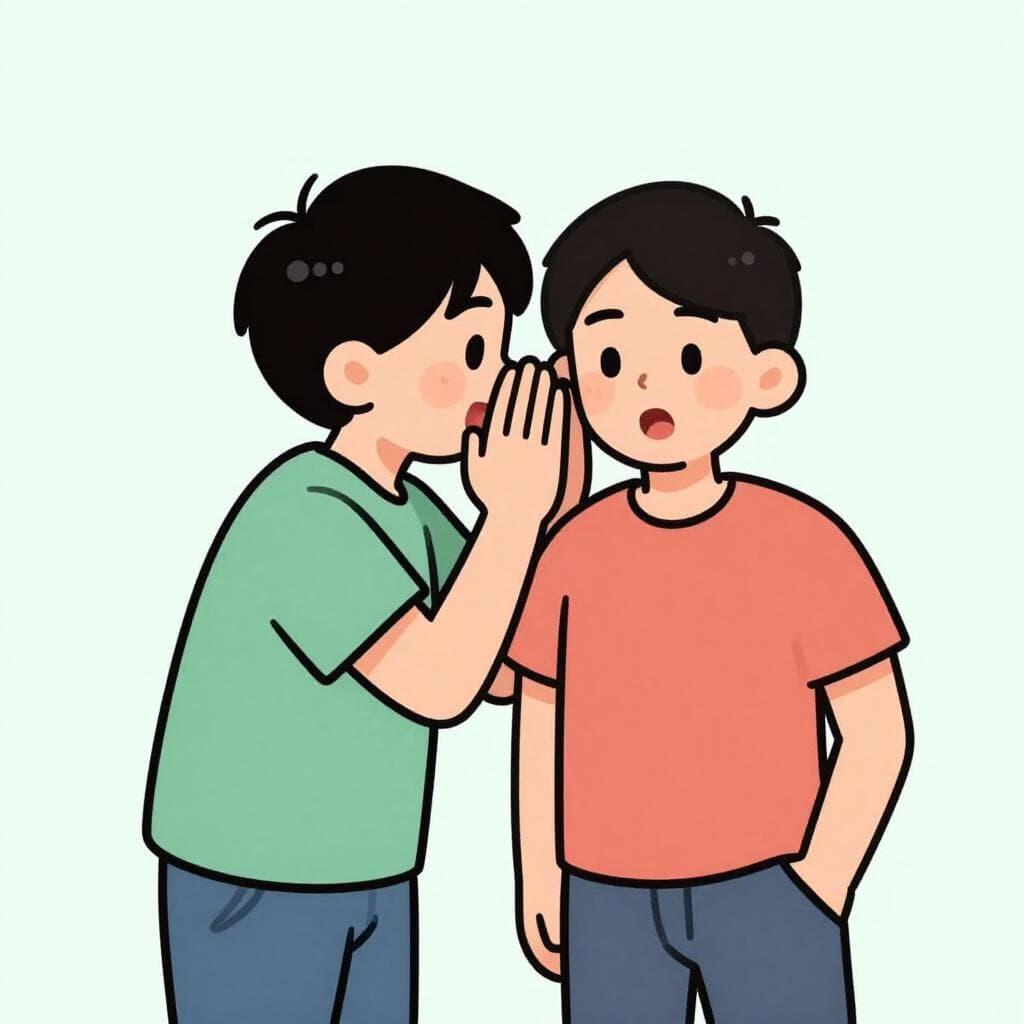



chisme
CHEE-smehˈtʃisme

Examples
¡No escuches esos chismes, son solo inventos!
Don't listen to that gossip, it's just made up!
¡Cuéntame el chisme completo!
Tell me the whole gossip!
No me gustan los chismes de la oficina.
I don't like office gossip.
Ese chisme resultó ser una mentira.
That rumor turned out to be a lie.
You can count 'chismes'
In English, 'gossip' is usually something you have 'some' of. In Spanish, it is a regular noun you can count: 'un chisme' (one piece of gossip) or 'muchos chismes' (lots of gossip).
Verbs to use
To share gossip, Spanish speakers almost always use the verb 'contar' (to tell/recount) or 'soltar' (to let go/release) if the news is particularly juicy.
Gossip vs. Gossiping
Mistake: “Me gusta chisme.”
Correction: Me gusta el chisme (the gossip) or Me gusta chismear (to gossip).
rumores
roo-MOH-resruˈmo.ɾes

Examples
Los rumores sobre la crisis económica son preocupantes.
The rumors about the economic crisis are worrying.
Hay muchos rumores sobre la boda de la actriz.
There are many rumors about the actress's wedding.
No creas los rumores; casi siempre son falsos.
Don't believe the rumors; they are almost always false.
Los rumores de un cambio de política afectaron la bolsa.
The rumors of a policy change affected the stock market.
Masculine Plural
Even though 'rumores' ends in '-es', it is a masculine noun. Use 'los' (the) or 'estos' (these) with it.
Using the Singular
Mistake: “Using 'un rumor' when talking about multiple stories.”
Correction: If you mean several pieces of unconfirmed information, always use the plural form: 'Hay rumores' (There are rumors).
chisme
CHEE-smehˈtʃisme
Examples
Me contó un chisme jugoso sobre el vecino.
He told me a juicy piece of gossip about the neighbor.
¡Cuéntame el chisme completo!
Tell me the whole gossip!
No me gustan los chismes de la oficina.
I don't like office gossip.
Ese chisme resultó ser una mentira.
That rumor turned out to be a lie.
You can count 'chismes'
In English, 'gossip' is usually something you have 'some' of. In Spanish, it is a regular noun you can count: 'un chisme' (one piece of gossip) or 'muchos chismes' (lots of gossip).
Verbs to use
To share gossip, Spanish speakers almost always use the verb 'contar' (to tell/recount) or 'soltar' (to let go/release) if the news is particularly juicy.
Gossip vs. Gossiping
Mistake: “Me gusta chisme.”
Correction: Me gusta el chisme (the gossip) or Me gusta chismear (to gossip).
rumor
roo-MORruˈmoɾ

Examples
Corrió el rumor de que se mudaría de país.
The rumor spread that he would move abroad.
Hay un rumor de que van a cerrar la tienda.
There's a rumor that they are going to close the store.
El director desmintió el rumor inmediatamente.
The director denied the rumor immediately.
No debes creer todos los rumores que circulan.
You shouldn't believe all the rumors that are going around.
Gender Check
Remember that 'rumor' is a masculine noun, so you must use 'el' or 'un' before it: 'el rumor' (the rumor).
False Cognate Warning
Mistake: “Using 'ruido' (noise) when you mean 'rumor' (gossip).”
Correction: While related, 'ruido' means a loud, physical noise. Use 'rumor' when referring to unverified talk or news.
charla
CHAR-lahˈtʃaɾla

Examples
Nos tomamos un café y tuvimos una charla tranquila.
We had a coffee and had a quiet chat.
Tuvimos una charla muy agradable después del trabajo.
We had a very nice chat after work.
¿Puedes venir? Necesito tener una charla contigo sobre el plan.
Can you come? I need to have a talk with you about the plan.
La charla entre los vecinos duró casi una hora.
The conversation between the neighbors lasted almost an hour.
Feminine Noun Rule
Remember that 'charla' is always feminine, so you must use 'la' or 'una' before it: 'la charla' (the chat), 'una charla' (a chat).
Confusing Noun and Verb
Mistake: “Using 'charlar' (the verb, to chat) when you mean 'charla' (the noun, the chat).”
Correction: Say 'Quiero tener una charla' (noun), not 'Quiero tener un charlar' (incorrect verb use).
Chisme vs. Rumor
Learn Spanish with Inklingo
Interactive stories, personalized learning, and more.