How to Say "rumor" in Spanish
The most common Spanish word for “rumor” is “rumor” — use 'rumor' when referring to any unverified story or piece of information circulating, especially about events or news rather than personal gossip.

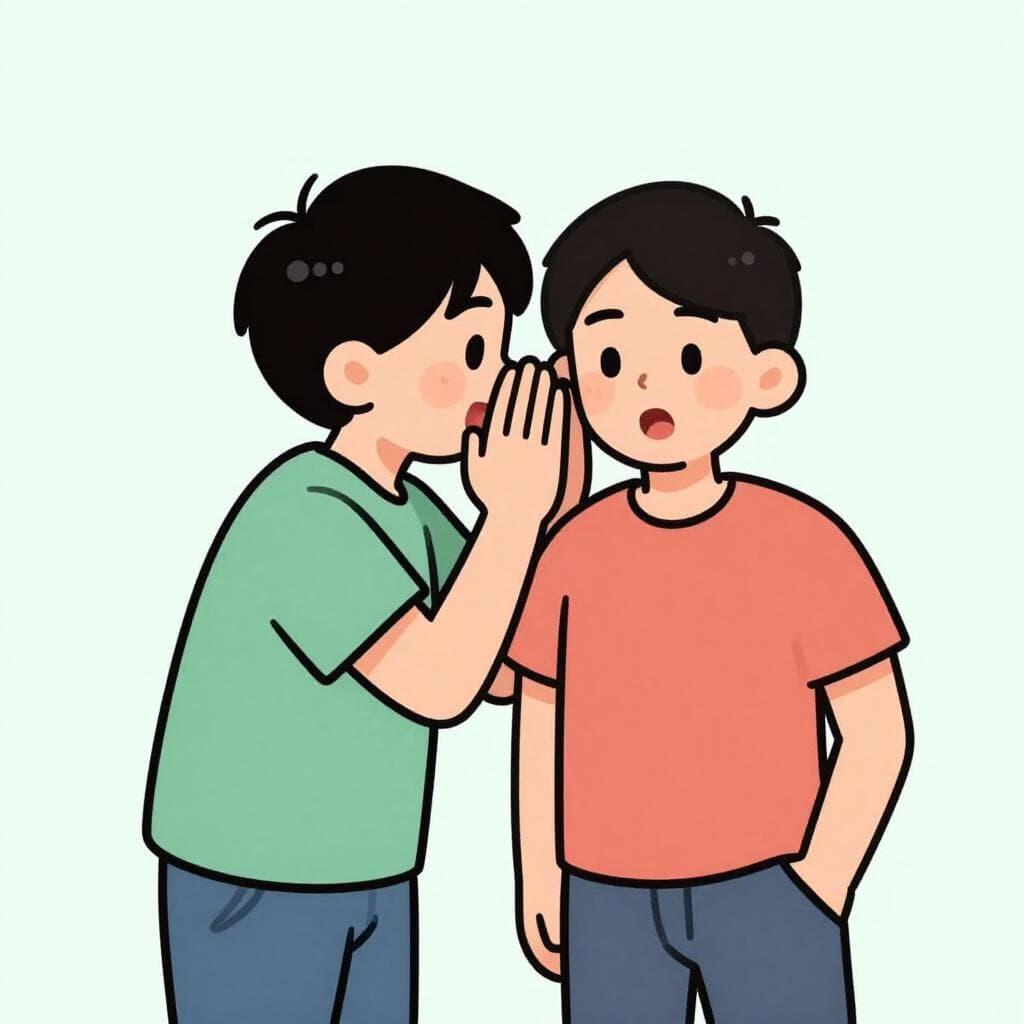
rumor
roo-MORruˈmoɾ

Examples
Hay un rumor de que van a cerrar la tienda.
There's a rumor that they are going to close the store.
El director desmintió el rumor inmediatamente.
The director denied the rumor immediately.
No debes creer todos los rumores que circulan.
You shouldn't believe all the rumors that are going around.
Gender Check
Remember that 'rumor' is a masculine noun, so you must use 'el' or 'un' before it: 'el rumor' (the rumor).
False Cognate Warning
Mistake: “Using 'ruido' (noise) when you mean 'rumor' (gossip).”
Correction: While related, 'ruido' means a loud, physical noise. Use 'rumor' when referring to unverified talk or news.
chisme
CHEE-smehˈtʃisme

Examples
¡Cuéntame el chisme completo!
Tell me the whole gossip!
No me gustan los chismes de la oficina.
I don't like office gossip.
Ese chisme resultó ser una mentira.
That rumor turned out to be a lie.
You can count 'chismes'
In English, 'gossip' is usually something you have 'some' of. In Spanish, it is a regular noun you can count: 'un chisme' (one piece of gossip) or 'muchos chismes' (lots of gossip).
Verbs to use
To share gossip, Spanish speakers almost always use the verb 'contar' (to tell/recount) or 'soltar' (to let go/release) if the news is particularly juicy.
Gossip vs. Gossiping
Mistake: “Me gusta chisme.”
Correction: Me gusta el chisme (the gossip) or Me gusta chismear (to gossip).
Chisme vs. Rumor
Related Translations
Learn Spanish with Inklingo
Interactive stories, personalized learning, and more.