How to Say "major" in Spanish
The most common Spanish word for “major” is “mayor” — use this when referring to something of great importance, significance, or size, like a 'major problem' or 'major issue'.




mayor
mah-YORmaˈʝoɾ
Examples
La contaminación es el mayor problema de la ciudad.
Pollution is the city's biggest problem.
La Plaza Mayor es muy bonita.
The main square is very beautiful.
Este proyecto requiere una inversión mayor.
This project requires a greater investment.
'Mayor' vs. 'Más Grande'
Use 'mayor' for abstract things like importance, difficulty, or concern. Use 'más grande' when you're talking about physical size. For example, 'un problema mayor' (a bigger problem) but 'una casa más grande' (a bigger house).
importante
eem-por-TAHN-tehimpoɾˈtante

Examples
Es muy importante estudiar.
It's very important to study.
Tengo una reunión importante mañana.
I have an important meeting tomorrow.
Él es una figura importante en la política local.
He is an important figure in local politics.
Same for Everyone
Importante ends in '-e', which is great news! It means you use the same form for both masculine and feminine things. For example: 'el libro importante' (the important book) and 'la casa importante' (the important house).
Placement is Key
Usually, importante comes after the thing it describes, just like in English. For example, 'una reunión importante' (an important meeting). Placing it before ('una importante reunión') adds a bit of emphasis or a more formal tone.
Your Go-To Verb: 'ser'
To say something is important, you'll almost always use the verb 'ser'. For example, 'Ser honesto es importante' (Being honest is important).
The 'Es importante que...' Rule
Mistake: “Es importante que tú estudias mucho.”
Correction: Es importante que tú estudies mucho. When you say it's important for *someone else* to do something, the verb that follows needs a special ending. This is a huge pattern in Spanish!
grandes
GRAHN-dehˈɡɾande

Examples
Gaudí fue un gran arquitecto.
Gaudí was a great architect.
Fue una gran sorpresa para todos.
It was a great surprise for everyone.
Tenemos grandes planes para el futuro.
We have big/great plans for the future.
The 'gran' Transformation
When you put 'grande' before a singular thing (masculine or feminine), it shortens to 'gran' and its meaning changes from 'big' to 'great'. For example, 'un gran día' (a great day).
'Big Man' vs. 'Great Man'
Mistake: “Él es un hombre grande.”
Correction: This means 'He is a large/big man' (physically). To say 'He is a great man,' you must say 'Es un gran hombre.' Placement is everything here!
principales
preen-see-PAH-lehspɾinsiˈpales
Examples
Estas son las razones principales de mi decisión.
These are the main reasons for my decision.
Necesitamos enfocarnos en los problemas principales ahora.
We need to focus on the principal problems now.
Hay tres ingredientes principales en esta receta.
There are three major ingredients in this recipe.
Agreement is Key
Since 'principales' is plural, it must be used with plural nouns, whether they are masculine (los problemas principales) or feminine (las ideas principales).
One Form for Both Genders
Unlike many Spanish adjectives, 'principal' (and 'principales') uses the exact same form whether the noun is masculine or feminine.
Forgetting the Plural
Mistake: “Los problemas principal.”
Correction: Los problemas principales. Remember to match the '-es' ending to the plural noun.
especialidad
es-peh-syah-lee-dahdes.pe.sjaˈli.ðað

Examples
¿Cuál es tu especialidad en la universidad?
What is your major in university?
Necesito ver a un médico especialista en mi especialidad.
I need to see a specialist doctor in my field.
Su especialidad es la cirugía cardíaca, la más difícil de todas.
His specialty is cardiac surgery, the most difficult of all.
Always Feminine
Remember that 'especialidad' is always a feminine noun, so you must use 'la' before it: 'la especialidad'.
Using the wrong preposition
Mistake: “Mi especialidad es matemáticas.”
Correction: Mi especialidad es en matemáticas. (Use 'en' to mean 'in' when defining the area.)
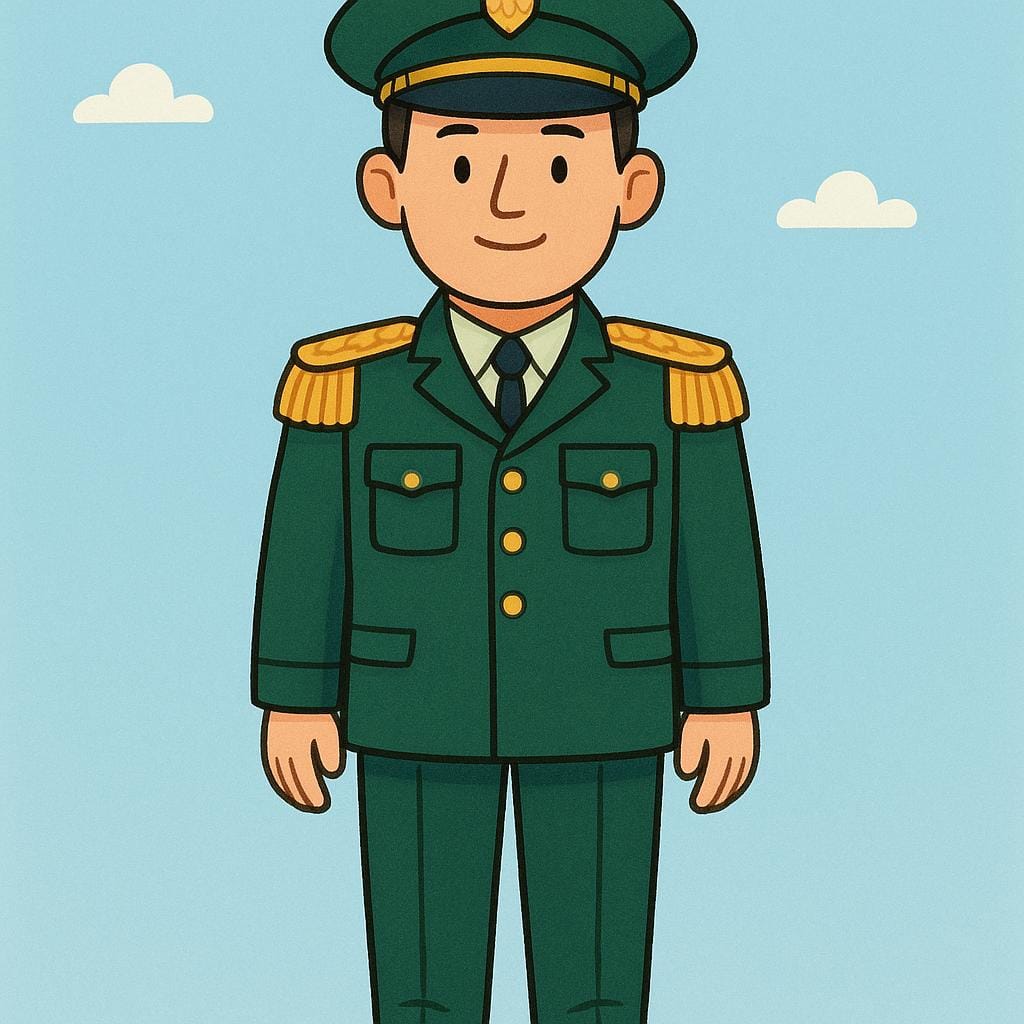
comandante
coh-mahn-DAHN-tehkomanˈdante
Examples
El comandante ordenó a sus tropas que se prepararan.
The commander ordered his troops to prepare.
La comandante de la policía revisó el perímetro de seguridad.
The police commander (female) checked the security perimeter.
Para ascender a comandante, se necesita mucha experiencia.
To be promoted to major/commander, a lot of experience is needed.
Gender Flexibility
Even though 'comandante' ends in '-e', it can refer to both men and women. Use 'el comandante' for a man and 'la comandante' for a woman.
Changing the Ending
Mistake: “Using *comandanta* when referring to a female commander.”
Correction: While *comandanta* is sometimes heard regionally, the preferred and standard form is 'la comandante' (always ending in -e) in most formal contexts.
serio
seh-ryohˈse.ɾjo
Examples
La falta de agua es un problema serio en esta región.
The lack of water is a serious problem in this region.
Cometió un error serio en el informe.
He made a serious mistake in the report.
Necesitamos encontrar una empresa seria para este trabajo.
We need to find a reliable company for this job.
mención
Examples
Tiene un grado en Educación con mención en Lengua Extranjera.
She has a degree in Education with a specialization in Foreign Language.
gordo
GOR-doh (like 'gore' then 'dough')ˈɡoɾðo

Examples
Lo más gordo del problema es la financiación.
The main part/biggest challenge of the problem is the financing.
Ganamos El Gordo de la Lotería de Navidad.
We won the major prize (The Fat One) in the Christmas Lottery.
Neuter Article 'Lo'
When 'lo' is placed before 'gordo,' it creates the phrase 'lo gordo,' which refers to the abstract idea of 'the main part' or 'the essence' of something.
may.
Examples
Rodrigo Pérez (may.)
Rodrigo Pérez, Sr.
Major vs. Important vs. Great
Learn Spanish with Inklingo
Interactive stories, personalized learning, and more.