How to Say "to demolish" in Spanish
The most common Spanish word for “to demolish” is “demoler” — use 'demoler' when specifically referring to the planned and systematic tearing down of buildings or structures, often to make way for new construction.
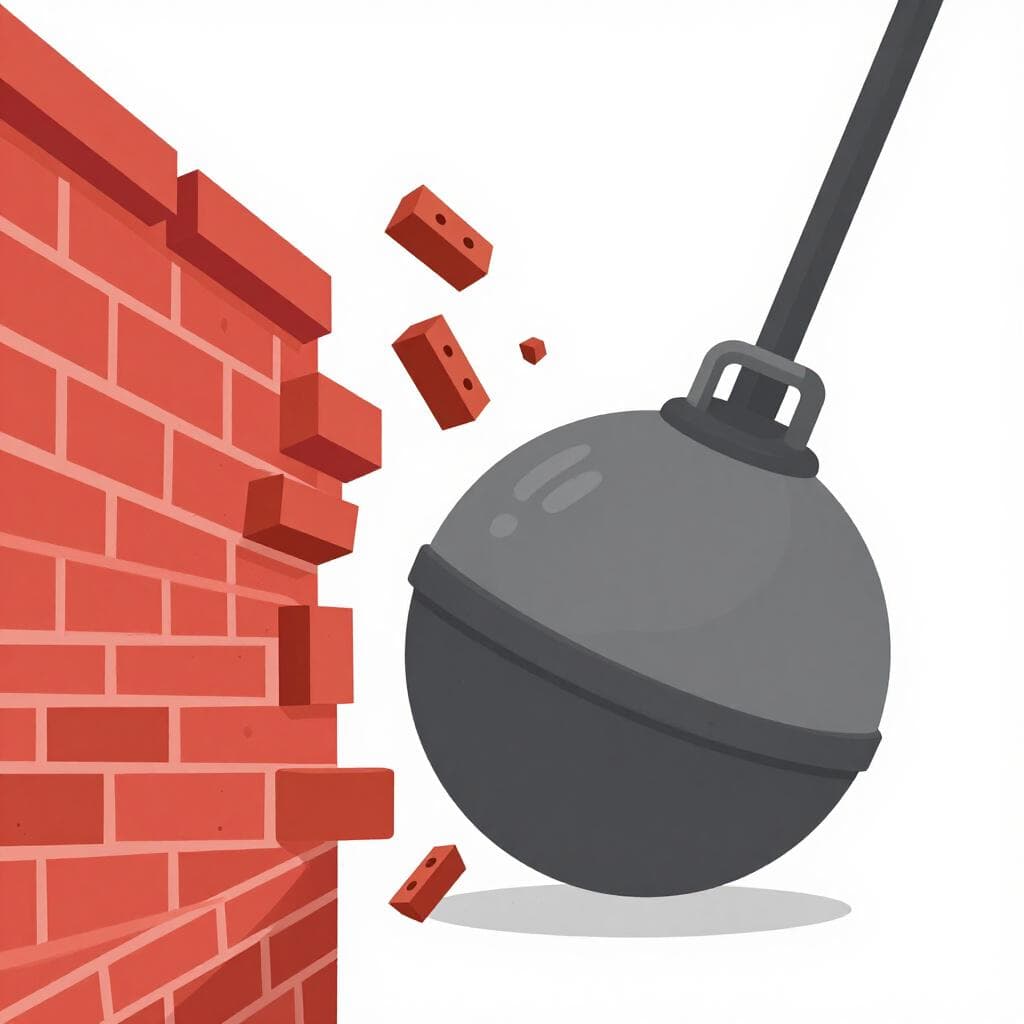
Use 'demoler' when specifically referring to the planned and systematic tearing down of buildings or structures, often to make way for new construction.
Learn more →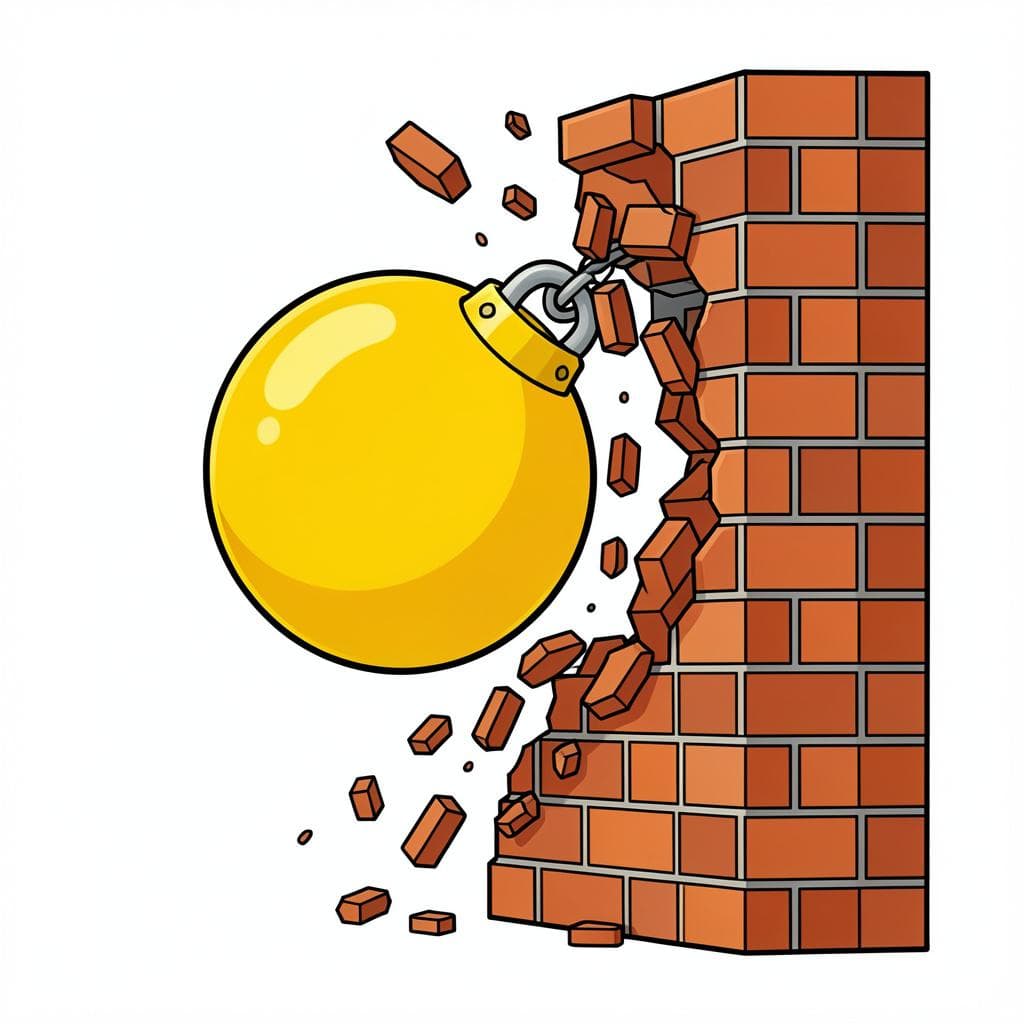
Choose 'derribar' for the intentional act of knocking down or bringing down a structure, often implying a more direct or forceful action than 'demoler'.
Learn more →
Use 'derrumbar' when a structure collapses or is intentionally brought down, often suggesting a more sudden or complete destruction, sometimes due to force or decay.
Learn more →
Employ 'arruinar' when something is ruined or destroyed in a more general sense, not necessarily a physical structure, but often implying damage that spoils or makes something unusable.
Learn more →deh-moh-LEHRdemoˈleɾ
Examples
Van a demoler el viejo cine para construir un centro comercial.
They are going to demolish the old cinema to build a shopping mall.
El ayuntamiento decidió demoler el edificio porque era peligroso.
The city council decided to tear down the building because it was dangerous.
Las máquinas empezaron a demoler los muros exteriores esta mañana.
The machines began to knock down the exterior walls this morning.
The Vowel Swap
This verb is part of the 'o to ue' family. When you stress the root of the word, the 'o' changes to 'ue'. For example, instead of 'yo demolo', you say 'yo demuelo'.
The Boot Pattern
The stem change only happens in the 'boot' shapes of the present tense: yo, tú, él/ella, and ellos/ellas. It does NOT change for nosotros and vosotros.
Forgetting the Stem Change
Mistake: “Yo demolo el muro.”
Correction: Yo demuelo el muro. Remember that the 'o' becomes 'ue' when you say 'I', 'you', or 'they'.
deh-rree-barderiˈβaɾ
Examples
Tuvieron que derribar el viejo muro para ampliar la calle.
They had to knock down the old wall to widen the street.
El boxeador derribó a su oponente en el tercer asalto.
The boxer knocked down his opponent in the third round.
Using 'derribar' with people
When using this word for knocking a person down, remember to add 'a' before the person, like: 'Derribó a su amigo'.
Derribar vs. Tirar
Mistake: “Using 'tirar' to mean demolition.”
Correction: Use 'derribar' for structures or large things that are standing up. 'Tirar' is more for throwing or pulling.
deh-rroom-barderumˈbaɾ

Examples
Van a derrumbar el viejo cine para construir un parque.
They are going to knock down the old cinema to build a park.
El terremoto derrumbó varias casas en el centro de la ciudad.
The earthquake toppled several houses in the city center.
Ten cuidado, no vayas a derrumbar esa pila de libros.
Be careful, don't knock over that pile of books.
Who is doing the knocking?
Use 'derrumbar' when someone or something (like a storm) knocks something else down. If a building falls down on its own, you need to add 'se' to the end: 'derrumbarse'.
Regular -AR Pattern
This verb follows the standard pattern for verbs ending in -ar, so if you know how to conjugate 'hablar', you already know how to conjugate this one!
Confusing 'to fall' with 'to knock down'
Mistake: “El edificio derrumbó ayer.”
Correction: El edificio se derrumbó ayer. Use 'derrumbar' only when something acts upon the building. If it fell by itself, use the 'se' version.
ahr-roo-ee-NAHRar.rwiˈnar

Examples
La tormenta arruinó la cosecha de este año.
The storm ruined this year's harvest.
El terremoto arruinó muchos edificios históricos.
The earthquake wrecked many historic buildings.
No dejes que un error arruine tu reputación.
Don't let one mistake ruin your reputation.
Regular -AR Verb
This verb follows the standard, predictable pattern for all verbs ending in -ar. If you know how to conjugate 'hablar' (to speak), you know how to conjugate 'arruinar'.
Accenting the 'u'
Mistake: “Using *arruíno* or *arruínas*.”
Correction: The stress stays on the last part of the stem: *arruino*, *arruinas*. The 'u' and 'i' are pronounced together as one syllable (rwee), not separately.
Demoler vs. Derribar vs. Derrumbar
Learners often confuse 'demoler', 'derribar', and 'derrumbar' because they all involve taking down structures. Remember 'demoler' is for planned demolition, 'derribar' for intentionally knocking something down, and 'derrumbar' for collapse or forceful destruction.
Related Translations
Learn Spanish with Inklingo
Interactive stories, personalized learning, and more.