How to Say "to detach" in Spanish
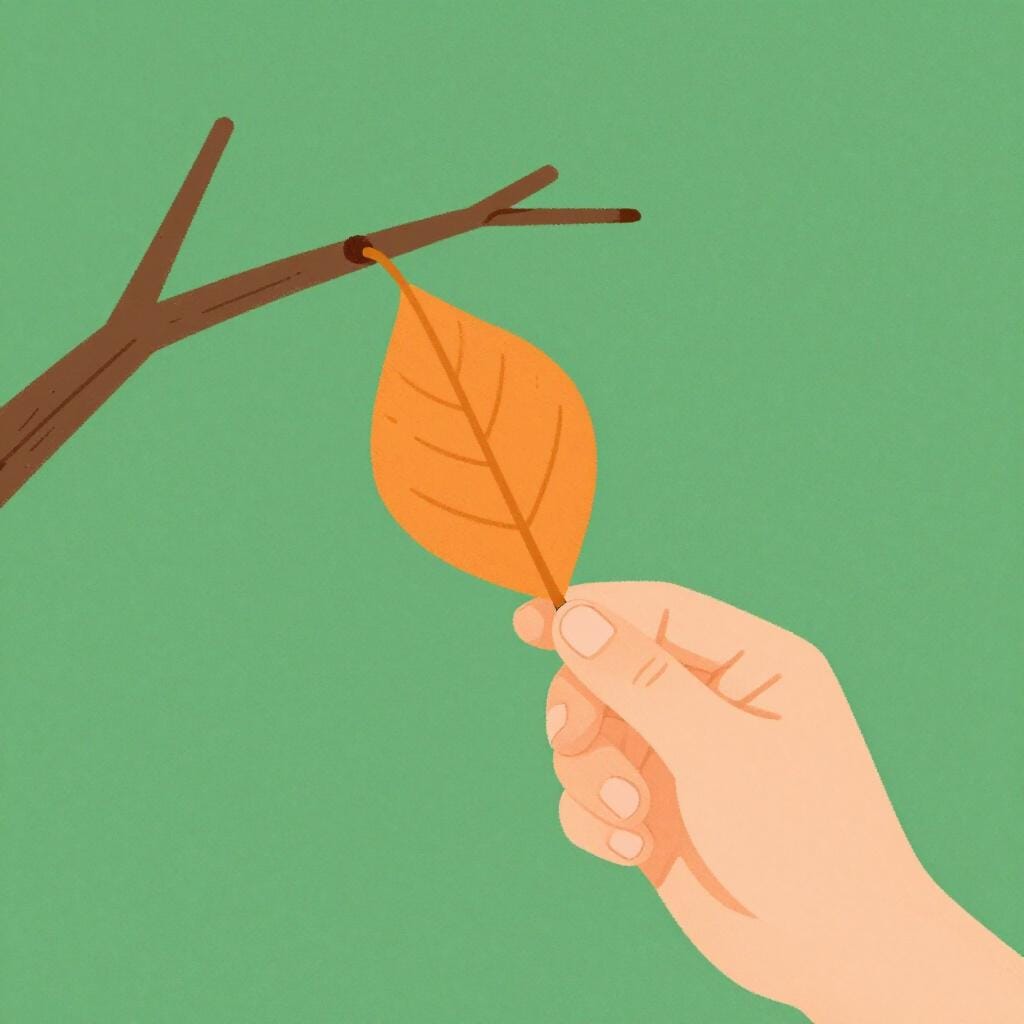
The most common Spanish word for “to detach” is “desprender” — use 'desprender' when you are actively removing or taking off something that is attached, like a label from clothing or a part from a machine.

Use 'desprender' when you are actively removing or taking off something that is attached, like a label from clothing or a part from a machine.
Learn more →
Use 'despegar' when you are separating two things that are stuck together, often implying a slight difficulty or the need for care, such as peeling off a sticker.
Learn more →des-pren-DERdespɾenˈdeɾ
Examples
Desprendí la etiqueta de mi camiseta nueva.
I took the tag off my new t-shirt.
Es difícil desprender el pegamento viejo de la mesa.
It is hard to remove the old glue from the table.
Tienes que desprender el cable con mucho cuidado para no romperlo.
You have to detach the cable very carefully so you don't break it.
Using 'Desprender' vs 'Quitar'
Use 'desprender' when something was stuck or joined and you are separating it. 'Quitar' is more general for just 'taking something away.'
Action Flow
This verb describes an action you do to an object. If the object falls off by itself, you'll need the reflexive version 'se desprende'.
Missing the 'se'
Mistake: “La pintura desprende.”
Correction: La pintura se desprende. (Use 'se' when something falls off on its own.)
des-peh-GAHRdespeˈɣaɾ

Examples
Ten cuidado al despegar la etiqueta del regalo.
Be careful when peeling the label off the gift.
No puedo despegar estos dos papeles porque tienen pegamento.
I can't unstick these two papers because they have glue on them.
Spelling Change Alert
In the past tense (Preterite) 'yo' form and all special 'wish' forms (Subjunctive), the 'g' changes to 'gu' to keep the hard 'G' sound before the letter 'e'.
Missing the 'u'
Mistake: “yo despegé”
Correction: yo despegué
Choosing between 'desprender' and 'despegar'
Learners often confuse 'desprender' and 'despegar'. Remember that 'desprender' is generally for actively removing an item from another, while 'despegar' implies separating things that are stuck together, like peeling something off a surface.
Related Translations
Learn Spanish with Inklingo
Interactive stories, personalized learning, and more.