How to Say "to fight" in Spanish
The most common Spanish word for “to fight” is “pelear” — use this word for general physical combat or arguments between people, often implying a less organized or more informal confrontation.

Use this word for general physical combat or arguments between people, often implying a less organized or more informal confrontation.
Learn more →
This word signifies physical combat or a struggle, often implying more effort or determination than 'pelear', and can also be used metaphorically for striving.
Learn more →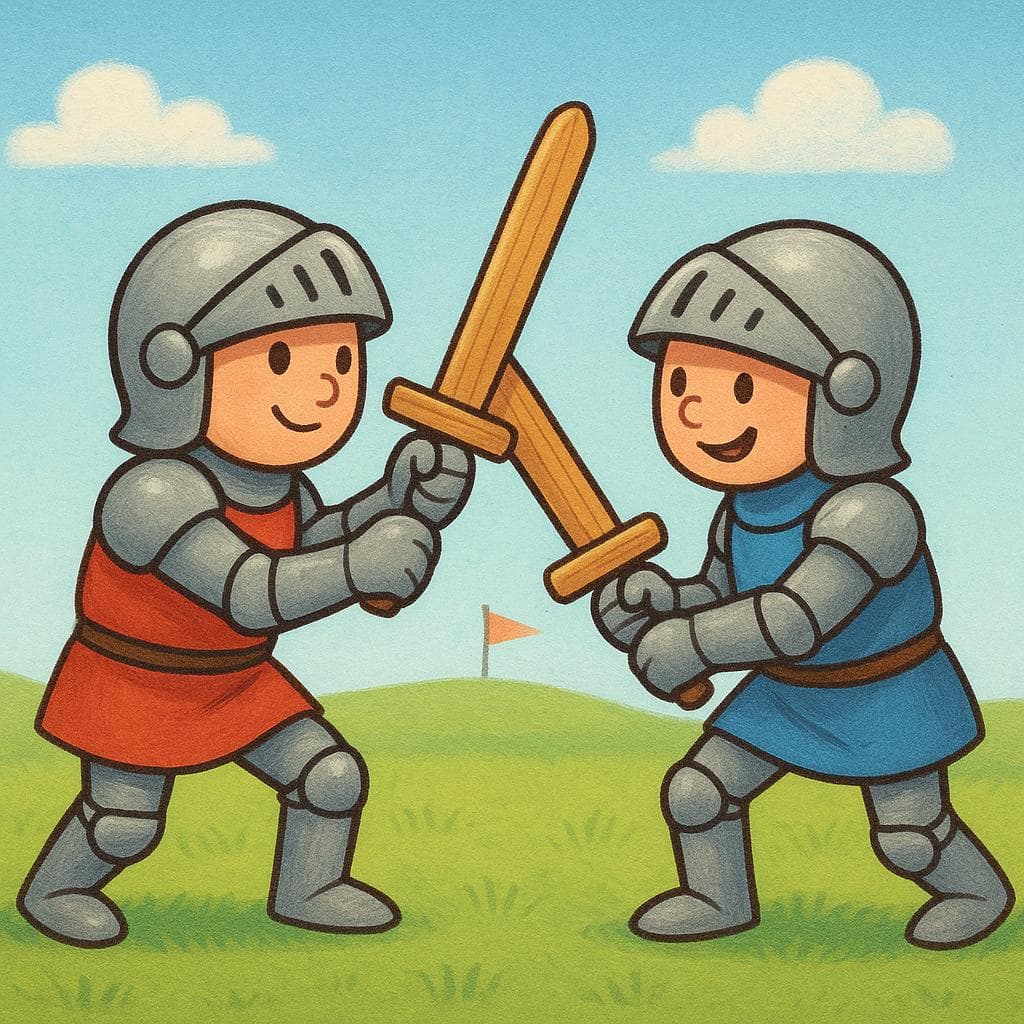
Use this term when referring to fighting against a declared enemy or opponent, especially in a military or organized conflict context.
Learn more →
This verb, used reflexively as 'agarrarse', means to get into a physical fight or scuffle, often implying a sudden or rough engagement.
Learn more →peh-leh-AHRpe.leˈaɾ

Examples
Los niños empezaron a pelear por el juguete.
The children started to fight over the toy.
¿Viste la pelea? Fue muy rápida.
Did you see the fight? It was very quick.
Los boxeadores deben pelear en su peso.
Boxers must fight in their weight class.
Action vs. Result
Use the gerund 'peleando' to describe the continuous action of fighting: 'Están peleando ahora' (They are fighting right now).
Confusing Action and Argument
Mistake: “Using 'pelear' when you mean 'to discuss'.”
Correction: Use 'discutir' if the conflict is only about ideas or opinions; use 'pelear' only when the argument is intense, loud, or leads to physical conflict.
loo-CHARluˈʧaɾ

Examples
Los niños lucharon por el juguete, pero nadie resultó herido.
The children fought over the toy, but nobody was hurt.
El campeón de boxeo tendrá que luchar contra un oponente muy fuerte.
The boxing champion will have to fight against a very strong opponent.
Regular -AR Verb
Luchar follows the normal pattern for verbs ending in -ar. Once you learn the pattern for verbs like 'hablar' (to speak), 'luchar' is easy to conjugate!
kom-bah-TEERkom.baˈtiɾ
Examples
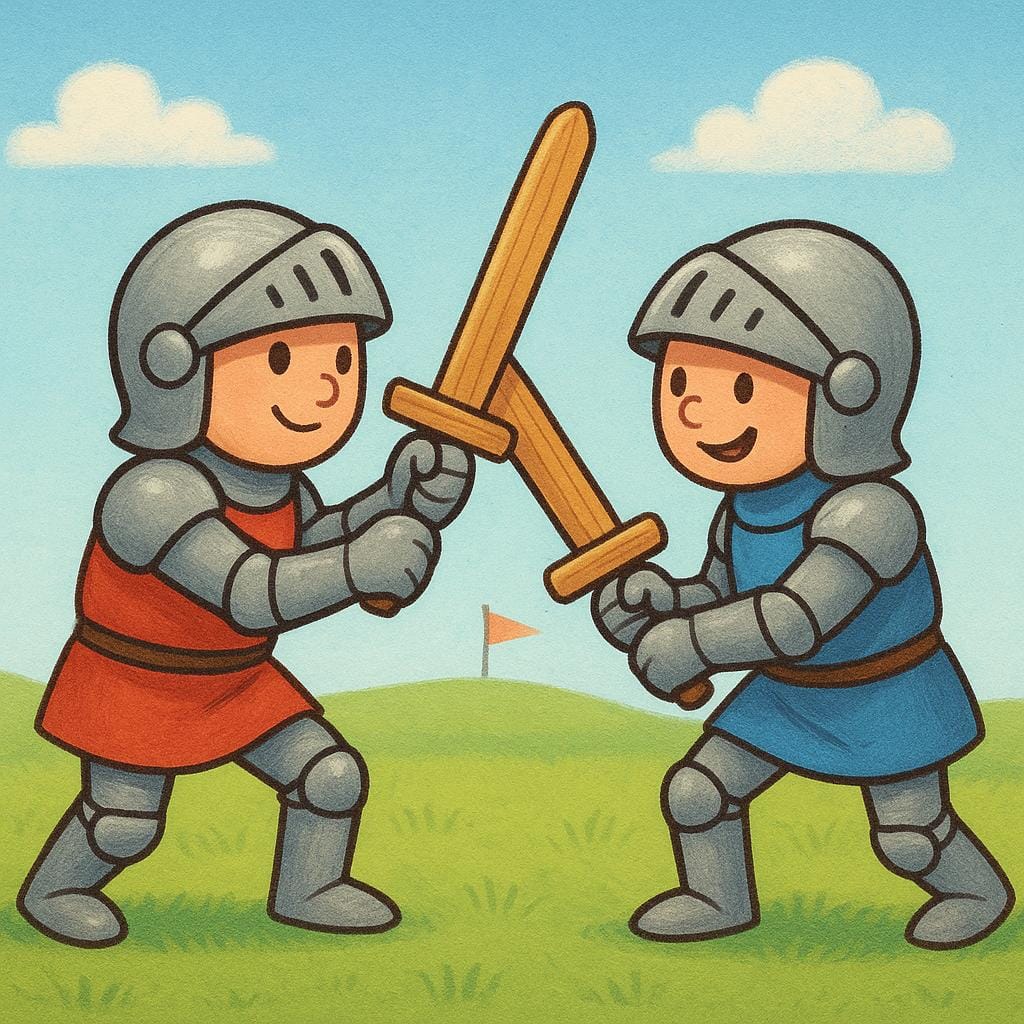
Los soldados están listos para combatir al enemigo.
The soldiers are ready to fight the enemy.
La tropa combatió valientemente durante la noche.
The troop fought bravely throughout the night.
Using 'Contra'
When you specify what or who you are fighting, you almost always need the preposition 'contra' (against): 'Ellos combatieron contra la invasión.'
ah-gah-RRAHRaɣaˈraɾ

Examples
Se agarraron en la calle después de la discusión.
They got into a fight in the street after the argument.
Agárrate bien a la barandilla, el barco se mueve mucho.
Hold on tightly to the railing, the boat is moving a lot.
Los dos vecinos se agarraron por culpa del ruido.
The two neighbors got into a fight because of the noise.
The 'Se' Marker
When you add 'se' (agarrarse), the action reflects back onto the person doing it. If someone 'se agarra,' they are holding themselves onto something, or they are involved in a mutual action, like a fight.
Confusing Reflexive and Non-Reflexive
Mistake: “Agarré la pared (I grabbed the wall).”
Correction: Me agarré a la pared (I clung to the wall). Use the reflexive form when the intent is to hold on for support.
Pelear vs. Luchar
Learners often confuse 'pelear' and 'luchar' as they both mean physical combat. 'Pelear' is more common for general arguments or scuffles, while 'luchar' suggests more effort or a determined struggle and can also be used metaphorically.
Related Translations
Learn Spanish with Inklingo
Interactive stories, personalized learning, and more.