How to Say "to mask" in Spanish
The most common Spanish word for “to mask” is “ocultar” — use this verb when you want to hide or conceal emotions or personal feelings, often implying an effort to keep them secret.
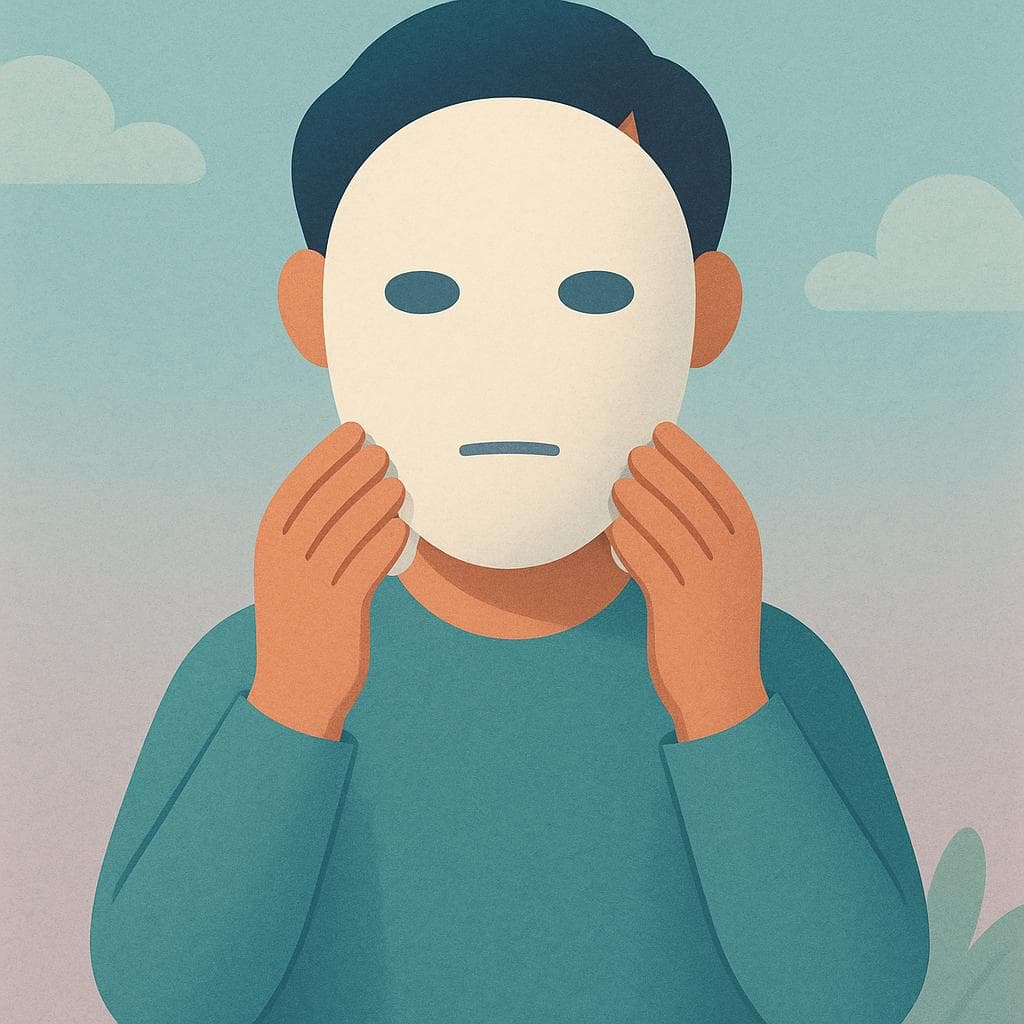
Use this verb when you want to hide or conceal emotions or personal feelings, often implying an effort to keep them secret.
Learn more →
This verb is best for disguising or downplaying something noticeable, like a sound, smell, or even a feeling, to make it less apparent.
Learn more →
Choose this verb when the intention is to deliberately cover up or disguise something, often with the implication of shielding it from view or knowledge.
Learn more →oh-kool-TAHRo.kulˈtaɾ

Examples
Intentó ocultar su tristeza con una sonrisa falsa.
He tried to conceal his sadness with a fake smile.
El político ocultó los detalles de la reunión a la prensa.
The politician concealed the details of the meeting from the press.
dee-see-moo-LAHRdisimuˈlaɾ

Examples
Ella intentó disimular su tristeza con una sonrisa.
She tried to hide her sadness with a smile.
Usa maquillaje para disimular la cicatriz.
She uses makeup to conceal the scar.
No puedes disimular que estás enojado conmigo.
You can't hide the fact that you are angry with me.
Using 'disimular' with 'que'
When you want to say someone is hiding the fact that something is happening, use 'disimular que' followed by a normal sentence. For example: 'Disimula que tiene miedo' (He hides that he is afraid).
It's completely regular
Good news! This verb follows the standard pattern for all '-ar' verbs in every tense, so you don't have to worry about weird spelling changes.
Disimular vs. Esconder
Mistake: “Using 'disimular' when you physically put an object inside a box.”
Correction: Use 'esconder' for physical objects you hide from sight. Use 'disimular' when you are trying to make something look different or less noticeable, like a stain on your shirt.
en-koo-BREERen.kuˈβɾiɾ

Examples
Ella intentó encubrir su tristeza con una gran sonrisa.
She tried to hide her sadness with a big smile.
La densa niebla encubría el valle por completo.
The thick fog concealed the valley completely.
Es difícil encubrir la falta de experiencia en este trabajo.
It's hard to mask the lack of experience in this job.
A special 'done' form
Even though the rest of the verb is regular, the 'past participle' (the form used for things like 'I have hidden') is 'encubierto,' not 'encubrido.'
Action vs. Result
Use 'encubrir' for the active process of trying to hide something, especially something that shouldn't be hidden.
Using the wrong participle
Mistake: “He encubrido la verdad.”
Correction: He encubierto la verdad. (The word 'encubrir' follows the pattern of 'cubrir,' which uses 'cubierto').
Ocultar vs. Disimular vs. Encubrir
Learners often confuse 'ocultar' and 'disimular' for hiding emotions. 'Ocultar' focuses more on keeping feelings secret, while 'disimular' is about making them less noticeable or apparent to others.
Related Translations
Learn Spanish with Inklingo
Interactive stories, personalized learning, and more.