How to Say "troops" in Spanish
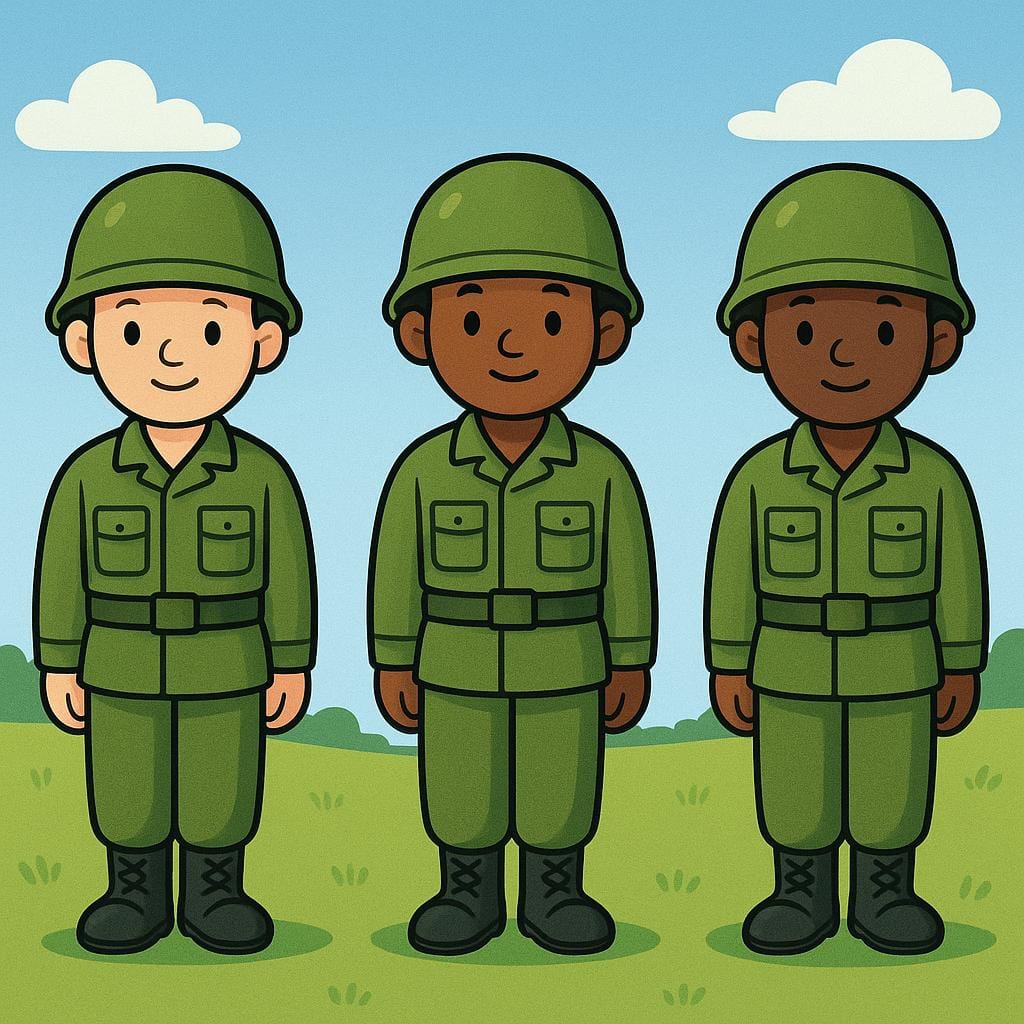
The most common Spanish word for “troops” is “soldados” — use 'soldados' when referring to individual soldiers or a group of them as people, especially in general or introductory contexts.
soldados
sol-DA-dossolˈdaðos
Examples
Los soldados desfilaron por la plaza central.
The soldiers marched through the central square.
Necesitamos más soldados para la misión de paz.
We need more troops for the peace mission.
El entrenamiento de los soldados es muy riguroso.
The soldiers' training is very rigorous.
Plural Form
This is the plural form of the masculine noun 'soldado' (soldier). Remember that when you refer to a mixed group of male and female soldiers, you still use 'los soldados'.
tropa
tro-pahˈtɾopa
Examples
La tropa descansaba en el campamento.
The troops were resting in the camp.
El general dio una orden a toda la tropa.
The general gave an order to all the troops.
Las tropas de paz de la ONU llegaron a la región.
The UN peacekeeping troops arrived in the region.
Singular Word, Multiple People
Even though 'tropa' refers to many soldiers, it is a single group. Always use singular verbs with it: 'La tropa está lista' (The troops are ready), not 'están'.
Gender and Soldiers
The word 'tropa' is always feminine ('la'), even if the group consists entirely of men. This is because the word itself is feminine, regardless of who is in the group.
Using Plural Verbs
Mistake: “La tropa llegaron tarde.”
Correction: La tropa llegó tarde. (Because 'tropa' is a single unit, use the singular verb form).
militares
mee-lee-TAH-resmiliˈtaɾes
Examples
Los militares llegaron para ayudar con el desastre natural.
The military personnel arrived to help with the natural disaster.
Muchos jóvenes quieren convertirse en militares.
Many young people want to become soldiers.
Collective Noun
Even though 'militares' is plural, it often refers to the entire institution or group of armed forces, similar to saying 'the military' in English.
Confusing Noun/Adjective
Mistake: “Using 'los militares' when you mean the adjective 'military' (e.g., 'el coche militares').”
Correction: Use 'el coche militar' (singular adjective) or 'los coches militares' (plural adjective) instead of using the noun form.
fuerzas
FWEHR-sas (or FWEHR-thas in Spain)fweɾ.θas
Examples
Las fuerzas de seguridad pública controlaron la manifestación.
The public security forces controlled the demonstration.
El presidente llamó a las Fuerzas Armadas para pedir ayuda.
The president called on the Armed Forces for help.
Capitalization
When referring to the official, formal institutions (like the Armed Forces), 'Fuerzas' is often capitalized, similar to how we capitalize specific government bodies.
Soldiers vs. Military Forces
Learn Spanish with Inklingo
Interactive stories, personalized learning, and more.