How to Say "try on" in Spanish
The most common Spanish word for “try on” is “probar” — use 'probar' (often as 'probarse' when referring to oneself) when talking about trying on clothing or accessories.
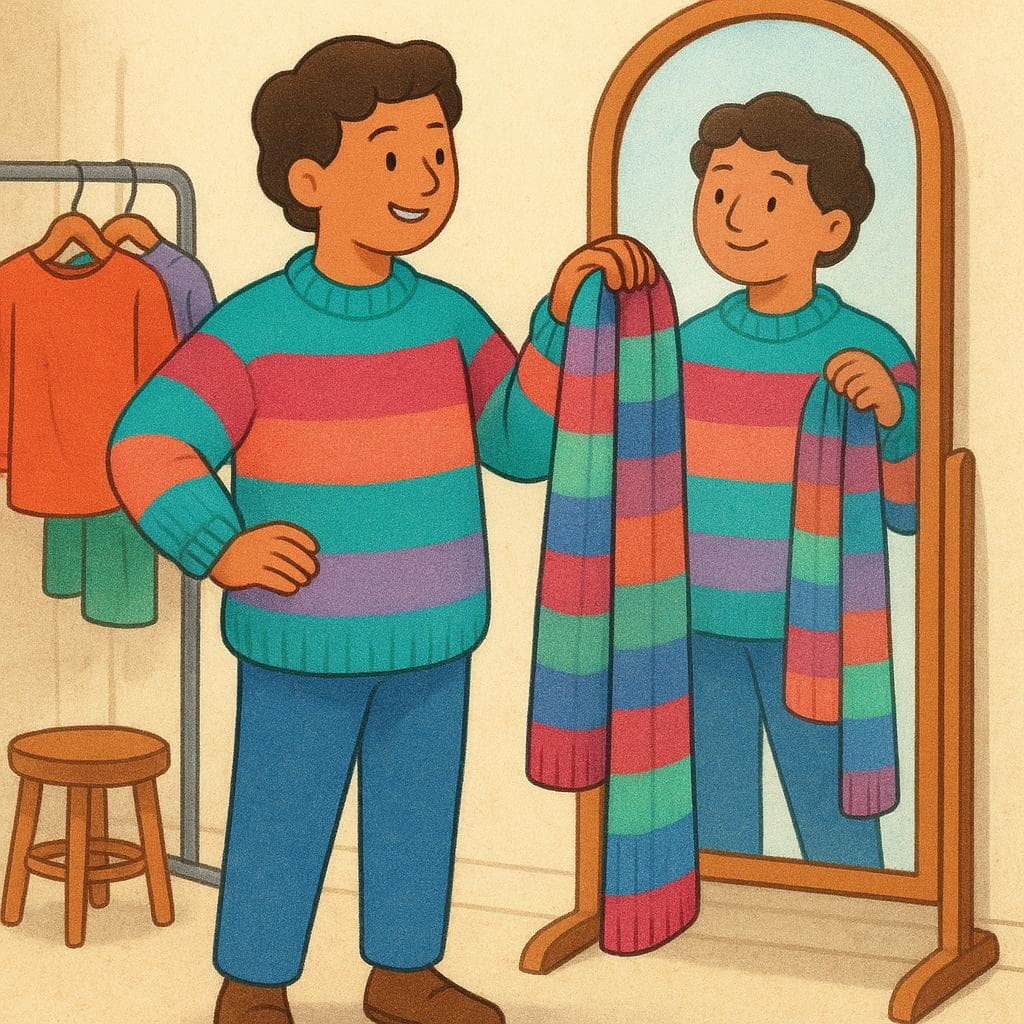
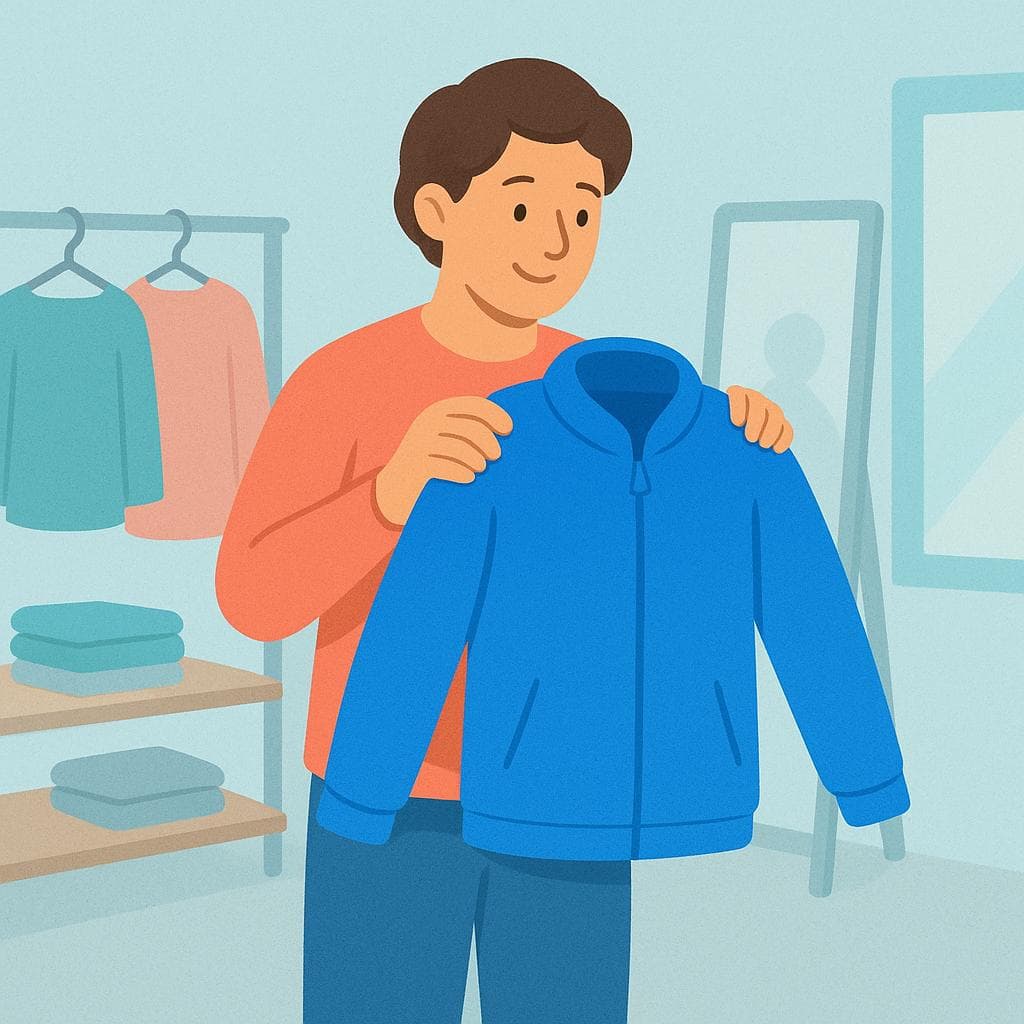
probar
proh-BAHRpɾoˈβaɾ
Examples
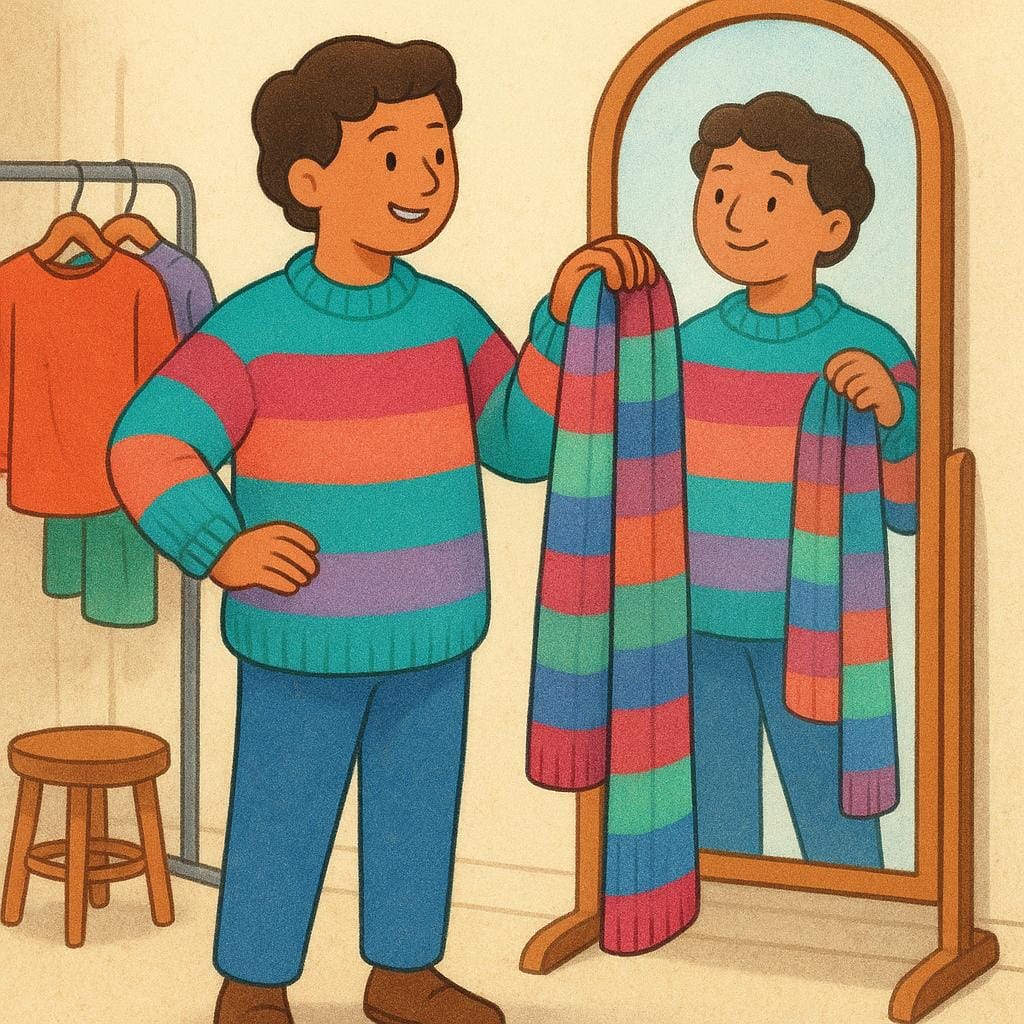
¿Puedo probarme esta camisa en una talla más grande?
Can I try on this shirt in a bigger size?
Me pruebo los zapatos antes de comprarlos.
I try on the shoes before buying them.
Ella se probó diez vestidos, pero no le gustó ninguno.
She tried on ten dresses, but didn't like any of them.
The 'Se' Makes It Personal
Adding the 'se' (or 'me,' 'te,' etc.) changes the meaning from just 'testing' to 'testing on oneself.' You must include the reflexive pronoun (e.g., me pruebo, se prueba).
Where the Pronoun Goes
The reflexive pronoun can attach to the end of the infinitive (Voy a probármelos) or go before the conjugated verb (Me los voy a probar). Both are correct!
Missing Reflexive Pronoun
Mistake: “Using 'Probar la camisa' when you mean 'I try on the shirt.'”
Correction: The correct phrase is 'Me pruebo la camisa.' Without the pronoun, it means 'I taste the shirt' or 'I test the shirt' (like a quality check).
pruebe
PRWEH-behˈpɾwe.βe
Examples
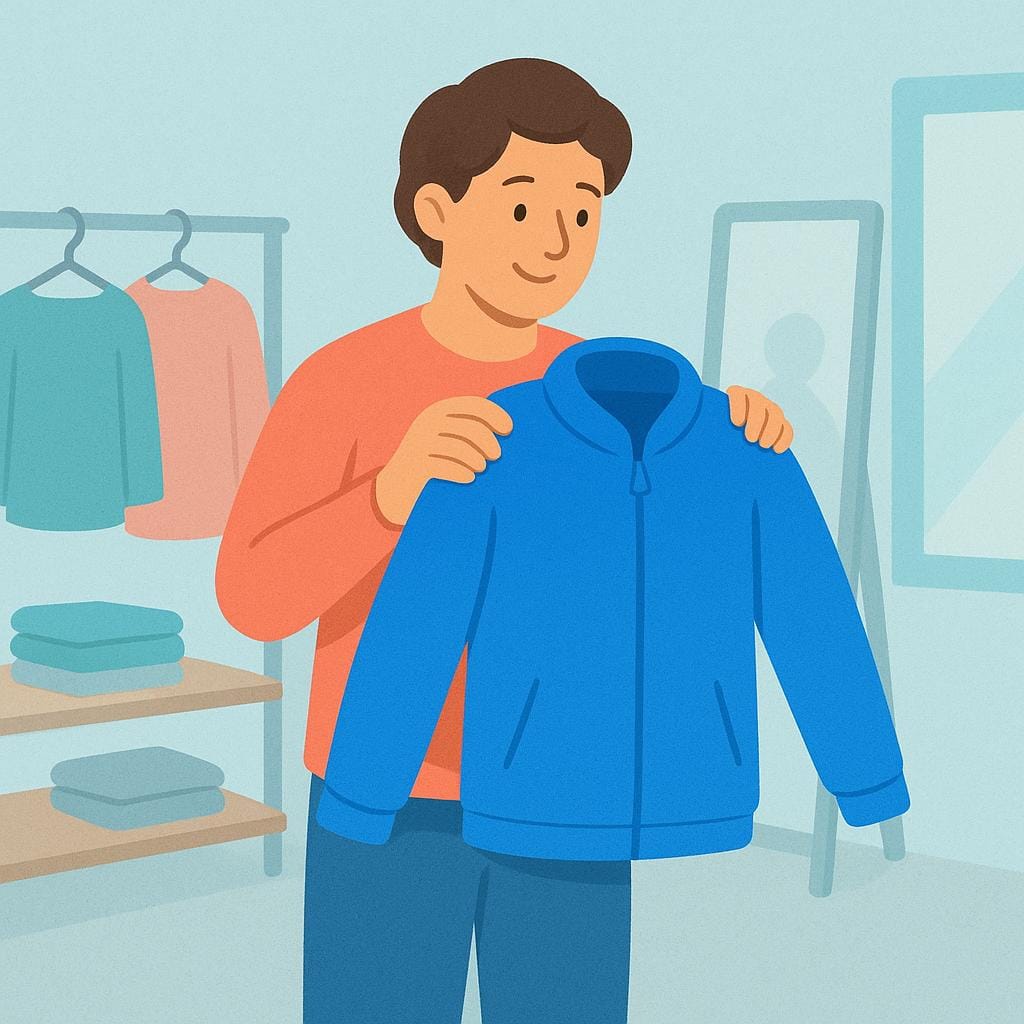
Le recomiendo que pruebe estos pantalones, están de oferta.
I recommend that you (formal) try on these pants, they are on sale.
Pruebe el coche antes de firmar los papeles.
Test out the car before signing the papers. (Formal Command)
Context is Key
When 'probar' is used with clothing, it always means 'to try on.' If you want someone to try on clothes politely, use 'pruebe' (Usted).
Base Verb vs. Conjugated Form
Learn Spanish with Inklingo
Interactive stories, personalized learning, and more.