How to Say "weirdo" in Spanish
The most common Spanish word for “weirdo” is “anormal” — use this when someone is behaving in a way that is noticeably strange or deviates from expected social norms, often implying a lack of common sense or intelligence.

Use this when someone is behaving in a way that is noticeably strange or deviates from expected social norms, often implying a lack of common sense or intelligence.
Learn more →
This term specifically refers to a female person who is considered eccentric or odd, often in her behavior or appearance, but not necessarily in a negative way.
Learn more →
Use this for someone perceived as strange, eccentric, or even a bit odd or peculiar, often in a way that sets them apart from others.
Learn more →ah-nor-mahla.noɾˈmal

Examples
¡No seas anormal! Mira por dónde vas.
Don't be an idiot! Watch where you're going.
¡No seas anormal! Pon atención a la carretera.
Don't be an idiot! Pay attention to the road.
Ese tipo es un anormal, siempre está gritando solo.
That guy is a weirdo; he's always shouting by himself.
Me trató de anormal delante de todos.
He called me an idiot in front of everyone.
Using it as a Person
When you use it as a noun to describe a person, you need an article like 'un' or 'el' (e.g., 'un anormal').
Too harsh?
Mistake: “Calling a friend 'anormal' for a small mistake.”
Correction: Use 'tonto' for light teasing. 'Anormal' is much stronger and can be considered a serious insult.
RRA-rahˈra.ɾa

Examples
Mi vecina es un poco rara, siempre habla sola por la calle.
My neighbor is a bit of an oddball; she always talks to herself in the street.
Mi hermana es la rara de la familia, siempre va vestida de negro.
My sister is the oddball of the family; she always wears black.
No hagas caso a esa chica, es una rara.
Don't pay attention to that girl, she's a weirdo.
Adjective to Noun
In Spanish, you can often use a descriptive word like 'rara' as a noun by placing the article 'la' or 'una' in front of it, meaning 'the strange one' or 'a strange person.'
bee-choˈbitʃo
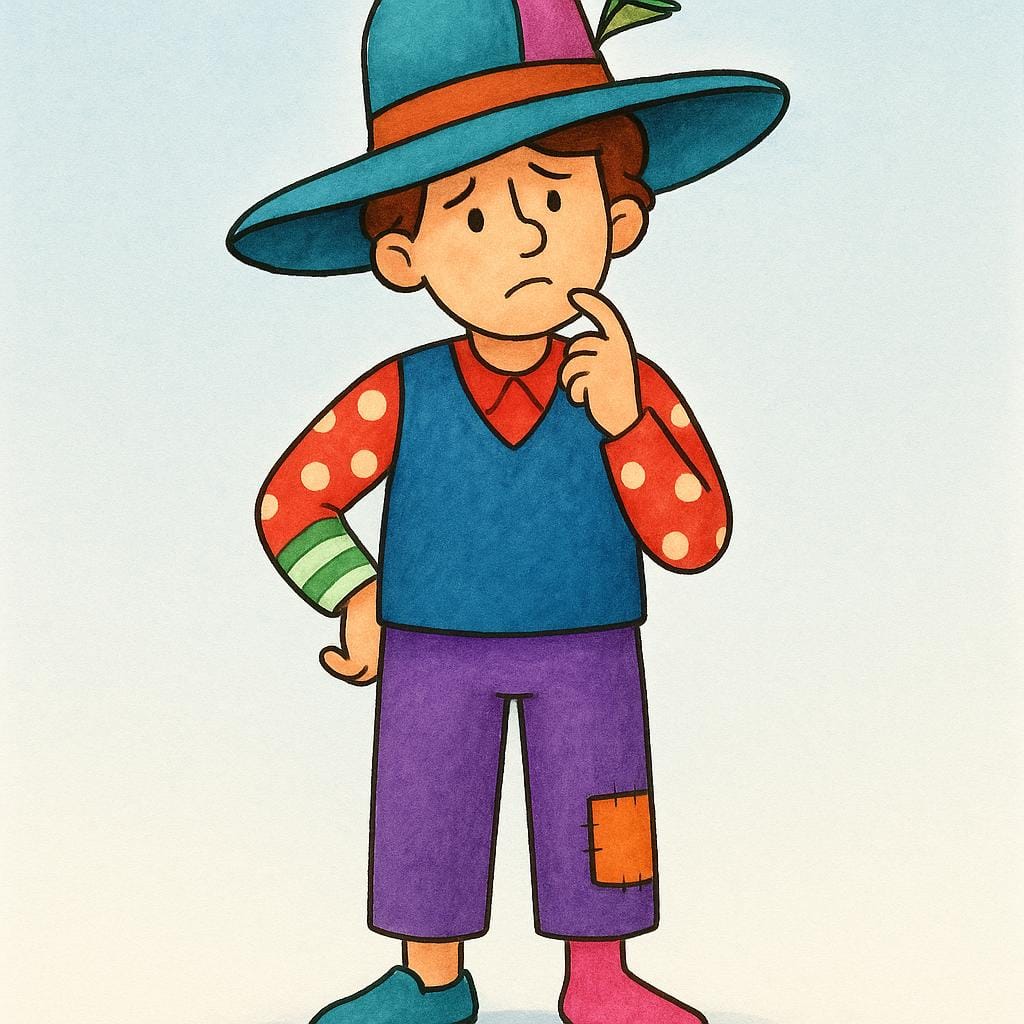
Examples
Ese bicho del artista vive en su propio mundo.
That weirdo artist lives in his own world.
Ese bicho del vecino siempre nos está espiando.
That weirdo neighbor is always spying on us.
Mi hijo es un bicho, nunca para de correr.
My son is a rascal; he never stops running.
Gender Flexibility
Though the word is masculine ('el bicho'), in some regions, 'la bicha' is used specifically to refer to a female person negatively.
Overuse in Formal Settings
Mistake: “Using 'bicho' to refer to a person in a professional environment.”
Correction: Use neutral terms like 'persona' or 'individuo.' This meaning is strictly informal.
Anormal vs. Rara/Bicho
Learners often confuse 'anormal' with 'rara' or 'bicho'. Remember 'anormal' implies behavior that is strange because it's illogical or lacks common sense, whereas 'rara' (female) and 'bicho' describe someone who is simply eccentric or odd.
Related Translations
Learn Spanish with Inklingo
Interactive stories, personalized learning, and more.