How to Say "woodland" in Spanish
The most common Spanish word for “woodland” is “bosque” — use 'bosque' for a general, large area covered with trees, often implying a natural forest where one might go for recreation.
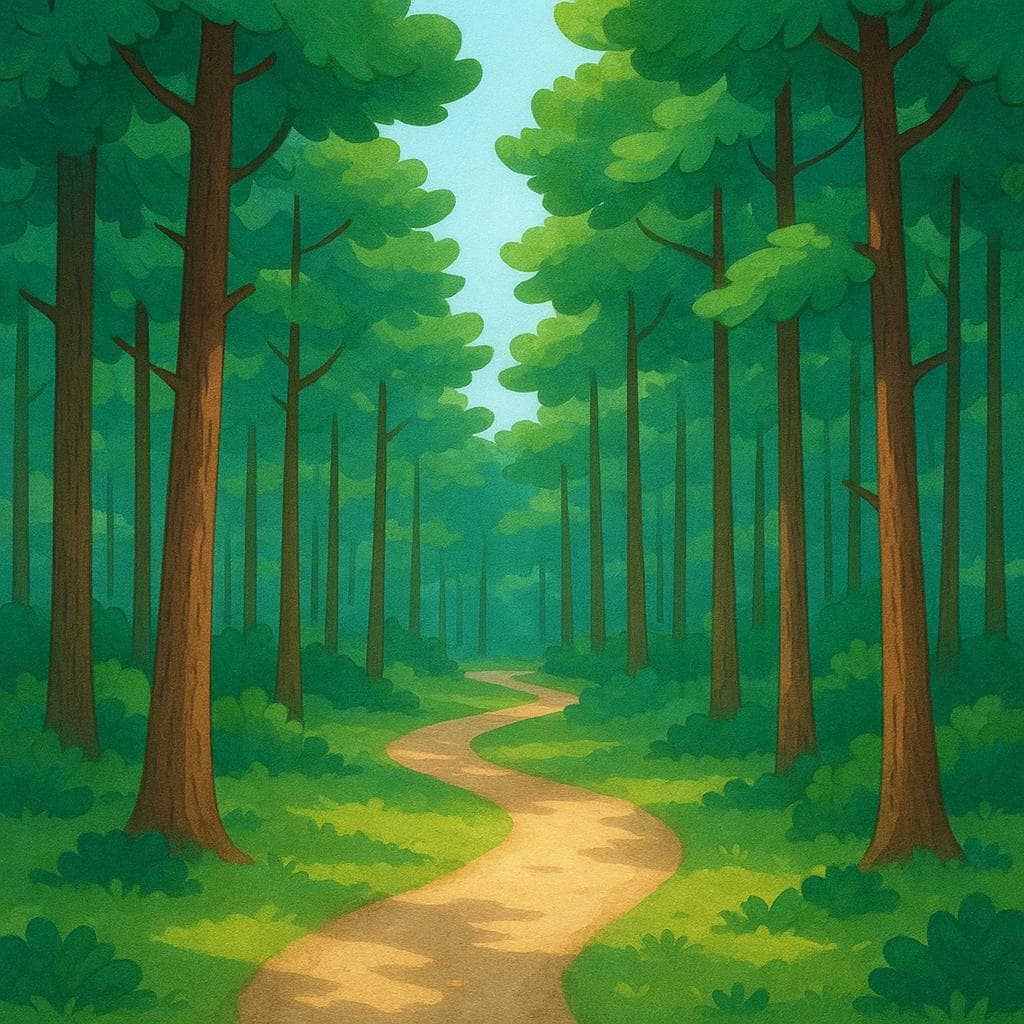
Use 'bosque' for a general, large area covered with trees, often implying a natural forest where one might go for recreation.
Learn more →
Use 'monte' to refer to an uncultivated, wilder area of trees or shrubs, often smaller or less formally defined than a 'bosque'.
Learn more →
Use 'forestal' specifically as an adjective to describe things related to forests, such as terrain, activities, or issues.
Learn more →BOHS-kehˈboske
Examples
Fuimos de excursión al bosque el fin de semana.
We went hiking in the forest this weekend.
El bosque estaba muy oscuro después del anochecer.
The woods were very dark after nightfall.
Los animales del bosque tienen mucho espacio para correr.
The forest animals have a lot of space to run.
Gender Rule
Since 'bosque' ends in -e, you need to memorize its gender: it is masculine. Always use the masculine article, 'el bosque' (the forest) or 'un bosque' (a forest).
Using the Wrong Article
Mistake: “La bosque.”
Correction: El bosque. Even though some -e ending words are feminine, this one is masculine.
món-teˈmonte
Examples
Nos perdimos un poco al entrar en el monte.
We got a little lost when we entered the woods.
Hay que tener cuidado con los incendios en el monte seco.
We must be careful with fires in the dry scrubland.
El perro se escapó y se metió en el monte.
The dog escaped and went into the brush.
Gender Reminder
Even though 'monte' ends in '-e', it is a masculine noun, so you use 'el monte' or 'un monte'.
Confusing 'Monte' and 'Bosque'
Mistake: “Using 'bosque' when referring to low, wild brush or scrubland.”
Correction: 'Monte' is often used for wilder, less managed land, whereas 'bosque' implies a taller, more established forest.
fo-res-TALfoɾesˈtal
Examples
Los bomberos están luchando contra un gran incendio forestal.
The firefighters are fighting a large forest fire.
La zona forestal de este país es impresionante.
The forest area of this country is impressive.
Estudio ingeniería forestal porque amo la naturaleza.
I am studying forestry engineering because I love nature.
A Gender-Neutral Adjective
This word is a 'chameleon'—it doesn't change its ending for masculine or feminine things. You say 'el parque forestal' and 'la zona forestal'.
Adjective vs. Noun
In English, we often use the word 'forest' as both a noun and a descriptor. In Spanish, use 'bosque' for the place (noun) and 'forestal' to describe things related to it (adjective).
Avoid 'Forestala'
Mistake: “La reserva forestala.”
Correction: La reserva forestal. Words ending in -al in Spanish almost always stay the same for both boys and girls.
Noun vs. Adjective Confusion
The most common mistake is using 'forestal' as a noun when you mean 'woodland' or 'forest'. Remember, 'forestal' is an adjective meaning 'relating to forests', while 'bosque' and 'monte' are nouns for the wooded area itself.
Related Translations
Learn Spanish with Inklingo
Interactive stories, personalized learning, and more.