Koniugacja aproximar Tryb warunkowy
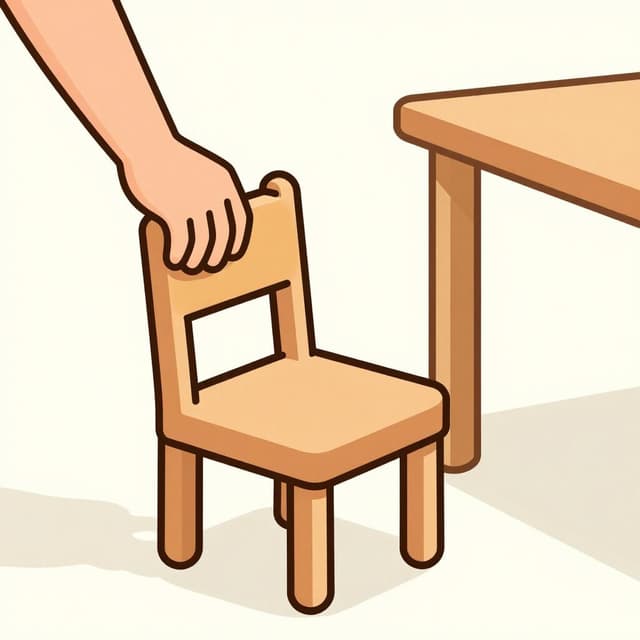
aproximar — to move closer
Hypothetical/polite 'would' with 'aproximar': aproximaría, aproximarías, aproximaría, aproximaríamos, aproximarían, aproximaríais.
Formy aproximar Tryb warunkowy
Kiedy używać Tryb warunkowy
Use the conditional tense for hypothetical situations ('would move closer'), polite requests, or future actions viewed from the past.
Uwagi dotyczące aproximar w czasie Tryb warunkowy
'Aproximar' is regular in the conditional tense. The stem is the full infinitive 'aproximar', and the standard conditional endings are added.
Przykładowe zdania
Yo aproximaría la mesa si tuviera más espacio.
I would move the table closer if I had more space.
yo
¿Te aproximarías a la ventana para ver mejor?
Would you move closer to the window to see better?
tú
Él aproximaría su silla para escuchar.
He would move his chair closer to listen.
él/ella/usted
Nos aproximaríamos si no tuviéramos miedo.
We would move closer if we weren't afraid.
nosotros
Ellos aproximarían el campamento si el clima fuera mejor.
They would move the camp closer if the weather were better.
ellos/ellas/ustedes
Częste błędy
Błąd: Using the conditional for a definite future action.
Poprawnie: For 'I will move closer', use the future 'Aproximaré'. For 'I would move closer' (hypothetical), use the conditional 'Aproximaría'.
Dlaczego: The conditional expresses uncertainty or hypothetical outcomes, not definite future plans.
Błąd: Confusing conditional endings with future endings.
Poprawnie: Conditional endings are -ía, -ías, -ía, -íamos, -íais, -ían. Future endings are -é, -ás, -á, -emos, -éis, -án.
Dlaczego: Both tenses use the infinitive stem, making the endings the key differentiator.
Opanuj hiszpańskie czasowniki w kontekście
Zapamiętywanie tabel to dopiero początek. Przeczytaj ponad 200 ilustrowanych i udźwiękowionych hiszpańskich historii, aby zobaczyć czasowniki takie jak 'aproximar' używane naturalnie — w czasach, których się uczysz.
Powiązane czasy
Czas teraźniejszy
yo: aproximo
Present tense for 'aproximar': aproximo, aproximas, aproxima, aproximamos, aproximan, aproximáis.
Czas przeszły prosty
yo: aproximé
Completed actions with 'aproximar': aproximé, aproximaste, aproximó, aproximamos, aproximaron, aproximasteis.
Czas przeszły niedokonany
yo: aproximaba
Ongoing/habitual past actions with 'aproximar': aproximaba, aproximabas, aproximábamos, aproximaban, aproximabais.
Czas przyszły
yo: aproximaré
Future actions with 'aproximar': aproximaré, aproximarás, aproximará, aproximaremos, aproximarán, aproximaréis.
Tryb Subj. teraźniejszy
yo: aproxime
Present subjunctive for 'aproximar': aproxime, aproximes, aproximemos, aproximen, aproximéis.
Tryb Subj. przeszły niedokonany
yo: aproximara
Past subjunctive for 'aproximar' (imperfect): aproximara, aproximaras, aproximáramos, aproximaran, aproximarais.
Tryb rozkazujący (twierdzący)
yo: aproxima
Commands for 'aproximar': ¡aproxima! (tú), ¡aproxime! (usted), ¡aproximemos! (nosotros), ¡aproximad! (vosotros), ¡aproximen! (ustedes).
Tryb rozkazujący (przeczący)
yo: no aproximes
Negative commands for 'aproximar' use the present subjunctive: no aproximemos, no aproximen, no aproximéis, no aproximes, no aproxime.