Koniugacja aproximar Tryb rozkazujący (przeczący)
aproximar — to move closer
Negative commands for 'aproximar' use the present subjunctive: no aproximemos, no aproximen, no aproximéis, no aproximes, no aproxime.
Formy aproximar Tryb rozkazujący (przeczący)
Kiedy używać Tryb rozkazujący (przeczący)
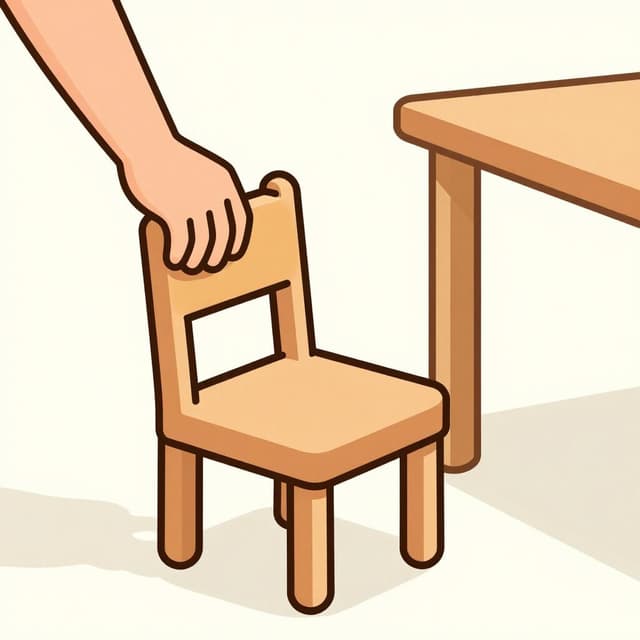
Use the negative imperative to tell someone *not* to do something with 'aproximar'. For instance, 'Don't move the chair closer'.
Uwagi dotyczące aproximar w czasie Tryb rozkazujący (przeczący)
All negative commands in Spanish are formed using the present subjunctive with 'no' preceding the verb. 'Aproximar' follows this rule with its regular present subjunctive forms.
Przykładowe zdania
No te aproximas tanto a la pantalla.
Don't move so close to the screen.
tú
Por favor, no aproxime su asiento todavía.
Please, don't move your seat closer yet.
usted
No aproximemos el fuego a la tela.
Let's not move the fire closer to the fabric.
nosotros
No aproximéis el coche a la pared.
Don't you all move the car closer to the wall.
vosotros
No aproximen la comida a la cara del bebé.
Don't you all move the food close to the baby's face.
ustedes
Częste błędy
Błąd: Using the infinitive or indicative instead of subjunctive.
Poprawnie: It must be 'no te aproximes', not 'no te aproximas' or 'no aproximar'.
Dlaczego: Negative commands always use the present subjunctive form for tú, usted, nosotros, and ustedes.
Błąd: Placing 'no' after the verb.
Poprawnie: 'No' always comes before the conjugated subjunctive verb in negative commands.
Dlaczego: Word order is crucial in Spanish, especially with negative commands.
Opanuj hiszpańskie czasowniki w kontekście
Zapamiętywanie tabel to dopiero początek. Przeczytaj ponad 200 ilustrowanych i udźwiękowionych hiszpańskich historii, aby zobaczyć czasowniki takie jak 'aproximar' używane naturalnie — w czasach, których się uczysz.
Powiązane czasy
Czas teraźniejszy
yo: aproximo
Present tense for 'aproximar': aproximo, aproximas, aproxima, aproximamos, aproximan, aproximáis.
Czas przeszły prosty
yo: aproximé
Completed actions with 'aproximar': aproximé, aproximaste, aproximó, aproximamos, aproximaron, aproximasteis.
Czas przeszły niedokonany
yo: aproximaba
Ongoing/habitual past actions with 'aproximar': aproximaba, aproximabas, aproximábamos, aproximaban, aproximabais.
Czas przyszły
yo: aproximaré
Future actions with 'aproximar': aproximaré, aproximarás, aproximará, aproximaremos, aproximarán, aproximaréis.
Tryb warunkowy
yo: aproximaría
Hypothetical/polite 'would' with 'aproximar': aproximaría, aproximarías, aproximaría, aproximaríamos, aproximarían, aproximaríais.
Tryb Subj. teraźniejszy
yo: aproxime
Present subjunctive for 'aproximar': aproxime, aproximes, aproximemos, aproximen, aproximéis.
Tryb Subj. przeszły niedokonany
yo: aproximara
Past subjunctive for 'aproximar' (imperfect): aproximara, aproximaras, aproximáramos, aproximaran, aproximarais.
Tryb rozkazujący (twierdzący)
yo: aproxima
Commands for 'aproximar': ¡aproxima! (tú), ¡aproxime! (usted), ¡aproximemos! (nosotros), ¡aproximad! (vosotros), ¡aproximen! (ustedes).