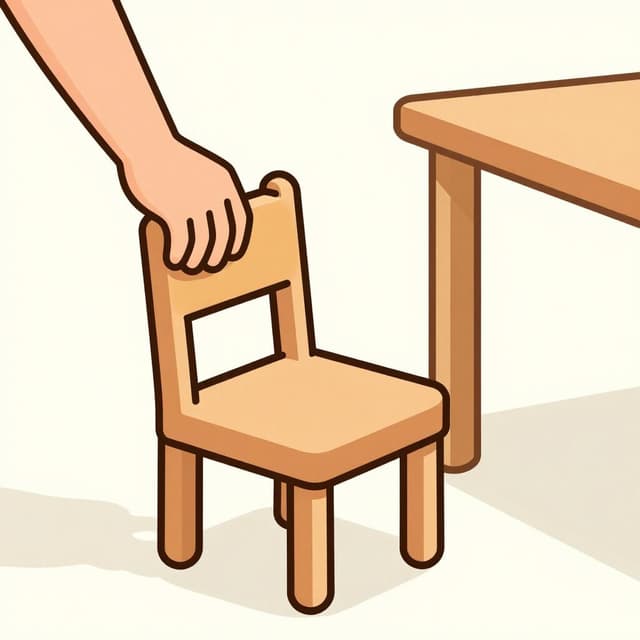
Koniugacja aproximar Czas przyszły
aproximar — to move closer
Future actions with 'aproximar': aproximaré, aproximarás, aproximará, aproximaremos, aproximarán, aproximaréis.
Formy aproximar Czas przyszły
Kiedy używać Czas przyszły
Use the future tense to talk about actions of moving closer that *will* happen. It can also express probability or conjecture about the present.
Uwagi dotyczące aproximar w czasie Czas przyszły
'Aproximar' is regular in the future tense. The stem is the full infinitive 'aproximar', and the standard future endings are added.
Przykładowe zdania
Mañana aproximaré más la cámara para la foto.
Tomorrow I will move the camera closer for the photo.
yo
¿Te aproximarás al escenario más tarde?
Will you move closer to the stage later?
tú
El coche aproximará a la acera.
The car will move closer to the sidewalk.
él/ella/usted
Nos aproximaremos a la verdad con más datos.
We will get closer to the truth with more data.
nosotros
Ellos aproximarán sus sillas para la conversación.
They will move their chairs closer for the conversation.
ellos/ellas/ustedes
Częste błędy
Błąd: Using the present tense instead of the future for a definite future action.
Poprawnie: For 'I will move the chair', use 'Aproximaré la silla', not 'Aproximo la silla'.
Dlaczego: While the present can sometimes imply future, the future tense is clearer for planned or certain future events.
Błąd: Confusing future and conditional forms.
Poprawnie: The future uses endings like -é, -ás, -á; the conditional uses -ía, -ías, -ía.
Dlaczego: Both use the infinitive stem, but the endings are distinct and express different meanings (will vs. would).
Opanuj hiszpańskie czasowniki w kontekście
Zapamiętywanie tabel to dopiero początek. Przeczytaj ponad 200 ilustrowanych i udźwiękowionych hiszpańskich historii, aby zobaczyć czasowniki takie jak 'aproximar' używane naturalnie — w czasach, których się uczysz.
Powiązane czasy
Czas teraźniejszy
yo: aproximo
Present tense for 'aproximar': aproximo, aproximas, aproxima, aproximamos, aproximan, aproximáis.
Czas przeszły prosty
yo: aproximé
Completed actions with 'aproximar': aproximé, aproximaste, aproximó, aproximamos, aproximaron, aproximasteis.
Czas przeszły niedokonany
yo: aproximaba
Ongoing/habitual past actions with 'aproximar': aproximaba, aproximabas, aproximábamos, aproximaban, aproximabais.
Tryb warunkowy
yo: aproximaría
Hypothetical/polite 'would' with 'aproximar': aproximaría, aproximarías, aproximaría, aproximaríamos, aproximarían, aproximaríais.
Tryb Subj. teraźniejszy
yo: aproxime
Present subjunctive for 'aproximar': aproxime, aproximes, aproximemos, aproximen, aproximéis.
Tryb Subj. przeszły niedokonany
yo: aproximara
Past subjunctive for 'aproximar' (imperfect): aproximara, aproximaras, aproximáramos, aproximaran, aproximarais.
Tryb rozkazujący (twierdzący)
yo: aproxima
Commands for 'aproximar': ¡aproxima! (tú), ¡aproxime! (usted), ¡aproximemos! (nosotros), ¡aproximad! (vosotros), ¡aproximen! (ustedes).
Tryb rozkazujący (przeczący)
yo: no aproximes
Negative commands for 'aproximar' use the present subjunctive: no aproximemos, no aproximen, no aproximéis, no aproximes, no aproxime.