Koniugacja aproximar Czas przeszły prosty
aproximar — to move closer
Completed actions with 'aproximar': aproximé, aproximaste, aproximó, aproximamos, aproximaron, aproximasteis.
Formy aproximar Czas przeszły prosty
Kiedy używać Czas przeszły prosty
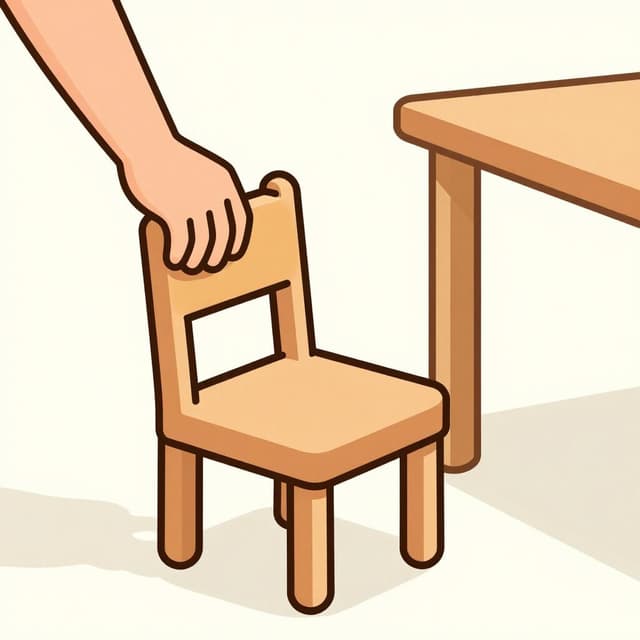
Use the preterite for completed actions of moving closer in the past. For example, 'I moved the chair closer' or 'They approached the city'.
Uwagi dotyczące aproximar w czasie Czas przeszły prosty
'Aproximar' is a regular -ar verb in the preterite. All conjugations follow the standard endings: -é, -aste, -ó, -amos, -asteis, -aron.
Przykładowe zdania
Aproximé la silla para estar más cerca.
I moved the chair closer to be nearer.
yo
¿Aproximaste el coche a la entrada?
Did you move the car closer to the entrance?
tú
El equipo aproximó el balón a la portería.
The team moved the ball closer to the goal.
él/ella/usted
Aproximamos nuestras ideas durante la reunión.
We brought our ideas closer together during the meeting.
nosotros
Los manifestantes aproximaron la marcha al palacio.
The protestors moved the march closer to the palace.
ellos/ellas/ustedes
Częste błędy
Błąd: Using the imperfect instead of the preterite for a single completed action.
Poprawnie: For 'I moved the chair closer *yesterday*', use 'Aproximé'. For 'I *used to* move the chair closer often', use 'Aproximaba'.
Dlaczego: The preterite is for specific, finished past events, while the imperfect describes ongoing or habitual past actions.
Błąd: Forgetting the accent on the yo form.
Poprawnie: The 'yo' form is 'aproximé', with an accent on the final 'é'.
Dlaczego: The accent is crucial to distinguish the 'yo' preterite from other forms and indicates the stressed syllable.
Opanuj hiszpańskie czasowniki w kontekście
Zapamiętywanie tabel to dopiero początek. Przeczytaj ponad 200 ilustrowanych i udźwiękowionych hiszpańskich historii, aby zobaczyć czasowniki takie jak 'aproximar' używane naturalnie — w czasach, których się uczysz.
Powiązane czasy
Czas teraźniejszy
yo: aproximo
Present tense for 'aproximar': aproximo, aproximas, aproxima, aproximamos, aproximan, aproximáis.
Czas przeszły niedokonany
yo: aproximaba
Ongoing/habitual past actions with 'aproximar': aproximaba, aproximabas, aproximábamos, aproximaban, aproximabais.
Czas przyszły
yo: aproximaré
Future actions with 'aproximar': aproximaré, aproximarás, aproximará, aproximaremos, aproximarán, aproximaréis.
Tryb warunkowy
yo: aproximaría
Hypothetical/polite 'would' with 'aproximar': aproximaría, aproximarías, aproximaría, aproximaríamos, aproximarían, aproximaríais.
Tryb Subj. teraźniejszy
yo: aproxime
Present subjunctive for 'aproximar': aproxime, aproximes, aproximemos, aproximen, aproximéis.
Tryb Subj. przeszły niedokonany
yo: aproximara
Past subjunctive for 'aproximar' (imperfect): aproximara, aproximaras, aproximáramos, aproximaran, aproximarais.
Tryb rozkazujący (twierdzący)
yo: aproxima
Commands for 'aproximar': ¡aproxima! (tú), ¡aproxime! (usted), ¡aproximemos! (nosotros), ¡aproximad! (vosotros), ¡aproximen! (ustedes).
Tryb rozkazujący (przeczący)
yo: no aproximes
Negative commands for 'aproximar' use the present subjunctive: no aproximemos, no aproximen, no aproximéis, no aproximes, no aproxime.