Koniugacja aproximar Czas przeszły niedokonany
aproximar — to move closer
Ongoing/habitual past actions with 'aproximar': aproximaba, aproximabas, aproximábamos, aproximaban, aproximabais.
Formy aproximar Czas przeszły niedokonany
Kiedy używać Czas przeszły niedokonany
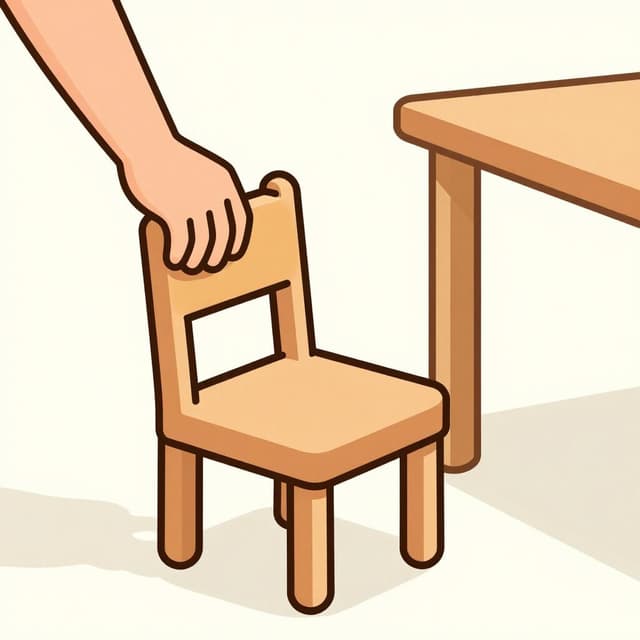
Use the imperfect tense for ongoing actions in the past, habitual actions, or background descriptions involving moving closer. For example, 'He was approaching the house' or 'She always moved her chair closer'.
Uwagi dotyczące aproximar w czasie Czas przeszły niedokonany
'Aproximar' is a regular -ar verb in the imperfect indicative. All conjugations follow the standard endings: -aba, -abas, -aba, -ábamos, -abais, -aban.
Przykładowe zdania
Yo aproximaba la cámara al objeto para enfocar.
I was moving the camera closer to the object to focus.
yo
Tú te aproximabas al fuego porque tenías frío.
You were moving closer to the fire because you were cold.
tú
El tren aproximaba a la estación.
The train was approaching the station.
él/ella/usted
Nosotros aproximábamos las sillas a la mesa cada noche.
We used to move the chairs closer to the table every night.
nosotros
Ellos aproximaban sus tiendas al mercado.
They were moving their tents closer to the market.
ellos/ellas/ustedes
Częste błędy
Błąd: Using the preterite instead of the imperfect for ongoing or habitual past actions.
Poprawnie: For 'He was approaching the city' (ongoing action), use 'El aproximaba'. For 'He approached the city yesterday' (completed action), use 'Él aproximó'.
Dlaczego: The imperfect describes the scene or background, while the preterite marks a specific event.
Błąd: Confusing the 'yo' and 'él/ella/usted' forms.
Poprawnie: Both are 'aproximaba', but context clarifies who is performing the action.
Dlaczego: This is a common feature of the imperfect tense for -ar verbs.
Opanuj hiszpańskie czasowniki w kontekście
Zapamiętywanie tabel to dopiero początek. Przeczytaj ponad 200 ilustrowanych i udźwiękowionych hiszpańskich historii, aby zobaczyć czasowniki takie jak 'aproximar' używane naturalnie — w czasach, których się uczysz.
Powiązane czasy
Czas teraźniejszy
yo: aproximo
Present tense for 'aproximar': aproximo, aproximas, aproxima, aproximamos, aproximan, aproximáis.
Czas przeszły prosty
yo: aproximé
Completed actions with 'aproximar': aproximé, aproximaste, aproximó, aproximamos, aproximaron, aproximasteis.
Czas przyszły
yo: aproximaré
Future actions with 'aproximar': aproximaré, aproximarás, aproximará, aproximaremos, aproximarán, aproximaréis.
Tryb warunkowy
yo: aproximaría
Hypothetical/polite 'would' with 'aproximar': aproximaría, aproximarías, aproximaría, aproximaríamos, aproximarían, aproximaríais.
Tryb Subj. teraźniejszy
yo: aproxime
Present subjunctive for 'aproximar': aproxime, aproximes, aproximemos, aproximen, aproximéis.
Tryb Subj. przeszły niedokonany
yo: aproximara
Past subjunctive for 'aproximar' (imperfect): aproximara, aproximaras, aproximáramos, aproximaran, aproximarais.
Tryb rozkazujący (twierdzący)
yo: aproxima
Commands for 'aproximar': ¡aproxima! (tú), ¡aproxime! (usted), ¡aproximemos! (nosotros), ¡aproximad! (vosotros), ¡aproximen! (ustedes).
Tryb rozkazujący (przeczący)
yo: no aproximes
Negative commands for 'aproximar' use the present subjunctive: no aproximemos, no aproximen, no aproximéis, no aproximes, no aproxime.