Koniugacja aproximar Tryb rozkazujący (twierdzący)
aproximar — to move closer
Commands for 'aproximar': ¡aproxima! (tú), ¡aproxime! (usted), ¡aproximemos! (nosotros), ¡aproximad! (vosotros), ¡aproximen! (ustedes).
Formy aproximar Tryb rozkazujący (twierdzący)
Kiedy używać Tryb rozkazujący (twierdzący)
Use the imperative to give direct commands or instructions with 'aproximar'. For example, telling someone to move closer to an object or a point.
Uwagi dotyczące aproximar w czasie Tryb rozkazujący (twierdzący)
The affirmative imperative of 'aproximar' is regular for all persons.
Przykładowe zdania
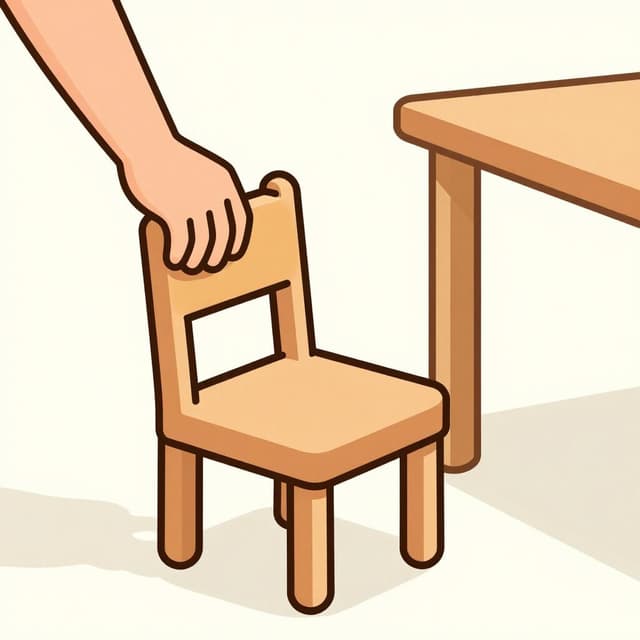
Tú, ¡aproxima la silla a la mesa!
You, move the chair closer to the table!
tú
Señor, aproxime su vehículo un poco más.
Sir, move your vehicle a little closer.
usted
¡Aproximemos el mapa para ver los detalles!
Let's move the map closer to see the details!
nosotros
Vosotros, ¡aproximad el zoom!
You all, move the zoom closer!
vosotros
Ustedes, aproximen las sillas al círculo.
You all, move the chairs closer to the circle.
ustedes
Częste błędy
Błąd: Using the subjunctive form instead of the affirmative imperative for tú.
Poprawnie: The correct tú command is '¡aproxima!', not '¡aproximas!' or '¡aproximas!'
Dlaczego: Learners sometimes confuse imperative forms with present indicative or subjunctive, but direct commands have unique forms.
Błąd: Forgetting the 'd' in the vosotros affirmative imperative.
Poprawnie: It should be 'aproximad', not 'aproxima'.
Dlaczego: The final 'd' is characteristic of the vosotros affirmative imperative and is often dropped by learners.
Opanuj hiszpańskie czasowniki w kontekście
Zapamiętywanie tabel to dopiero początek. Przeczytaj ponad 200 ilustrowanych i udźwiękowionych hiszpańskich historii, aby zobaczyć czasowniki takie jak 'aproximar' używane naturalnie — w czasach, których się uczysz.
Powiązane czasy
Czas teraźniejszy
yo: aproximo
Present tense for 'aproximar': aproximo, aproximas, aproxima, aproximamos, aproximan, aproximáis.
Czas przeszły prosty
yo: aproximé
Completed actions with 'aproximar': aproximé, aproximaste, aproximó, aproximamos, aproximaron, aproximasteis.
Czas przeszły niedokonany
yo: aproximaba
Ongoing/habitual past actions with 'aproximar': aproximaba, aproximabas, aproximábamos, aproximaban, aproximabais.
Czas przyszły
yo: aproximaré
Future actions with 'aproximar': aproximaré, aproximarás, aproximará, aproximaremos, aproximarán, aproximaréis.
Tryb warunkowy
yo: aproximaría
Hypothetical/polite 'would' with 'aproximar': aproximaría, aproximarías, aproximaría, aproximaríamos, aproximarían, aproximaríais.
Tryb Subj. teraźniejszy
yo: aproxime
Present subjunctive for 'aproximar': aproxime, aproximes, aproximemos, aproximen, aproximéis.
Tryb Subj. przeszły niedokonany
yo: aproximara
Past subjunctive for 'aproximar' (imperfect): aproximara, aproximaras, aproximáramos, aproximaran, aproximarais.
Tryb rozkazujący (przeczący)
yo: no aproximes
Negative commands for 'aproximar' use the present subjunctive: no aproximemos, no aproximen, no aproximéis, no aproximes, no aproxime.