
Diferente vs Distinto
They are 99% interchangeable. Use 'diferente' as your default. Use 'distinto' to add a little emphasis on 'separate' or 'unique'.
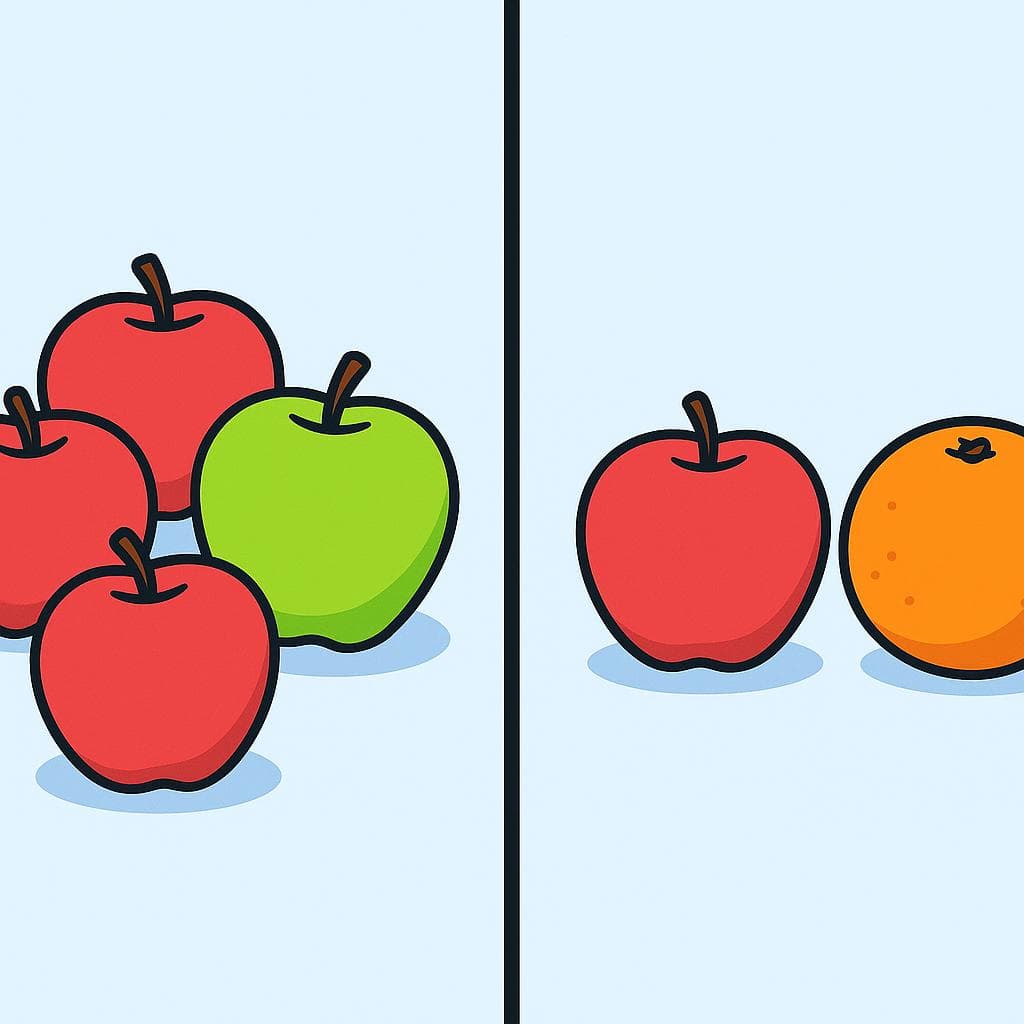
diferente
Different, unlike, not the same. This is the most common, all-purpose word for 'different'.
dee-feh-REN-tehdistinto
Different, distinct, separate. Used to emphasize that things are clearly separate or unique from each other. Slightly more formal.
dees-TEEN-tohQuick Rule
They are 99% interchangeable. Use 'diferente' as your default. Use 'distinto' to add a little emphasis on 'separate' or 'unique'.
Think: Diferente = Default. Distinto = Distinction.
- In everyday conversation, 'diferente' is far more common. When in doubt, it's always the safest and most natural choice.
Comparison Table
| Context | diferente | distinto | Why? |
|---|---|---|---|
| Everyday Conversation | Mi coche es diferente. | Mi coche es distinto. | Both are correct. 'Diferente' is the much more common and natural choice for a simple statement like this. |
| Meaning 'Various' | Hablamos con diferentes personas. | Hablamos con distintas personas. | Completely interchangeable. 'Distintas' can sound slightly more formal or literary, like something you'd read in a report. |
| Emphasizing Separation | El primer acto y el segundo son muy diferentes. | El primer acto y el segundo son muy distintos. | Both work, but 'distintos' does a slightly better job of emphasizing that the two acts are separate, non-overlapping entities. |
When to Use "diferente / distinto"
diferente
Different, unlike, not the same. This is the most common, all-purpose word for 'different'.
dee-feh-REN-teh
General comparison
Mi opinión es diferente.
My opinion is different.
Variety ('various')
Tenemos diferentes opciones para la cena.
We have different options for dinner.
Describing something unusual
Es un libro muy diferente.
It's a very different book.
distinto
Different, distinct, separate. Used to emphasize that things are clearly separate or unique from each other. Slightly more formal.
dees-TEEN-toh
Emphasizing separateness
Son dos problemas completamente distintos.
They are two completely distinct problems.
Variety (slightly more formal)
El museo presenta obras de distintos artistas.
The museum presents works from various artists.
Highlighting clarity or perception
Se oían dos acentos distintos.
Two distinct accents could be heard.
Contrast Examples
With "diferente":
Tu idea es diferente a la mía.
Your idea is different from mine.
With "distinto":
Tu idea es distinta a la mía.
Your idea is distinct from mine.
The Difference: The meaning is almost identical. 'Diferente' is the standard, neutral way to say it. Using 'distinto' adds a subtle emphasis on the uniqueness or separateness of the ideas.
With "diferente":
Escuché dos ruidos diferentes.
I heard two different noises.
With "distinto":
Escuché dos ruidos distintos.
I heard two distinct noises.
The Difference: Here, 'distintos' is slightly more precise. It implies that the noises were clearly separate and easy to tell apart. 'Diferentes' is still correct but doesn't carry that same sense of clarity.
Common Mistakes
Me siento muy distinto hoy.
Me siento muy diferente hoy.
While technically correct, using 'distinto' in casual, everyday chat can sound a bit stiff or overly dramatic. 'Diferente' is the more natural choice for describing how you feel.
Pensar que tienen significados muy separados.
Entender que casi siempre son sinónimos.
The biggest mistake is overthinking it! Don't stress about finding a huge difference in meaning. In 99% of cases, you can use 'diferente' and you will be perfectly understood.
Quick Practice
Quick Quiz: Diferente vs Distinto
Question 1 of 2
For everyday, casual conversation, which word is your safest bet for 'different'?
Related Grammar
Want to understand the grammar behind this pair? Explore these lessons for a deep dive:
Key Words



Tags
Build the instinct, not just the rule
Rules help you get it right; context makes it automatic. Read 200+ illustrated and narrated Spanish stories to see confusing pairs chosen correctly — over and over — until you stop thinking about it.
Frequently Asked Questions
Are there any situations where only one is correct?
Not really. It's almost always a matter of style or subtle emphasis. You will almost never be 'wrong' for choosing one over the other. The main difference is that 'diferente' is far more common in spoken Spanish, so using 'distinto' too often can sound a bit unnatural.
Do they both use the same prepositions, like 'diferente a' or 'diferente de'?
Yes, they follow the same pattern. Both 'diferente' and 'distinto' can be followed by 'a' or 'de' when making a comparison. For example, 'Tu coche es diferente al mío' and 'Tu coche es distinto del mío' are both correct. In modern Spanish, 'a' is becoming more common with both words.