clavar Future Conjugation
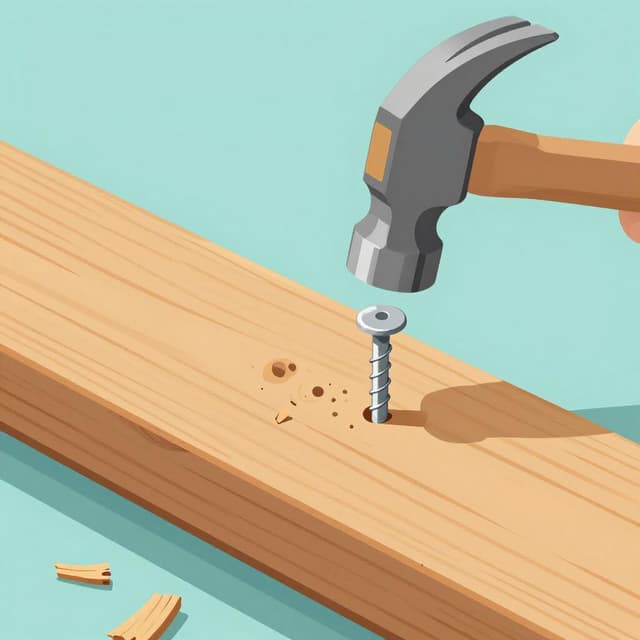
clavar — to nail
Use 'clavaré' (yo), 'clavarás' (tú), 'clavará' (él/ella/usted), 'claremos' (nosotros), 'clararéis' (vosotros), 'clararán' (ellos/ellas/ustedes) for actions that will happen in the future with clavar.
clavar Future Forms
When to Use the Future
The future tense is used to talk about things that will happen later. For 'clavar', you might say 'I will nail the shelf tomorrow' or 'They will nail the final board in place'. It can also express probability.
Notes on clavar in the Future
Clavar is regular in the future tense. The future stem is the infinitive 'clavar-', and you add the standard future endings.
Example Sentences
Mañana clavaré la puerta.
Tomorrow I will nail the door shut.
yo
¿Tú clavarás el último clavo?
Will you nail the last nail?
tú
Él clavará la madera en la viga.
He will nail the wood to the beam.
él/ella/usted
Ellos clavarán las tablas del suelo.
They will nail the floorboards.
ellos/ellas/ustedes
Common Mistakes
Mistake: Using the present tense instead of the future for a future action.
Correct: For a definite future action, use the future tense: 'Clavaré' (I will nail) not 'Clavo' (I nail).
Why: The present tense can sometimes imply the future, but the future tense is more precise for planned or certain future events.
Mistake: Forgetting the accent on the future endings like 'clavará' or 'clavarás'.
Correct: All future tense endings require an accent: 'clavaré', 'clavarás', 'clavará', etc.
Why: The accent marks the stressed syllable and is required for future tense forms.
Master Spanish verbs in context
Memorizing tables only gets you so far. Read 200+ illustrated and narrated Spanish stories to see verbs like 'clavar' used naturally — in the tenses you're learning.
Related Tenses
Present
yo: clavo
Use 'clavo' (yo), 'clavas' (tú), 'clava' (él/ella/usted), 'clavamos' (nosotros), 'claváis' (vosotros), 'clavan' (ellos/ellas/ustedes) for habitual actions, things happening now, or general truths with clavar.
Preterite
yo: clavé
Use 'clavé' (yo), 'clavaste' (tú), 'clavó' (él/ella/usted), 'clavamos' (nosotros), 'clavasteis' (vosotros), 'clavaron' (ellos/ellas/ustedes) for completed actions in the past with clavar.
Imperfect
yo: clavaba
Use 'clavaba' (yo/él/ella/usted), 'clavabas' (tú), 'clavábamos' (nosotros), 'clavabais' (vosotros), 'clavaban' (ellos/ellas/ustedes) for ongoing or habitual past actions with clavar.
Conditional
yo: clavaría
Use 'clavaría' (yo/él/ella/usted), 'clavarías' (tú), 'clavaríamos' (nosotros), 'clavaríais' (vosotros), 'clavarían' (ellos/ellas/ustedes) for hypothetical situations ('would') or polite requests with clavar.
Present Subjunctive
yo: clave
Use 'clava' (yo/él/ella/usted), 'clavas' (tú), 'clavemos' (nosotros), 'claven' (ellos/ellas/ustedes), 'clavéis' (vosotros) after expressions of doubt, desire, emotion, or uncertainty with clavar.
Imperfect Subjunctive
yo: clavara
Use 'clavara' or 'clavase' (yo/él/ella/usted), 'clavaras' or 'clavases' (tú), 'claváramos' or 'clavásemos' (nosotros), 'clavaran' or 'clavasen' (ellos/ellas/ustedes), 'clavarais' or 'clavaseis' (vosotros) for past hypothetical situations or wishes with clavar.
Affirmative Imperative
yo: clava
Use 'clava' (tú), 'clave' (usted), 'clavemos' (nosotros), 'claven' (ustedes), 'clavad' (vosotros) for direct commands with clavar.
Negative Imperative
yo: no claves
Use 'no claves' (tú), 'no clave' (usted), 'no clavemos' (nosotros), 'no claven' (ustedes), 'no clavéis' (vosotros) for negative commands with clavar.