clavar Present Conjugation
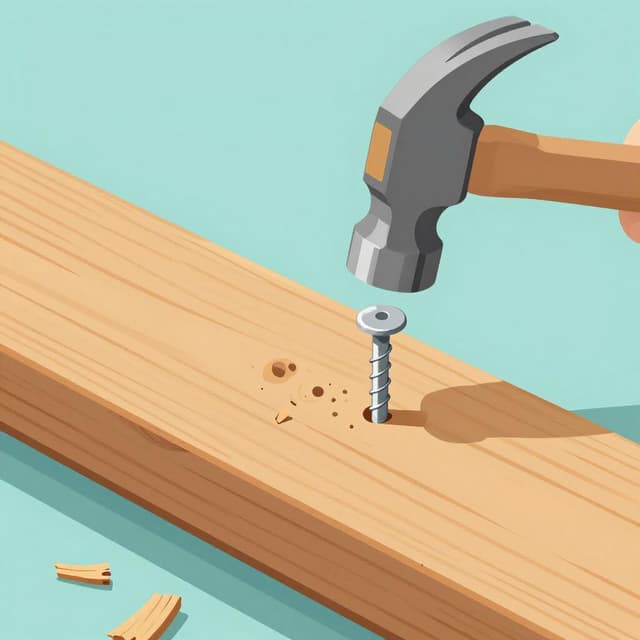
clavar — to nail
Use 'clavo' (yo), 'clavas' (tú), 'clava' (él/ella/usted), 'clavamos' (nosotros), 'claváis' (vosotros), 'clavan' (ellos/ellas/ustedes) for habitual actions, things happening now, or general truths with clavar.
clavar Present Forms
When to Use the Present
The present tense is your go-to for actions happening right now, things you do regularly, or general facts. For 'clavar', it could be 'I am nailing this board' or 'He nails a lot of houses in his job'.
Notes on clavar in the Present
Clavar is regular in the present indicative. All conjugations follow the standard pattern for -ar verbs.
Example Sentences
Yo clavo los clavos con un martillo.
I hammer the nails with a hammer.
yo
¿Tú clavas los clavos en esa madera?
Are you nailing the nails into that wood?
tú
Ella clava retratos en todas las habitaciones.
She hangs pictures in all the rooms.
él/ella/usted
Nosotros clavamos las tablas del suelo.
We are nailing the floorboards.
nosotros
Common Mistakes
Mistake: Using the present tense for an action that just finished.
Correct: For a completed action, use the preterite: 'Clavé' (I nailed) instead of 'Clavo' (I nail).
Why: The preterite is for single, completed past events.
Mistake: Forgetting the vosotros form ending '-áis'.
Correct: The vosotros form is 'claváis', not 'clavas' or 'clavan'.
Why: Spanish verbs have distinct endings for each pronoun.
Master Spanish verbs in context
Memorizing tables only gets you so far. Read 200+ illustrated and narrated Spanish stories to see verbs like 'clavar' used naturally — in the tenses you're learning.
Related Tenses
Preterite
yo: clavé
Use 'clavé' (yo), 'clavaste' (tú), 'clavó' (él/ella/usted), 'clavamos' (nosotros), 'clavasteis' (vosotros), 'clavaron' (ellos/ellas/ustedes) for completed actions in the past with clavar.
Imperfect
yo: clavaba
Use 'clavaba' (yo/él/ella/usted), 'clavabas' (tú), 'clavábamos' (nosotros), 'clavabais' (vosotros), 'clavaban' (ellos/ellas/ustedes) for ongoing or habitual past actions with clavar.
Future
yo: clavaré
Use 'clavaré' (yo), 'clavarás' (tú), 'clavará' (él/ella/usted), 'claremos' (nosotros), 'clararéis' (vosotros), 'clararán' (ellos/ellas/ustedes) for actions that will happen in the future with clavar.
Conditional
yo: clavaría
Use 'clavaría' (yo/él/ella/usted), 'clavarías' (tú), 'clavaríamos' (nosotros), 'clavaríais' (vosotros), 'clavarían' (ellos/ellas/ustedes) for hypothetical situations ('would') or polite requests with clavar.
Present Subjunctive
yo: clave
Use 'clava' (yo/él/ella/usted), 'clavas' (tú), 'clavemos' (nosotros), 'claven' (ellos/ellas/ustedes), 'clavéis' (vosotros) after expressions of doubt, desire, emotion, or uncertainty with clavar.
Imperfect Subjunctive
yo: clavara
Use 'clavara' or 'clavase' (yo/él/ella/usted), 'clavaras' or 'clavases' (tú), 'claváramos' or 'clavásemos' (nosotros), 'clavaran' or 'clavasen' (ellos/ellas/ustedes), 'clavarais' or 'clavaseis' (vosotros) for past hypothetical situations or wishes with clavar.
Affirmative Imperative
yo: clava
Use 'clava' (tú), 'clave' (usted), 'clavemos' (nosotros), 'claven' (ustedes), 'clavad' (vosotros) for direct commands with clavar.
Negative Imperative
yo: no claves
Use 'no claves' (tú), 'no clave' (usted), 'no clavemos' (nosotros), 'no claven' (ustedes), 'no clavéis' (vosotros) for negative commands with clavar.