clavar Imperfect Subjunctive Conjugation
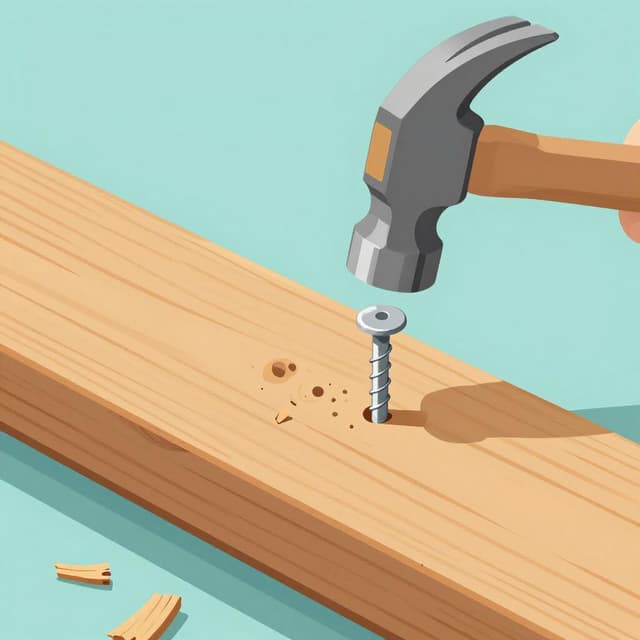
clavar — to nail
Use 'clavara' or 'clavase' (yo/él/ella/usted), 'clavaras' or 'clavases' (tú), 'claváramos' or 'clavásemos' (nosotros), 'clavaran' or 'clavasen' (ellos/ellas/ustedes), 'clavarais' or 'clavaseis' (vosotros) for past hypothetical situations or wishes with clavar.
clavar Imperfect Subjunctive Forms
When to Use the Imperfect Subjunctive
The imperfect subjunctive is used for hypothetical situations in the past, wishes, or polite requests that didn't necessarily happen. For 'clavar', you might say 'If I had nailed it differently...' or 'I wish you would nail it more carefully'.
Notes on clavar in the Imperfect Subjunctive
Clavar is regular in the imperfect subjunctive. You can use either the -ra or -se ending (e.g., clavara/clavase); the -ra form is more common.
Example Sentences
Si yo clavara mejor, la estantería no se caería.
If I nailed better, the shelf wouldn't fall.
yo
Me gustaría que tú clavaras los cuadros.
I would like you to nail the pictures.
tú
Él actuó como si no hubiera clavado nada.
He acted as if he hadn't nailed anything.
él/ella/usted
Ojalá ellos clavaran los clavos rectos.
I wish they would nail the nails straight.
ellos/ellas/ustedes
Common Mistakes
Mistake: Using the preterite instead of the imperfect subjunctive in 'if' clauses.
Correct: For past hypothetical conditions, use the imperfect subjunctive: 'Si clavara...' not 'Si clavó...'.
Why: The subjunctive is required for unreal or hypothetical conditions.
Mistake: Confusing the -ra and -se forms, or using the wrong one.
Correct: Both 'clavara' and 'clavase' are correct imperfect subjunctive forms for 'yo', 'él', 'ella', 'usted'. Use the one you are comfortable with, but be consistent.
Why: While both are technically correct, consistency and regional preference matter.
Master Spanish verbs in context
Memorizing tables only gets you so far. Read 200+ illustrated and narrated Spanish stories to see verbs like 'clavar' used naturally — in the tenses you're learning.
Related Tenses
Present
yo: clavo
Use 'clavo' (yo), 'clavas' (tú), 'clava' (él/ella/usted), 'clavamos' (nosotros), 'claváis' (vosotros), 'clavan' (ellos/ellas/ustedes) for habitual actions, things happening now, or general truths with clavar.
Preterite
yo: clavé
Use 'clavé' (yo), 'clavaste' (tú), 'clavó' (él/ella/usted), 'clavamos' (nosotros), 'clavasteis' (vosotros), 'clavaron' (ellos/ellas/ustedes) for completed actions in the past with clavar.
Imperfect
yo: clavaba
Use 'clavaba' (yo/él/ella/usted), 'clavabas' (tú), 'clavábamos' (nosotros), 'clavabais' (vosotros), 'clavaban' (ellos/ellas/ustedes) for ongoing or habitual past actions with clavar.
Future
yo: clavaré
Use 'clavaré' (yo), 'clavarás' (tú), 'clavará' (él/ella/usted), 'claremos' (nosotros), 'clararéis' (vosotros), 'clararán' (ellos/ellas/ustedes) for actions that will happen in the future with clavar.
Conditional
yo: clavaría
Use 'clavaría' (yo/él/ella/usted), 'clavarías' (tú), 'clavaríamos' (nosotros), 'clavaríais' (vosotros), 'clavarían' (ellos/ellas/ustedes) for hypothetical situations ('would') or polite requests with clavar.
Present Subjunctive
yo: clave
Use 'clava' (yo/él/ella/usted), 'clavas' (tú), 'clavemos' (nosotros), 'claven' (ellos/ellas/ustedes), 'clavéis' (vosotros) after expressions of doubt, desire, emotion, or uncertainty with clavar.
Affirmative Imperative
yo: clava
Use 'clava' (tú), 'clave' (usted), 'clavemos' (nosotros), 'claven' (ustedes), 'clavad' (vosotros) for direct commands with clavar.
Negative Imperative
yo: no claves
Use 'no claves' (tú), 'no clave' (usted), 'no clavemos' (nosotros), 'no claven' (ustedes), 'no clavéis' (vosotros) for negative commands with clavar.