clavar Present Subjunctive Conjugation
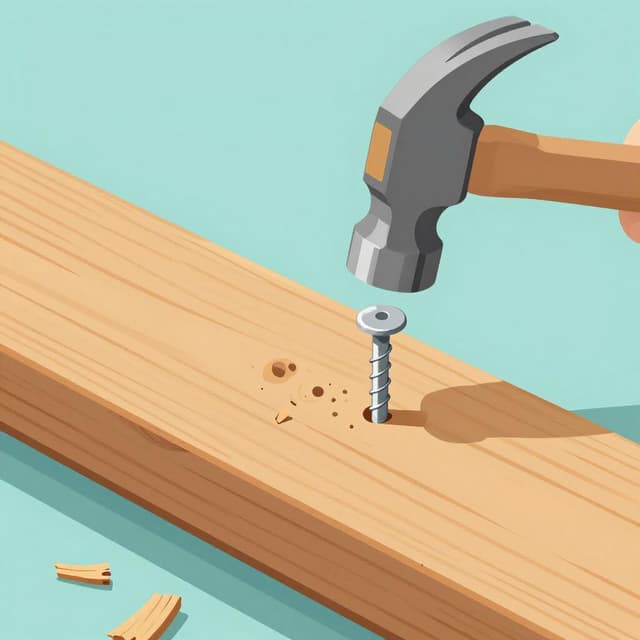
clavar — to nail
Use 'clava' (yo/él/ella/usted), 'clavas' (tú), 'clavemos' (nosotros), 'claven' (ellos/ellas/ustedes), 'clavéis' (vosotros) after expressions of doubt, desire, emotion, or uncertainty with clavar.
clavar Present Subjunctive Forms
When to Use the Present Subjunctive
The present subjunctive is used when there's uncertainty, emotion, or a desire involved. For 'clavar', you might say 'I doubt they will nail it correctly' or 'I hope you nail the target'.
Notes on clavar in the Present Subjunctive
Clavar is regular in the present subjunctive. The forms are derived from the 'yo' form of the present indicative ('clavo'), dropping the -o and adding the opposite vowel endings.
Example Sentences
Espero que claves bien el clavo.
I hope you nail the nail well.
tú
Dudo que él clave la estaca en el suelo.
I doubt he will nail the stake into the ground.
él/ella/usted
Queremos que todos claven la bandera al mismo tiempo.
We want everyone to nail the flag at the same time.
ellos/ellas/ustedes
No creo que nosotros clavemos el punto exacto.
I don't think we will hit the exact spot.
nosotros
Common Mistakes
Mistake: Using the indicative instead of the subjunctive after verbs of doubt or desire.
Correct: After phrases like 'dudo que' or 'espero que', you need the subjunctive: 'Dudo que clave' not 'Dudo que clava'.
Why: Certain trigger phrases require the subjunctive mood to express non-factuality.
Mistake: Confusing 'clavo' (yo, present indicative) with 'clavo' (yo, present subjunctive).
Correct: While the form is the same, the context dictates the mood. 'Yo clavo' is a statement of fact; 'Espero que yo clavo' is incorrect, it should be 'Espero que clave'.
Why: The subjunctive is used for wishes, doubts, etc., while the indicative states facts.
Master Spanish verbs in context
Memorizing tables only gets you so far. Read 200+ illustrated and narrated Spanish stories to see verbs like 'clavar' used naturally — in the tenses you're learning.
Related Tenses
Present
yo: clavo
Use 'clavo' (yo), 'clavas' (tú), 'clava' (él/ella/usted), 'clavamos' (nosotros), 'claváis' (vosotros), 'clavan' (ellos/ellas/ustedes) for habitual actions, things happening now, or general truths with clavar.
Preterite
yo: clavé
Use 'clavé' (yo), 'clavaste' (tú), 'clavó' (él/ella/usted), 'clavamos' (nosotros), 'clavasteis' (vosotros), 'clavaron' (ellos/ellas/ustedes) for completed actions in the past with clavar.
Imperfect
yo: clavaba
Use 'clavaba' (yo/él/ella/usted), 'clavabas' (tú), 'clavábamos' (nosotros), 'clavabais' (vosotros), 'clavaban' (ellos/ellas/ustedes) for ongoing or habitual past actions with clavar.
Future
yo: clavaré
Use 'clavaré' (yo), 'clavarás' (tú), 'clavará' (él/ella/usted), 'claremos' (nosotros), 'clararéis' (vosotros), 'clararán' (ellos/ellas/ustedes) for actions that will happen in the future with clavar.
Conditional
yo: clavaría
Use 'clavaría' (yo/él/ella/usted), 'clavarías' (tú), 'clavaríamos' (nosotros), 'clavaríais' (vosotros), 'clavarían' (ellos/ellas/ustedes) for hypothetical situations ('would') or polite requests with clavar.
Imperfect Subjunctive
yo: clavara
Use 'clavara' or 'clavase' (yo/él/ella/usted), 'clavaras' or 'clavases' (tú), 'claváramos' or 'clavásemos' (nosotros), 'clavaran' or 'clavasen' (ellos/ellas/ustedes), 'clavarais' or 'clavaseis' (vosotros) for past hypothetical situations or wishes with clavar.
Affirmative Imperative
yo: clava
Use 'clava' (tú), 'clave' (usted), 'clavemos' (nosotros), 'claven' (ustedes), 'clavad' (vosotros) for direct commands with clavar.
Negative Imperative
yo: no claves
Use 'no claves' (tú), 'no clave' (usted), 'no clavemos' (nosotros), 'no claven' (ustedes), 'no clavéis' (vosotros) for negative commands with clavar.