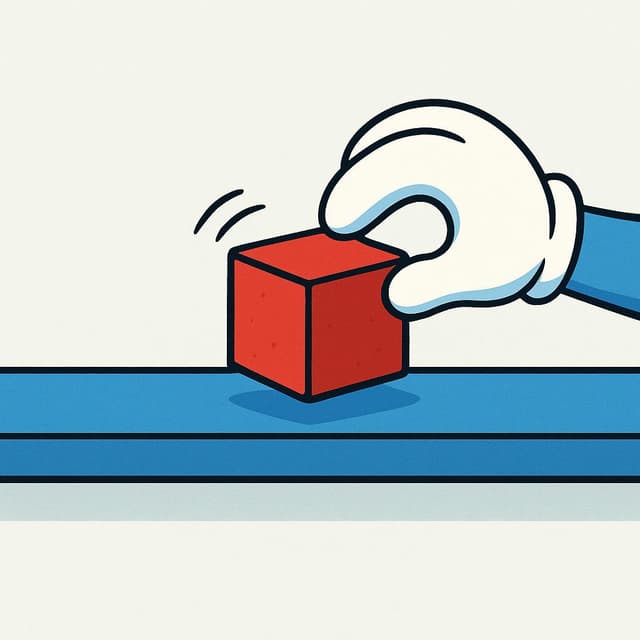
retirar Affirmative Imperative Conjugation
retirar — to remove
Use 'retira' (tú), 'retire' (usted), 'retiren' (ustedes), 'retirad' (vosotros), or 'retiremos' (nosotros) for direct commands.
retirar Affirmative Imperative Forms
When to Use the Affirmative Imperative
The imperative is for giving direct orders or instructions. For 'retirar', you might tell someone to remove something specific, like '¡Retira tus cosas de aquí!' (Remove your things from here!).
Notes on retirar in the Affirmative Imperative
The affirmative imperative of 'retirar' is regular. The 'tú' form drops the final 'r' from the infinitive and adds 'a'. The 'vosotros' form adds 'd'. The other forms follow regular patterns based on the infinitive ending.
Example Sentences
Retira el plato de la mesa, por favor.
Remove the plate from the table, please.
tú
¡Retiren toda la basura antes de las cinco!
Remove all the trash before five o'clock!
ustedes
Retirad los libros del suelo.
Remove the books from the floor.
vosotros
Retire su firma de este documento.
Remove your signature from this document.
usted
Common Mistakes
Mistake: Using the present indicative instead of the imperative for commands.
Correct: Use 'retira' for 'tú' commands, not 'retiras'.
Why: The imperative mood is specifically for commands, while the present indicative describes current actions.
Mistake: Forgetting the 'd' in the vosotros form.
Correct: The command form for vosotros is 'retirad', not 'retira'.
Why: Adding 'd' to the infinitive stem is the standard way to form the vosotros imperative for -ar verbs.
Master Spanish verbs in context
Memorizing tables only gets you so far. Read 200+ illustrated and narrated Spanish stories to see verbs like 'retirar' used naturally — in the tenses you're learning.
Related Tenses
Present
yo: retiro
The present tense of 'retirar' is regular: retiro, retiras, retira, retiramos, retiráis, retiran, used for current or habitual actions.
Preterite
yo: retiré
The preterite of 'retirar' is regular: retiré, retiraste, retiró, retiramos, retirasteis, retiraron, used for completed past actions.
Imperfect
yo: retiraba
The imperfect tense of 'retirar' is regular: retiraba, retirabas, retiraba, retirábamos, retirabais, retiraban, used for ongoing or habitual past actions.
Future
yo: retiraré
The future tense of 'retirar' is regular: retiraré, retirarás, retirará, retiraremos, retiraréis, retirarán, used for actions that will happen.
Conditional
yo: retiraría
The conditional of 'retirar' is regular: retiraría, retirarías, retiraría, retiraríamos, retiraríais, retirarían, used for hypotheticals and polite requests.
Present Subjunctive
yo: retire
The present subjunctive of 'retirar' is 'retire' (yo/usted), 'retires' (tú), 'retiremos' (nosotros), 'retiréis' (vosotros), 'retiren' (ustedes), used after expressions of doubt, desire, or emotion.
Imperfect Subjunctive
yo: retirara
The imperfect subjunctive of 'retirar' has two forms: 'retirara/retirase' and 'retiraras/retirases', used for past hypotheticals or wishes.
Negative Imperative
yo: no retires
Use 'no retires' (tú), 'no retire' (usted), 'no retiren' (ustedes), 'no retiréis' (vosotros), or 'no retiremos' (nosotros) for negative commands.