conectado
“conectado” means “connected” in Spanish. It has 3 different meanings depending on context:

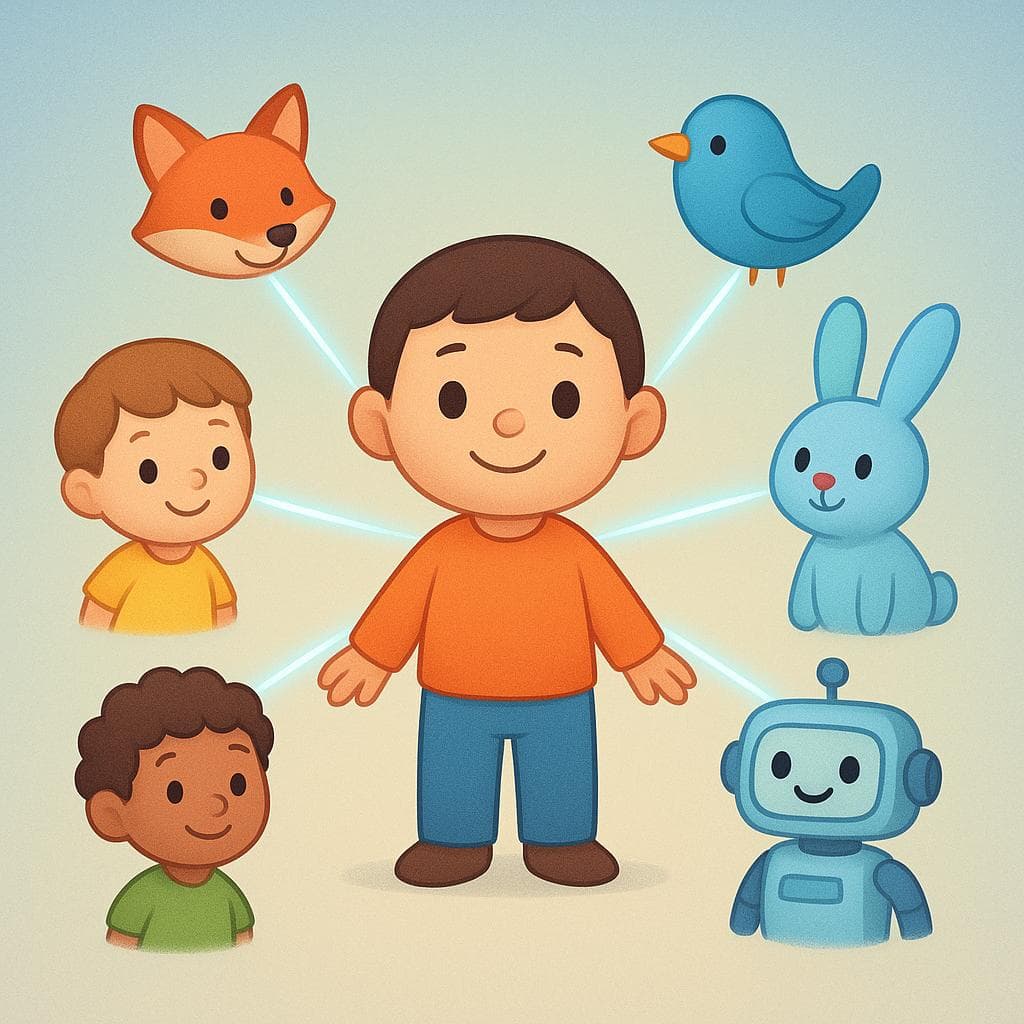

connected, onlineAlso: plugged in, linked

📝 In Action
Mi computadora está conectado al wifi de la oficina.
A1My computer is connected to the office wifi.
Asegúrate de que el cable esté bien conectado a la pantalla.
A2Make sure the cable is well connected to the screen.
Estuve conectado toda la mañana en la reunión virtual.
A1I was online all morning in the virtual meeting.
Word Connections
well-connected, plugged inAlso: in the loop

📝 In Action
El director es muy conectado en el mundo de las finanzas.
B1The director is very well-connected in the world of finance.
Ella se siente más conectada con su comunidad después de unirse al club.
B2She feels more linked (or in tune) with her community after joining the club.
Word Connections
connectedAlso: joined

📝 In Action
Ya hemos conectado el proyector para la presentación.
A2We have already connected the projector for the presentation.
Si no hubieras conectado el cable, no funcionaría.
B2If you hadn't connected the cable, it wouldn't work.
Word Connections
Translate to Spanish
Words that translate to "conectado" in Spanish:
✏️ Quick Practice
Quick Quiz: conectado
Question 1 of 2
Which sentence uses 'conectado' as an adjective describing a state?
📚 More Resources
👥 Word Family
📚 Etymology
Comes directly from the verb 'conectar,' which was borrowed from the Latin verb 'connectere,' meaning 'to tie together' or 'to join.' It shares roots with the English word 'connect.'
First recorded: 15th century (as a Latin root in Spanish usage)
Cognates (Related words)
💡 Master Spanish
Take your Spanish to the next level. Read 200+ illustrated and narrated Spanish stories tailored to your level with the Inklingo app!
Frequently Asked Questions
How is 'conectado' different from 'en línea'?
'Conectado' describes the state of having a link (physical or digital). 'En línea' (literally 'in line') specifically means being connected to the internet or a network. While 'estar conectado' often implies 'estar en línea,' 'conectado' can also mean physically plugged in, which 'en línea' cannot.
Does 'conectado' always refer to technology?
No. While it is most common in tech contexts, it can also describe someone who has a strong network of contacts ('un hombre conectado') or someone who feels emotionally linked to a place or idea ('conectado con la historia').