diestro
“diestro” means “right-handed” in Spanish. It has 3 different meanings depending on context:


right-handed
Also: on the right
📝 In Action
Mi hermano es diestro, pero yo soy zurdo.
A1My brother is right-handed, but I am left-handed.
Uso la mano diestra para escribir.
A2I use my right hand to write.
El botón está en el lado diestro del aparato.
B1The button is on the right side of the device.
skilled
Also: expert, adroit
📝 In Action
Ella es muy diestra con la guitarra.
B1She is very skilled with the guitar.
Es un cirujano diestro y con mucha experiencia.
B2He is a skilled surgeon with a lot of experience.
Se mostró diestro en el manejo de la crisis.
C1He proved to be expert in handling the crisis.
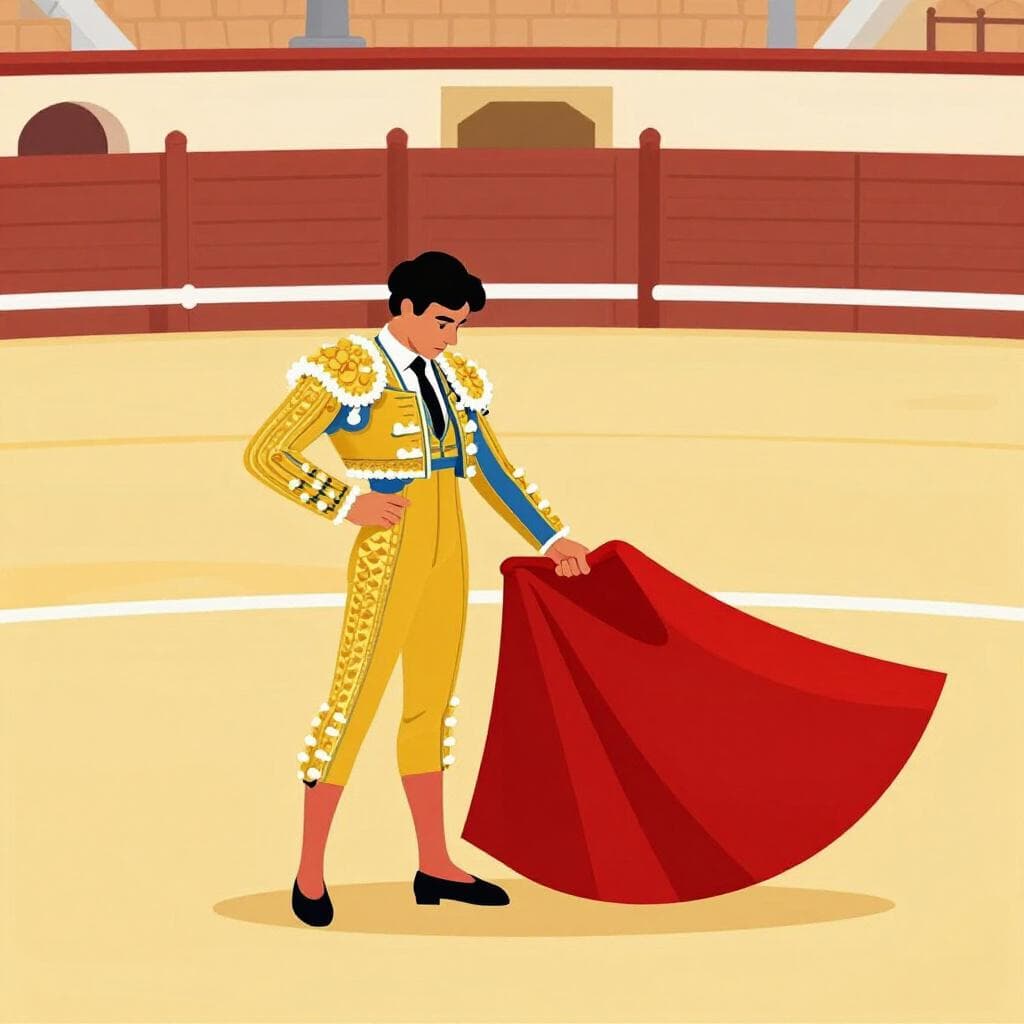
bullfighter
Also: matador
📝 In Action
El diestro recibió una ovación del público.
B2The bullfighter received a standing ovation from the crowd.
Es el diestro más famoso de esta temporada.
C1He is the most famous bullfighter of this season.
Translate to Spanish
Words that translate to "diestro" in Spanish:
adroit→bullfighter→expert→matador→right-handed→skilled→✏️ Quick Practice
Quick Quiz: diestro
Question 1 of 3
If someone is 'zurdo', what is the opposite word?
📚 More Resources
👥 Word Family▼
📚 Etymology▼
From the Latin word 'dexter', which means 'right side'. Historically, the right hand was considered the stronger, more 'correct' hand, which is why the word evolved to also mean 'skilled'.
First recorded: 13th century
Cognates (Related words)
💡 Master Spanish
Take your Spanish to the next level. Read 200+ illustrated and narrated Spanish stories tailored to your level with the Inklingo app!
Frequently Asked Questions
Can I use 'derecho' to mean right-handed?
Not exactly. Use 'derecho' for directions (to the right) or laws/rights. To describe a person's hand preference, 'diestro' is the correct term.
Does 'diestro' always change to 'diestra'?
Yes, if you are describing a woman or a feminine noun. For example: 'una mujer diestra' or 'la mano diestra'.
Is 'diestro' related to 'sinister'?
Yes! In Latin, 'dexter' (right) was seen as good/skilled, and 'sinister' (left) was seen as unlucky or bad. Spanish kept 'diestro' for skill and 'siniestro' for left (or scary/unlucky things).