Inklingo

dió

/dee-OH/

he/she/it gave

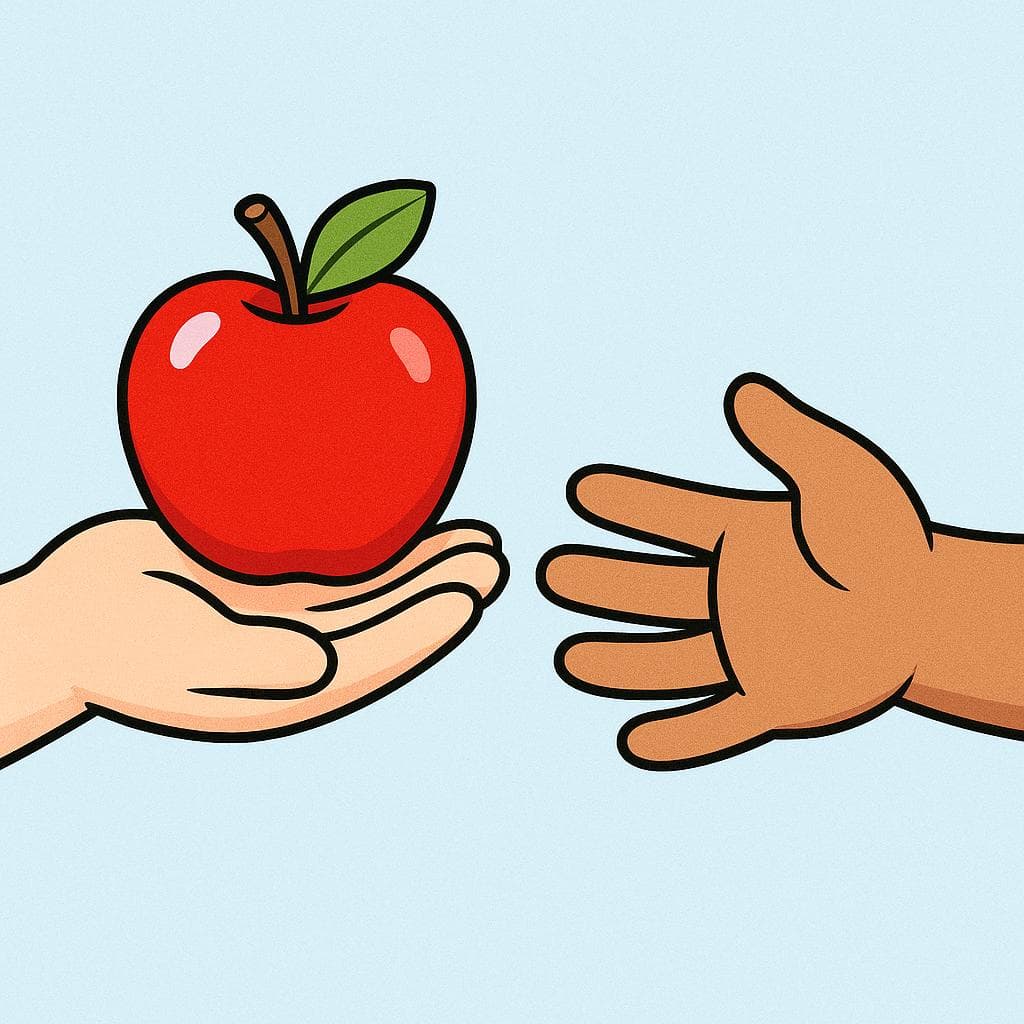
Two stylized hands exchanging a bright red apple, symbolizing the act of giving.

The image shows a past action: He/she/it gave (dió) the apple.

dió(Verb)

A1irregular ar

he/she/it gave

?

simple past action of giving

,

you gave

?

formal singular simple past

Also:

he/she/it handed over

?

physical transfer

📝 In Action

Mi jefe me dió el día libre ayer.

A1

My boss gave me the day off yesterday.

Ella le dió su chaqueta porque hacía frío.

A1

She gave him her jacket because it was cold.

Usted dió la respuesta correcta en el examen.

A2

You (formal) gave the correct answer on the exam.

Word Connections

Synonyms

Antonyms

Common Collocations

  • dió un besogave a kiss
  • dió permisogave permission

Idioms & Expressions

  • dió el visto buenogave the approval

💡 Grammar Points

Simple Past Tense

'Dió' tells you that the action of giving started and finished completely at a specific moment in the past. This is the simple past (or preterite) tense.

Irregularity Alert

The verb 'dar' is irregular in the simple past. Notice that 'dió' (he/she/you gave) is spelled with an accent mark on the 'o' to maintain its sound and distinguish it from other words.

❌ Common Pitfalls

Confusing Simple Past and Imperfect

Mistake: "Using 'daba' instead of 'dió' for a single, completed action."

Correction: 'Dió' is for a finished action ('She gave me a book'). 'Daba' (the imperfect) is for repeated or ongoing actions in the past ('She used to give me books').

⭐ Usage Tips

Required Accent Mark

Always include the accent mark on the 'o' (dió). Without it, the word is not the verb form you intend.

A brown seed in the soil instantly sprouting a brightly colored flower, representing a direct outcome or consequence.

The planting of the seed resulted in (dió) a beautiful flower.

dió(Verb)

B1irregular ar

he/she/it resulted in

?

outcome or consequence

,

he/she/it caused

?

to be the origin of something

Also:

he/she/it produced

?

yield or output

📝 In Action

La investigación dió resultados muy prometedores.

B1

The investigation yielded very promising results.

El accidente dió un susto enorme a los vecinos.

B1

The accident caused a huge scare for the neighbors.

La crisis económica dió origen a nuevas protestas.

B2

The economic crisis gave rise to new protests.

Word Connections

Synonyms

  • causó (caused)
  • produjo (produced)

Common Collocations

  • dió problemascaused problems
  • dió comienzobegan/started

💡 Grammar Points

Abstract Giving

When 'dió' is used with abstract nouns (like 'miedo,' 'pena,' 'susto'), it means 'caused' or 'generated' that feeling or outcome.

⭐ Usage Tips

Use with 'Origen'

The phrase 'dió origen a' (gave origin to) is a very common way to say 'started' or 'caused the beginning of' something.

A large golden bell being struck by its clapper, with stylized sound waves radiating from the impact point.

The bell struck (dió) loudly, sending sound waves across the air.

dió(Verb)

B2irregular ar

he/she/it struck

?

referring to a clock or bell ringing

,

he/she/it hit/kicked

?

physical contact, often followed by a body part

Also:

he/she/it faced/looked onto

?

referring to a window or building orientation (dar a)

📝 In Action

El reloj de la torre dió las tres en punto.

B2

The tower clock struck three o'clock.

El niño le dió una patada al balón.

B2

The child gave (or delivered) a kick to the ball.

La ventana dió al jardín, no a la calle.

C1

The window faced the garden, not the street. (Past tense of 'dar a')

Word Connections

Synonyms

Common Collocations

  • dió un golpedelivered a blow
  • dió la carafaced the consequences

💡 Grammar Points

Clocks and Time

When talking about the hour striking on a clock, we use 'dar' in the simple past: 'Dió las...' (It struck...).

⭐ Usage Tips

Physical Actions

In Spanish, we often use 'dar' + a noun (like 'patada' or 'golpe') where English just uses a verb ('to kick' or 'to hit'). 'Le dió un golpe' literally means 'He gave him a hit.'

🔄 Conjugations

indicative

present

él/ella/ustedda
yodoy
das
ellos/ellas/ustedesdan
nosotrosdamos
vosotrosdais

imperfect

él/ella/usteddaba
yodaba
dabas
ellos/ellas/ustedesdaban
nosotrosdábamos
vosotrosdabais

preterite

él/ella/usteddió
yodi
diste
ellos/ellas/ustedesdieron
nosotrosdimos
vosotrosdisteis

subjunctive

present

él/ella/usted
yo
des
ellos/ellas/ustedesden
nosotrosdemos
vosotrosdeis

imperfect

él/ella/usteddiera
yodiera
dieras
ellos/ellas/ustedesdieran
nosotrosdiéramos
vosotrosdierais

✏️ Quick Practice

💡 Quick Quiz: dió

Question 1 of 2

Which sentence correctly uses 'dió' to mean 'caused' or 'resulted in'?

📚 More Resources

Word Family

dar(to give) - verb
dando(giving) - gerund

Frequently Asked Questions

Is 'dió' the same as 'di'?

No. Both are simple past forms of 'dar,' but they refer to different people. 'Dió' means 'he/she/it gave' or 'you (formal) gave.' 'Di' means 'I gave.'

Can I use 'dió' to talk about something happening over a long period?

Generally, no. 'Dió' is the simple past, used for actions completed at a specific point (e.g., 'yesterday'). For actions that were ongoing or habitual in the past, you should use the imperfect form, 'daba' (he/she/it was giving/used to give).