Inklingo

echarme

/eh-CHAR-meh/

to lie down

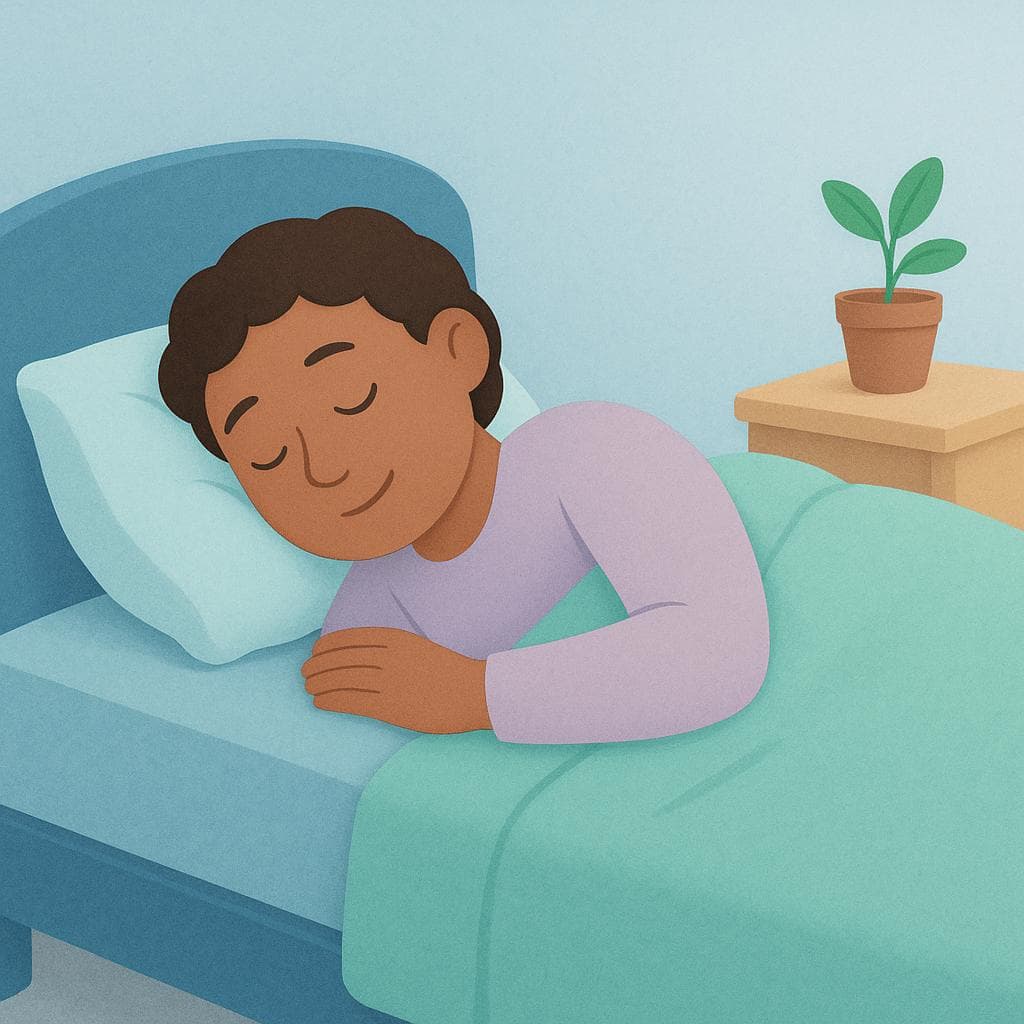
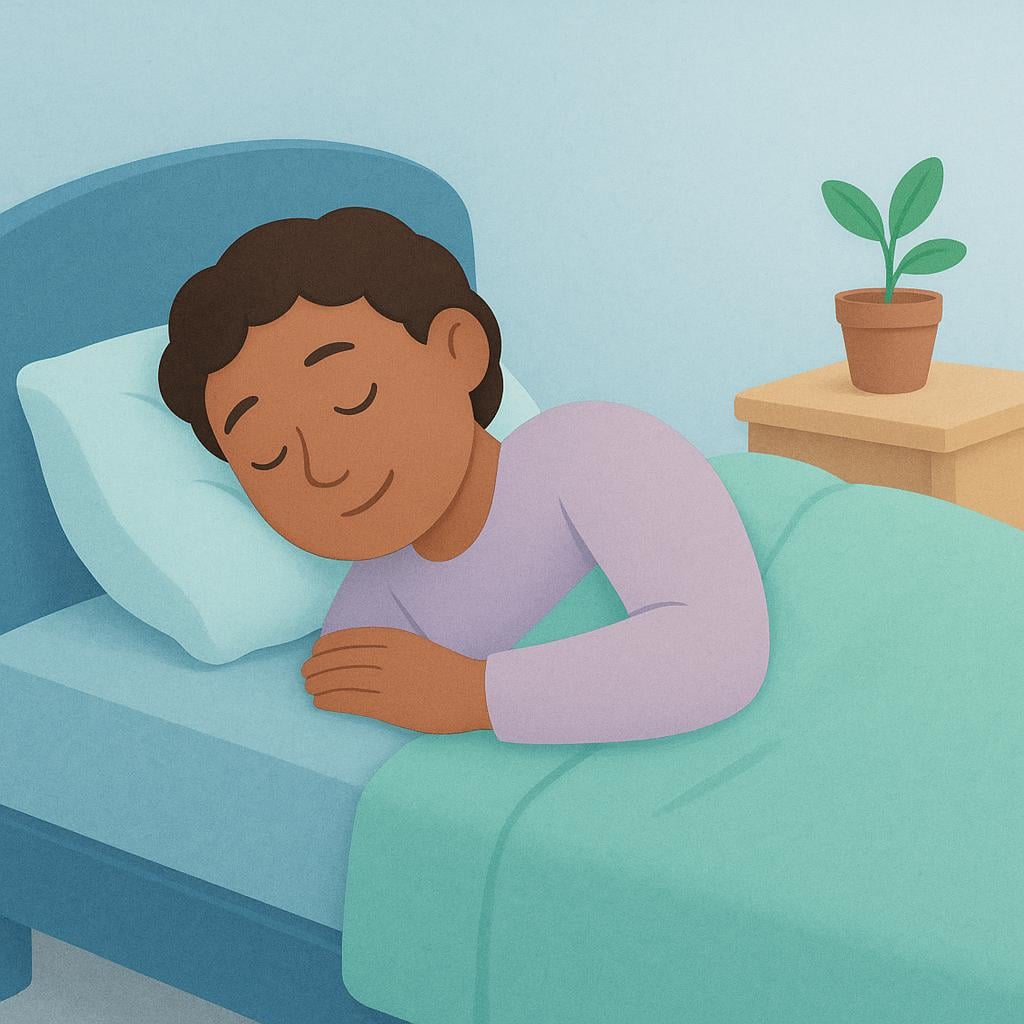
A person resting comfortably on a soft bed with a pillow.

A person lying down to rest their body.

echarme(verb)

A1regular ar

to lie down

?

to rest your body

Also:

to take a nap

?

sleeping for a short time

📝 In Action

Estoy cansado, voy a echarme un rato.

A1

I'm tired, I'm going to lie down for a bit.

Necesito echarme una siesta.

A2

I need to take a nap.

Word Connections

Synonyms

  • tumbarme (to lie down)
  • acostarme (to go to bed)

Antonyms

Common Collocations

  • echarme una siestato take a nap
  • echarme en el sofáto lie on the sofa

💡 Grammar Points

The Attached Pronoun

The 'me' at the end means 'myself.' In Spanish, when a verb is in its 'to' form (infinitive), you can stick the pronoun directly onto the end.

Reflexive Action

This is a reflexive verb, meaning you are doing the action to yourself. 'Echar' means to throw, so 'echarme' is literally 'to throw myself' (onto a bed or sofa).

❌ Common Pitfalls

Me echar vs Echarme

Mistake: "Me echar un rato."

Correction: Voy a echarme un rato or Me voy a echar un rato. You can't put 'me' before the verb unless the verb is conjugated or part of a phrase like 'voy a'.

⭐ Usage Tips

Natural Phrasing

Use 'echarme' when you're talking about a quick rest. If you're going to bed for the night, 'acostarme' is more common.

A person suddenly beginning to run from a starting line.

The sudden beginning of an action, like starting to run.

echarme(verb)

B1regular ar

to start (doing something)

?

sudden beginning of an action

Also:

to burst out

?

expressing sudden emotion like laughing or crying

📝 In Action

Al oír el chiste, no pude evitar echarme a reír.

B1

Upon hearing the joke, I couldn't help but burst out laughing.

Voy a echarme a correr todas las mañanas.

B1

I'm going to start running every morning.

Word Connections

Synonyms

Antonyms

Common Collocations

  • echarme a llorarto burst into tears
  • echarme a reírto burst out laughing

💡 Grammar Points

The 'A' Connection

When using 'echarme' to mean 'start doing something,' you must always follow it with the word 'a' before the next action.

❌ Common Pitfalls

Missing the 'A'

Mistake: "Me eché reír."

Correction: Me eché a reír. Without the 'a', the sentence doesn't work.

⭐ Usage Tips

Suddenness

This phrase implies that the action started suddenly or uncontrollably, like a sudden burst of emotion.

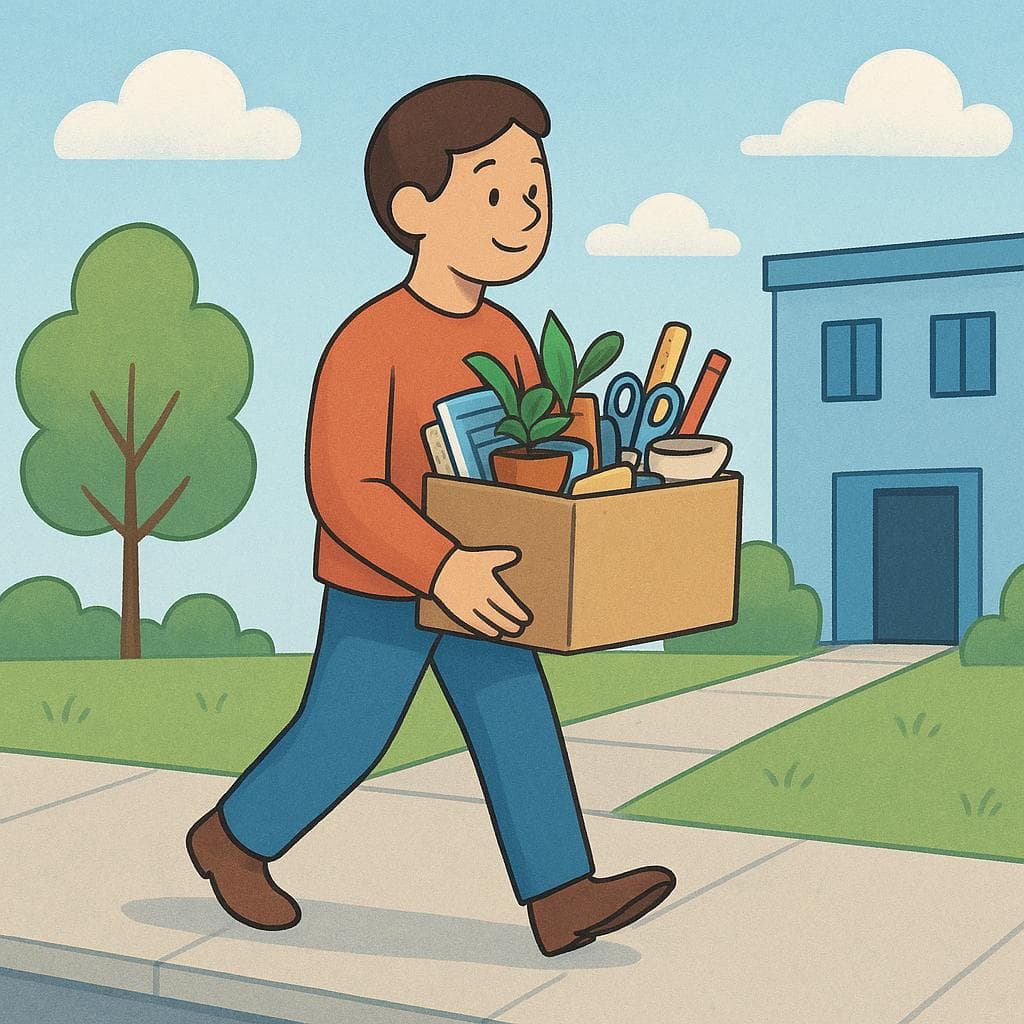
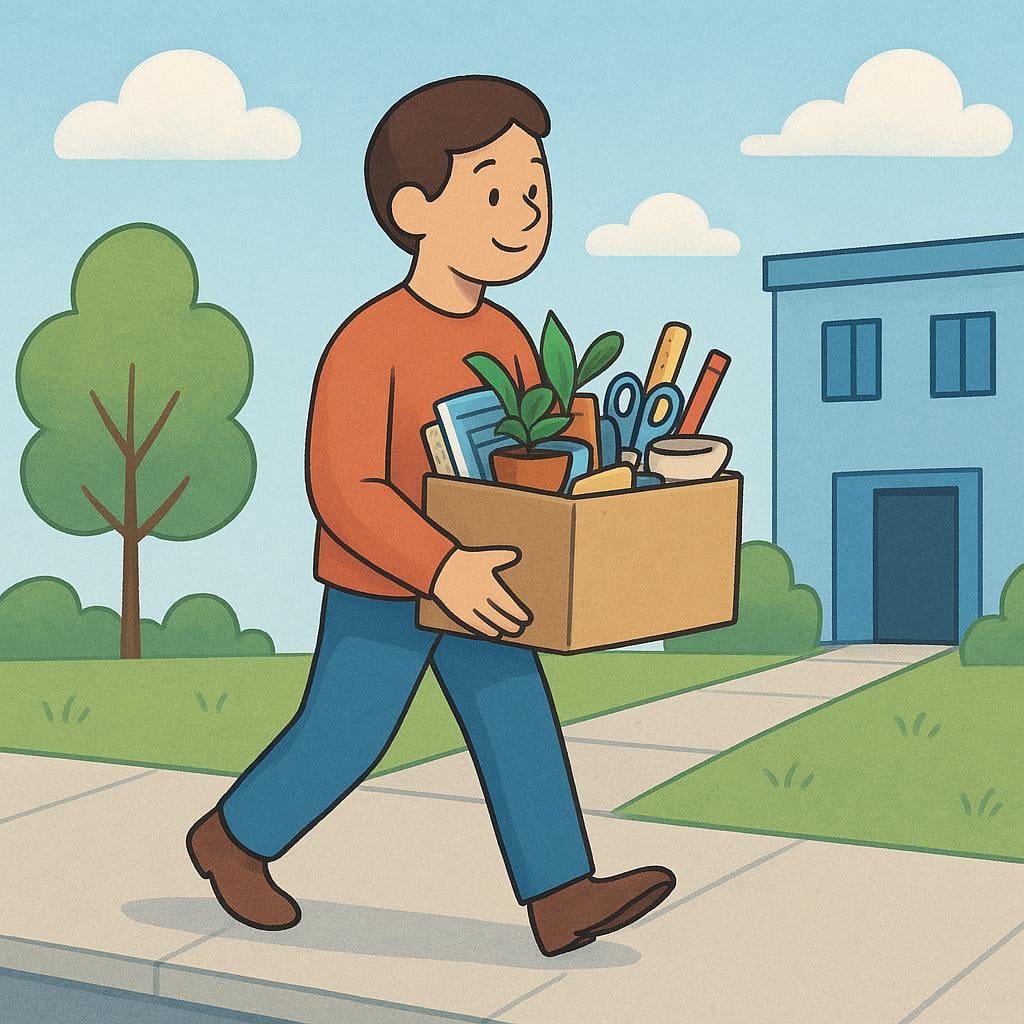
A person carrying a cardboard box away from a large office building.

Leaving a workplace after losing a job.

echarme(verb)

A2regular ar

to fire me

?

losing a job

Also:

to throw me out

?

being forced to leave a location

📝 In Action

Si llego tarde otra vez, van a echarme.

A2

If I'm late again, they are going to fire me.

El guardia va a echarme si no tengo entrada.

A2

The guard is going to throw me out if I don't have a ticket.

Word Connections

Synonyms

Antonyms

  • contratarme (to hire me)

Common Collocations

  • echarme del trabajoto fire me from work
  • echarme de casato kick me out of the house

💡 Grammar Points

Who is doing the action?

In this meaning, someone else is doing the action to you. 'Me' is the person receiving the 'throwing out'.

❌ Common Pitfalls

Confusing with 'echarse'

Mistake: "Me eché del trabajo."

Correction: Me echaron del trabajo. 'Me eché' would mean you threw yourself out, which sounds like you quit in a very dramatic way!

⭐ Usage Tips

Casual vs. Formal

'Echarme' is the common, casual way to say someone lost their job. 'Despedirme' is the more professional term.

🔄 Conjugations

subjunctive

present

yome eche
nosotrosnos echemos
ellos/ellas/ustedesse echen
te eches
vosotrosos echéis
él/ella/ustedse eche

imperfect

yome echara
nosotrosnos echáramos
ellos/ellas/ustedesse echaran
te echaras
vosotrosos echarais
él/ella/ustedse echara

indicative

present

yome echo
nosotrosnos echamos
ellos/ellas/ustedesse echan
te echas
vosotrosos echáis
él/ella/ustedse echa

imperfect

yome echaba
nosotrosnos echábamos
ellos/ellas/ustedesse echaban
te echabas
vosotrosos echabais
él/ella/ustedse echaba

preterite

yome eché
nosotrosnos echamos
ellos/ellas/ustedesse echaron
te echaste
vosotrosos echasteis
él/ella/ustedse echó

✏️ Quick Practice

💡 Quick Quiz: echarme

Question 1 of 2

Which sentence means 'I am going to lie down'?

📚 More Resources

Word Family

Frequently Asked Questions

Is 'echarme' one word or two?

It is technically two words (the action 'echar' + the person 'me') joined together into one written word.

Can I say 'me echar' instead?

No. You can say 'me voy a echar' or 'voy a echarme', but you cannot put 'me' alone before the 'to' form of the verb.