ensalada
“ensalada” means “salad” in Spanish (a dish of mixed raw vegetables).
salad
Also: tossed salad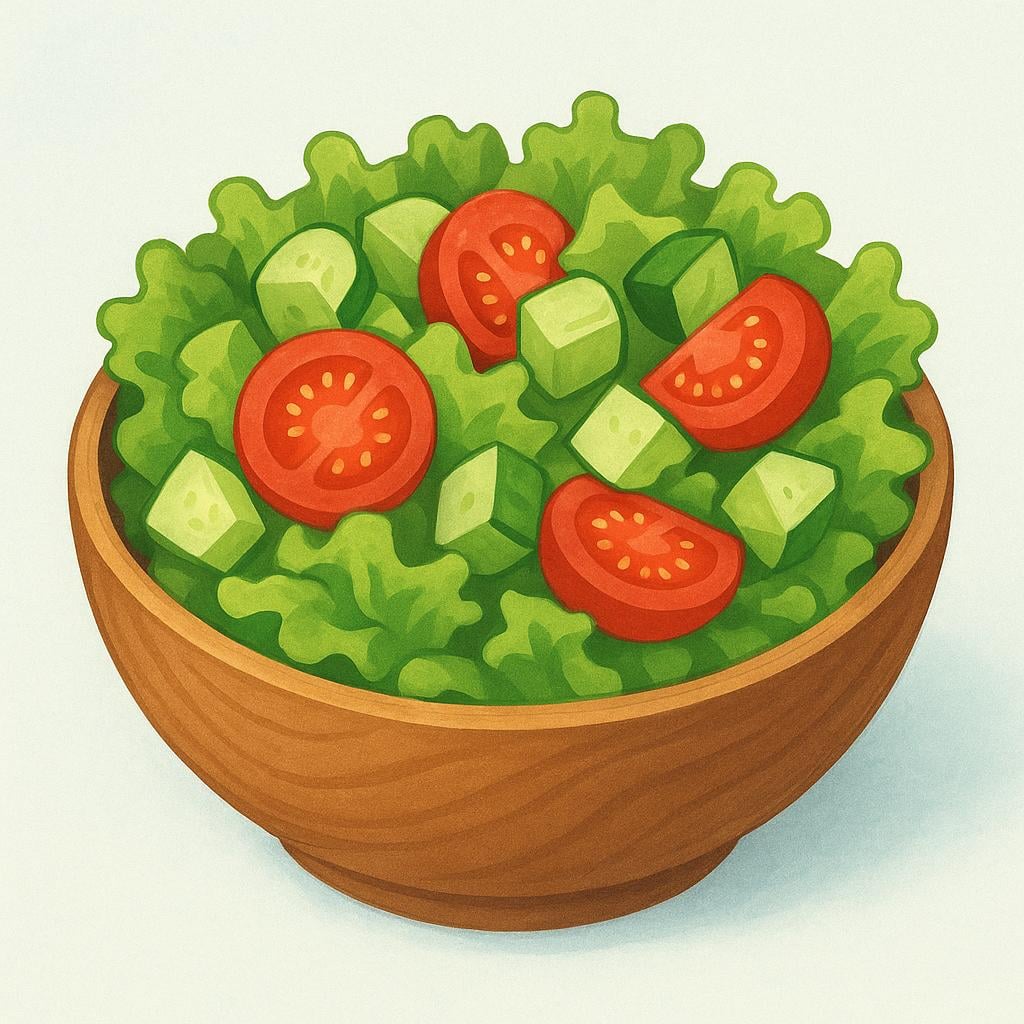
📝 In Action
Para el almuerzo, pedí una ensalada de tomate y aguacate.
A1For lunch, I ordered a tomato and avocado salad.
¿Quieres ponerle aceite y vinagre a tu ensalada?
A2Do you want to put oil and vinegar on your salad?
La ensalada mixta viene con lechuga, zanahoria y maíz.
A1The mixed salad comes with lettuce, carrot, and corn.
Vocabulary Collections
Translate to Spanish
✏️ Quick Practice
Quick Quiz: ensalada
Question 1 of 1
Which phrase correctly asks for a mixed salad?
📚 More Resources
👥 Word Family▼
📚 Etymology▼
The word comes from the Italian 'insalata,' which itself comes from the Latin 'salata.' This literally means 'salted' or 'seasoned,' because early salads were often just raw greens seasoned with salt, oil, and vinegar.
First recorded: 13th century (in Spanish)
Cognates (Related words)
💡 Master Spanish
Take your Spanish to the next level. Read 200+ illustrated and narrated Spanish stories tailored to your level with the Inklingo app!
Frequently Asked Questions
Is 'ensalada' ever used to mean something other than food?
Yes, but it's less common. Sometimes in informal speech, 'ensalada' can mean a big mess or a chaotic jumble of things, similar to saying 'a mixed bag' or 'a salad of problems.'
How do I order a dressing on the side?
You can say: 'El aderezo aparte, por favor.' ('The dressing on the side, please.') The word for dressing is usually 'aderezo' or 'aliño'.