estufa
“estufa” means “stove” in Spanish. It has 2 different meanings depending on context:
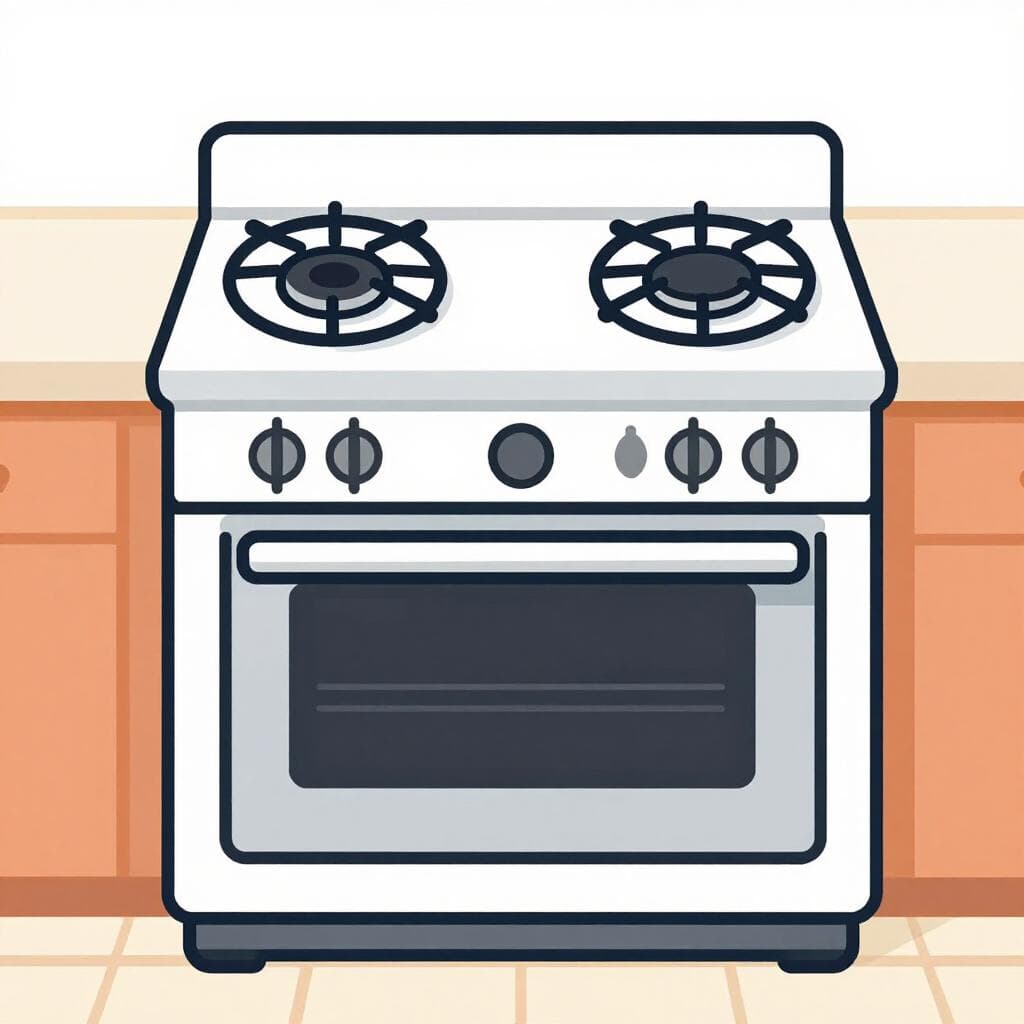

stove
Also: range, cooktop
📝 In Action
La sopa está en la estufa.
A1The soup is on the stove.
Mi abuela tiene una estufa de gas muy antigua.
A2My grandmother has a very old gas stove.
Limpia la estufa después de cocinar para que no se pegue la grasa.
B1Clean the stove after cooking so the grease doesn't stick.
heater
Also: space heater, furnace
📝 In Action
Hace mucho frío, ¿puedes prender la estufa?
A1It's very cold, can you turn on the heater?
Nos sentamos frente a la estufa de leña.
A2We sat in front of the wood-burning stove.
Esa estufa eléctrica consume mucha energía.
B1That electric heater uses a lot of energy.
Translate to Spanish
✏️ Quick Practice
Quick Quiz: estufa
Question 1 of 3
If you are in a kitchen in Mexico and someone says 'Limpia la estufa,' what should you clean?
📚 More Resources
👥 Word Family▼
🎵 Rhymes▼
📚 Etymology▼
From the Late Latin word 'stufa,' which referred to a heated room or a steam bath.
First recorded: 13th century
Cognates (Related words)
💡 Master Spanish
Take your Spanish to the next level. Read 200+ illustrated and narrated Spanish stories tailored to your level with the Inklingo app!
Frequently Asked Questions
What is the difference between 'estufa' and 'cocina'?
In many places, they are used interchangeably for the appliance. However, 'cocina' also means the room (the kitchen), while 'estufa' only refers to the device itself.
Is 'estufa' used for the oven?
No, 'estufa' specifically refers to the top burners. The oven is called 'el horno'.
Does 'estufa' mean the same thing in Spain and Latin America?
Mostly, yes, but in Spain, it's much more common to use 'estufa' for a room heater and 'cocina' for the stove. In Latin America, 'estufa' is very commonly used for the kitchen stove.