forjar
“forjar” means “to forge” in Spanish. It has 2 different meanings depending on context:
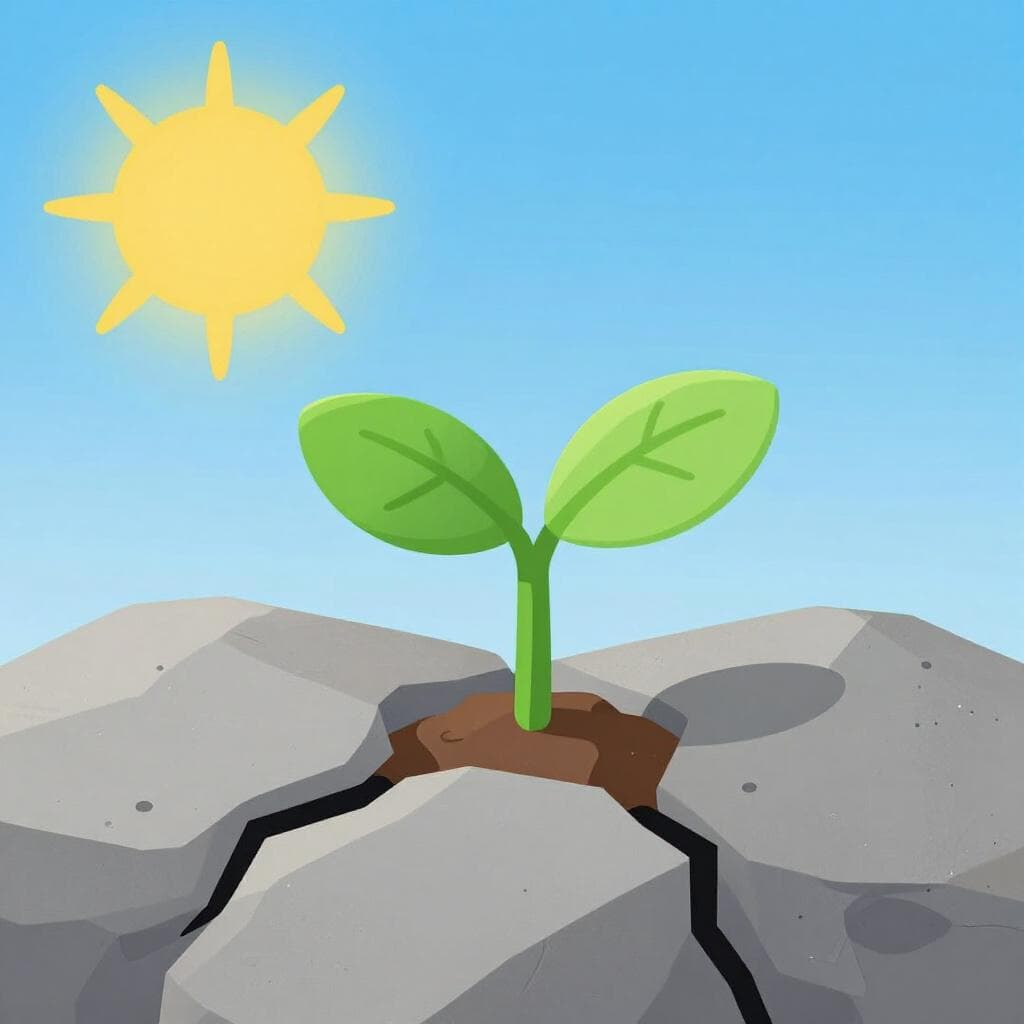
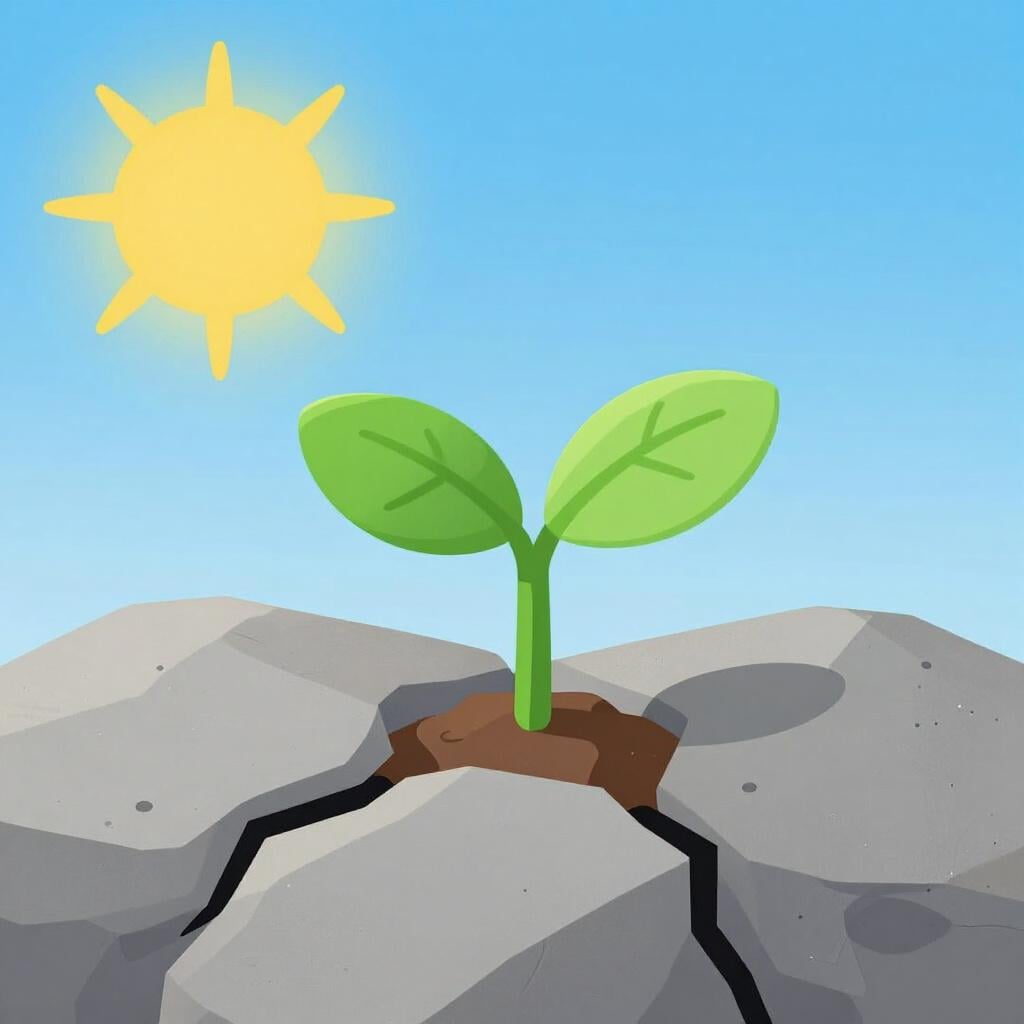
to forgeAlso: to build up, to shape
📝 In Action
Ellos quieren forjar una alianza duradera.
B1They want to forge a lasting alliance.
El deporte ayuda a forjar el carácter de los jóvenes.
B2Sports help to shape the character of young people.
Forjó su carrera con mucho esfuerzo y dedicación.
C1She built her career with a lot of effort and dedication.
Word Connections
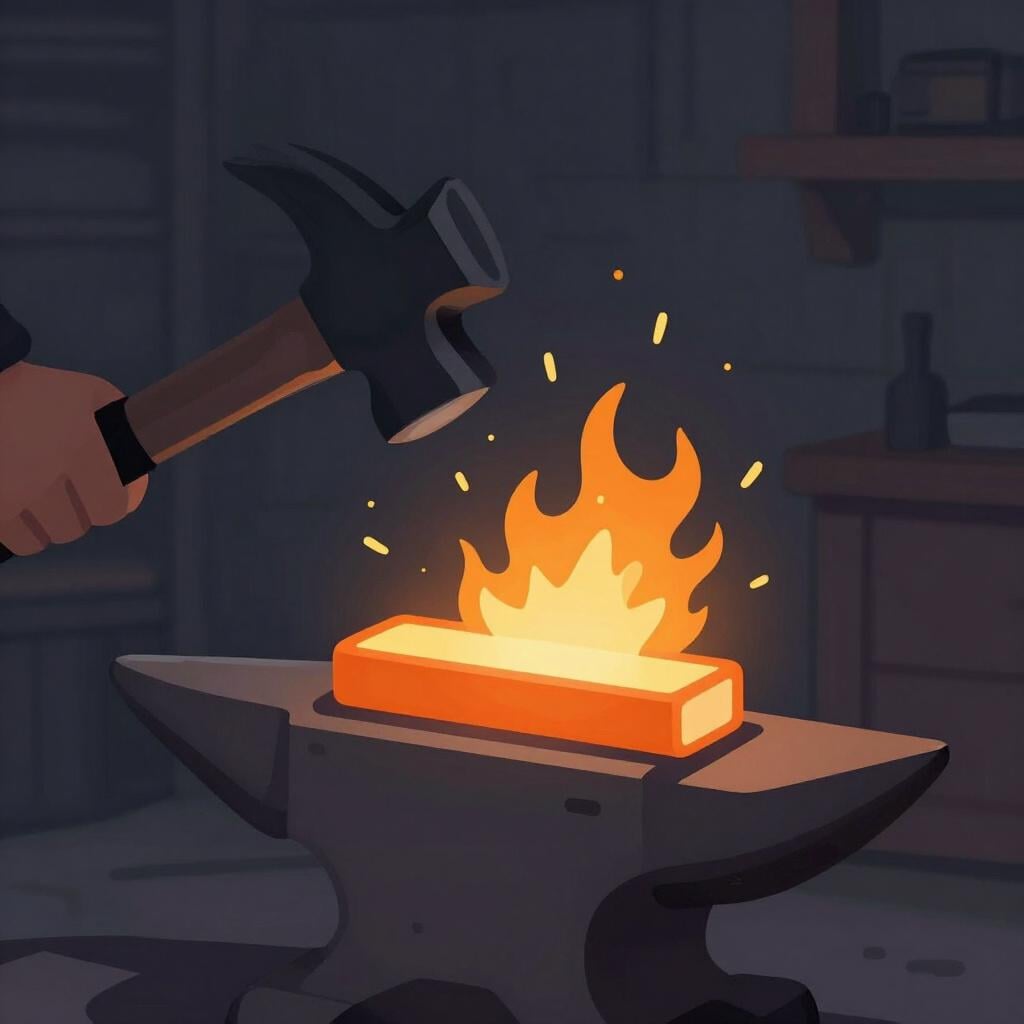
to forgeAlso: to smith
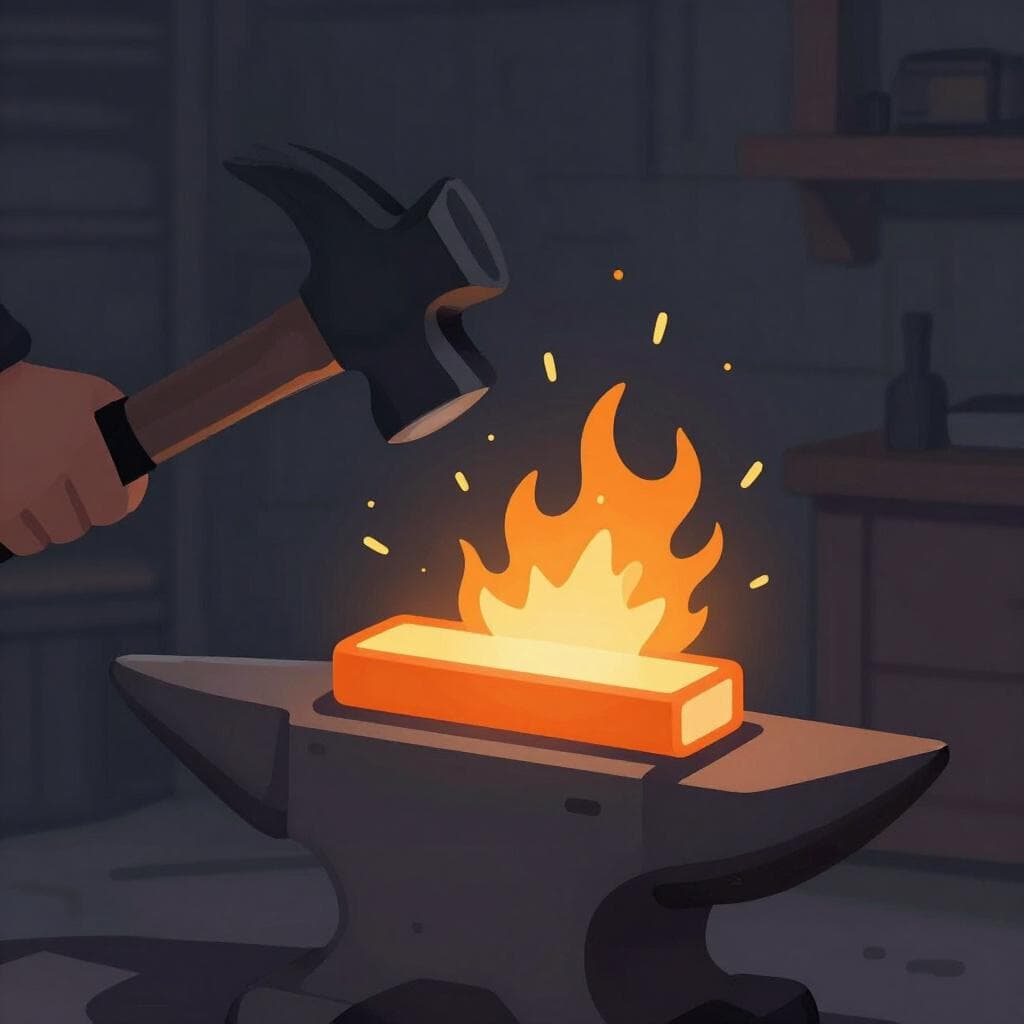
📝 In Action
El herrero forja el hierro en el yunque.
B2The blacksmith forges the iron on the anvil.
Es necesario calentar el metal antes de forjarlo.
B2It is necessary to heat the metal before forging it.
Word Connections
Subjunctive
Imperfect Subjunctive
Present Subjunctive
Indicative
Preterite
Imperfect
Present
✏️ Quick Practice
Quick Quiz: forjar
Question 1 of 3
Which of these is a figurative use of 'forjar'?
📚 More Resources
👥 Word Family
📚 Etymology
From the Old French word 'forger', which itself comes from the Latin 'fabricare', meaning 'to construct' or 'to build'. It shares the same root as the English word 'fabric' and 'fabricate'.
First recorded: 13th century
Cognates (Related words)
💡 Master Spanish
Take your Spanish to the next level. Read 200+ illustrated and narrated Spanish stories tailored to your level with the Inklingo app!
Frequently Asked Questions
Is 'forjar' an irregular verb?
No, it is a perfectly regular -ar verb. It follows the exact same pattern as 'hablar' or 'cantar' in every tense.
Can I use 'forjar' for building a wall?
Usually, no. 'Forjar' is reserved for metalwork or abstract concepts like character and friendships. For a wall or a house, 'construir' is the better choice.
Does 'forjar' mean 'to forget'?
No! This is a common mistake for English speakers because the words sound similar. 'To forget' is 'olvidar' in Spanish.