ladrillo
“ladrillo” means “brick” in Spanish. It has 2 different meanings depending on context:
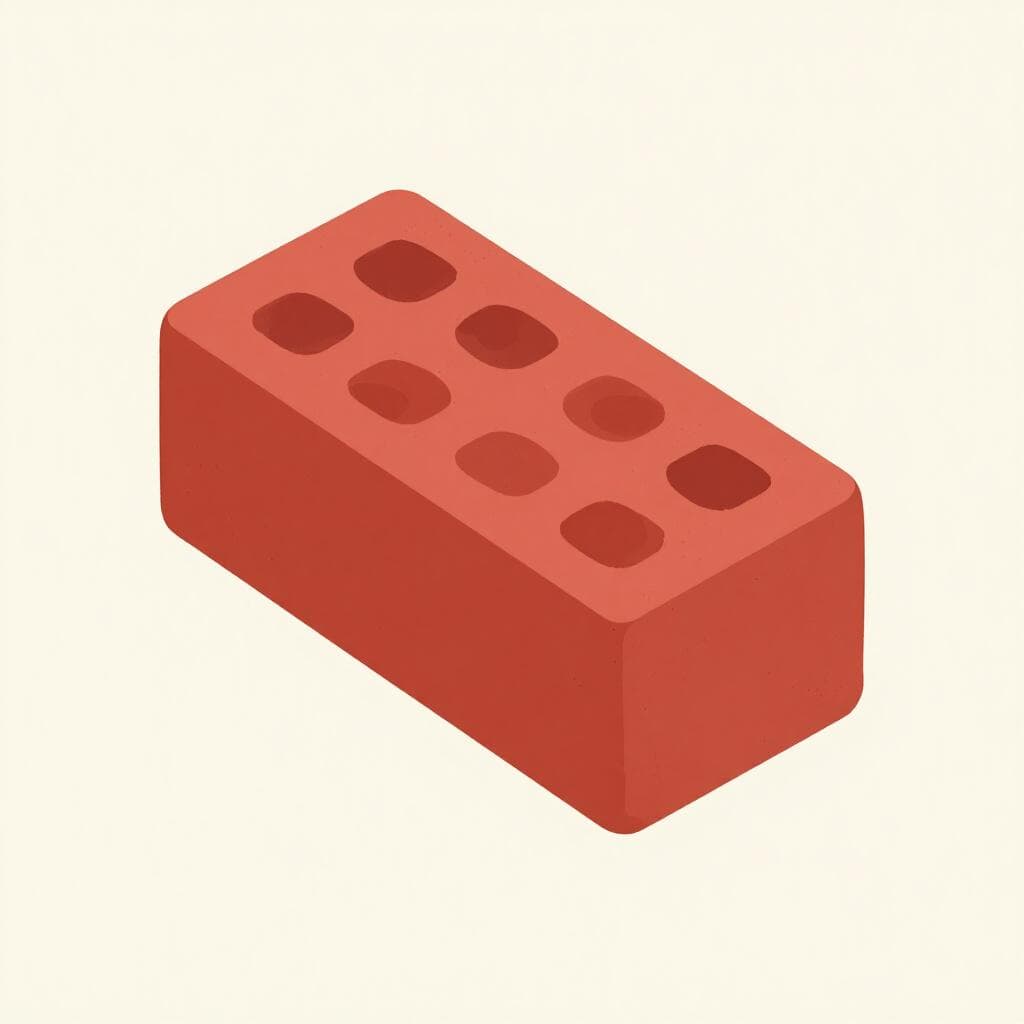

brick
Also: block
📝 In Action
La casa está construida con ladrillo rojo.
A1The house is built with red brick.
El muro de ladrillo es muy resistente.
A2The brick wall is very strong.
Los obreros están colocando los ladrillos uno por uno.
B1The workers are placing the bricks one by one.
bore
Also: heavy going, drag
📝 In Action
Ese libro de historia es un ladrillo.
B1That history book is a real bore (heavy going).
La conferencia fue un ladrillo y me quedé dormido.
B2The lecture was a total drag and I fell asleep.
No veas esa película, es un ladrillo de tres horas.
C1Don't watch that movie; it's a three-hour bore.
Translate to Spanish
✏️ Quick Practice
Quick Quiz: ladrillo
Question 1 of 3
If someone says a movie is 'un ladrillo', they mean it is...
📚 More Resources
👥 Word Family▼
📚 Etymology▼
From the old Spanish word 'ladre,' which comes from the Latin 'later' meaning 'brick.' The '-illo' ending was originally a way to make the word sound smaller or more common.
First recorded: 13th century
Cognates (Related words)
💡 Master Spanish
Take your Spanish to the next level. Read 200+ illustrated and narrated Spanish stories tailored to your level with the Inklingo app!
Frequently Asked Questions
Can I use 'ladrillo' for the tiles in my bathroom?
No, 'ladrillo' is only for construction bricks. For floor or wall tiles, use 'azulejo' or 'baldosa'.
Is 'ladrillo' a rude word when meaning 'boring'?
Not rude, just informal. You can use it with friends, but maybe not in a professional critique of a boss's presentation!
Does 'ladrillo' ever change to 'ladrilla'?
No, 'ladrillo' is a masculine noun and stays that way regardless of what it describes.