población
“población” means “population” in Spanish. It has 2 different meanings depending on context:


population
Also: inhabitants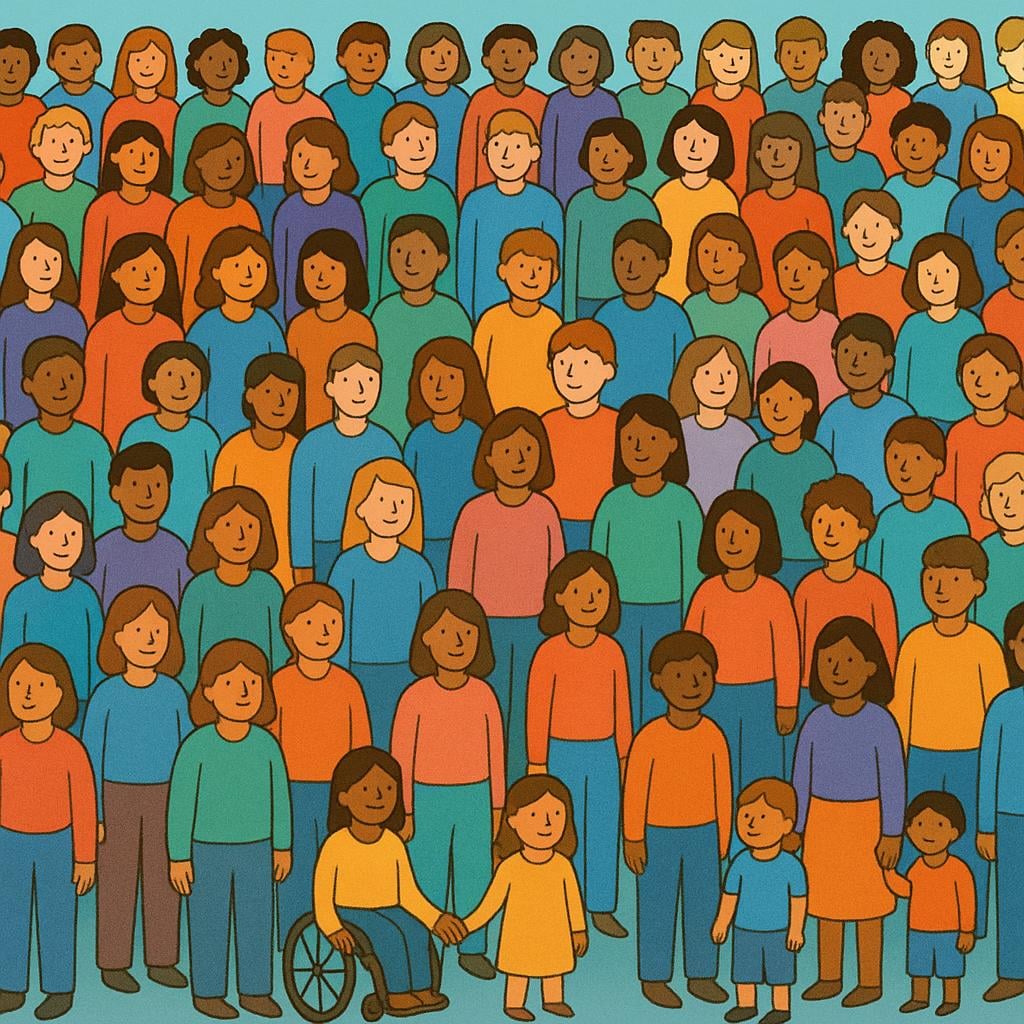
📝 In Action
La población mundial sigue creciendo rápidamente.
B1The world population continues to grow rapidly.
Necesitamos un censo para contar la población de la ciudad.
B1We need a census to count the city's population.
La baja densidad de población hace que la zona sea muy tranquila.
B2The low population density makes the area very quiet.
town
Also: village, locality
📝 In Action
Llegamos a la pequeña población después de tres horas de viaje.
B2We arrived at the small town after three hours of travel.
Es una población costera con mucha historia.
C1It is a coastal settlement with a lot of history.
Vocabulary Collections
✏️ Quick Practice
Quick Quiz: población
Question 1 of 1
Which sentence uses 'población' to refer to the physical place?
📚 More Resources
👥 Word Family▼
🎵 Rhymes▼
📚 Etymology▼
Comes from the Latin word *populatio*, which means 'the act of peopling' or filling a place with people. It is directly related to the Latin word *populus*, meaning 'people' or 'nation'.
First recorded: Around the 13th century
Cognates (Related words)
💡 Master Spanish
Take your Spanish to the next level. Read 200+ illustrated and narrated Spanish stories tailored to your level with the Inklingo app!
Frequently Asked Questions
Is 'población' the same as 'gente'?
No. 'Gente' means 'people' (a group of individuals) and is generally used informally. 'Población' is a formal term referring to the total count or demographic of inhabitants in a specific area (like a city or country).