rampa
“rampa” means “ramp” in Spanish. It has 2 different meanings depending on context:

ramp
Also: slope, apron
📝 In Action
Hay una rampa al lado de las escaleras para las sillas de ruedas.
A1There is a ramp next to the stairs for wheelchairs.
El coche tiene dificultades para subir la rampa del garaje.
A2The car has trouble going up the garage ramp.
Los skaters practican saltos en la rampa del parque.
B1The skaters practice jumps on the park ramp.
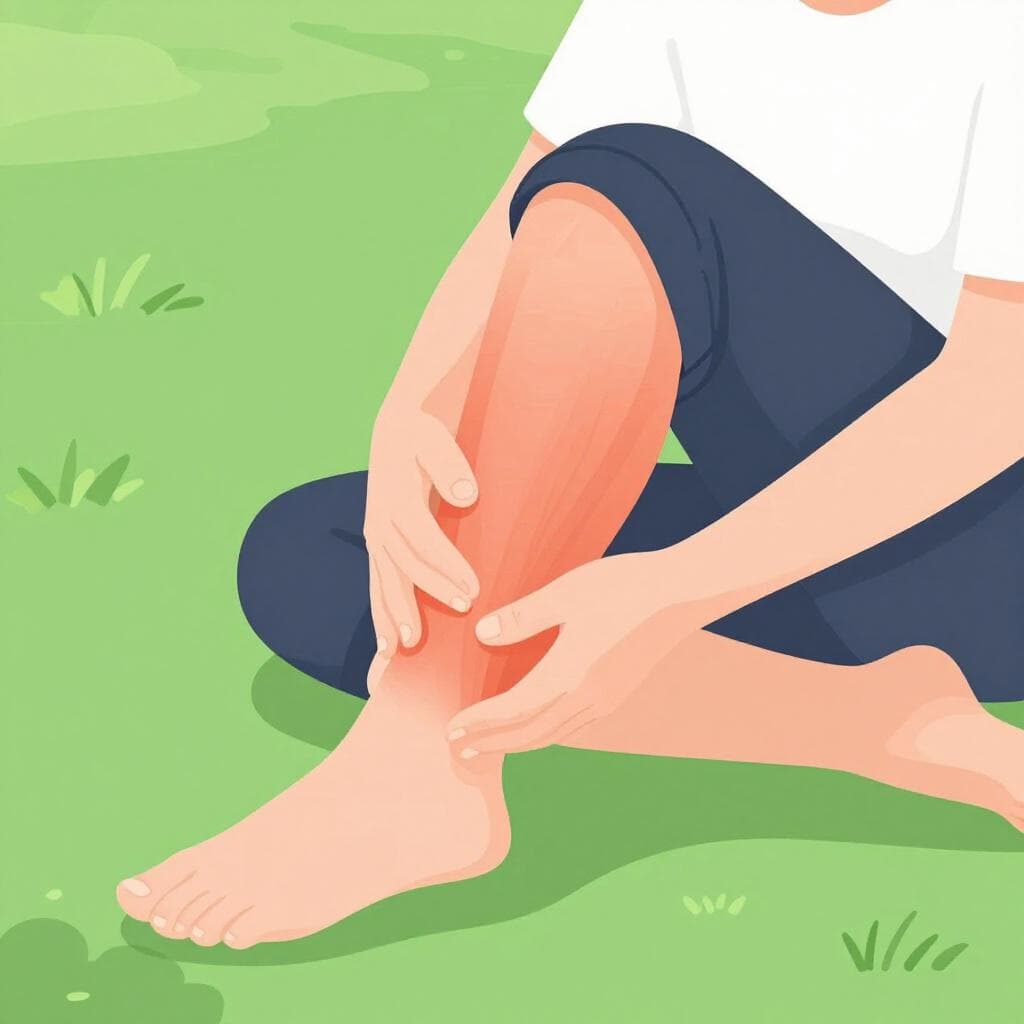
cramp

📝 In Action
Me dio una rampa en el gemelo mientras corría.
B1I got a cramp in my calf while I was running.
Si no estiras bien, te darán rampas.
B2If you don't stretch well, you will get cramps.
Tengo una rampa muy dolorosa en el pie.
B2I have a very painful cramp in my foot.
✏️ Quick Practice
Quick Quiz: rampa
Question 1 of 3
If you are in Madrid and you say 'Me dio una rampa en la pierna', what happened?
📚 More Resources
👥 Word Family▼
📚 Etymology▼
Derived from the French word 'rampe', which comes from 'ramper' (to climb or crawl). It describes something that helps you move from one level to another.
First recorded: 18th century
Cognates (Related words)
💡 Master Spanish
Take your Spanish to the next level. Read 200+ illustrated and narrated Spanish stories tailored to your level with the Inklingo app!
Frequently Asked Questions
Is 'rampa' different from 'calambre'?
In Spain, they are often used as synonyms for a muscle cramp. However, 'calambre' is also used for electric shocks, while 'rampa' is not.
Can I use 'rampa' for a hill?
You can use it for a very short, steep section of a road, but for a general hill, 'colina' or 'cuesta' is better.
Do people in Mexico use 'rampa' for cramps?
No, in Mexico and most of Latin America, they use 'calambre'. Using 'rampa' there might cause confusion.