Inklingo

rompí

/rrohm-PEE/

I broke

A porcelain plate shattered into several large pieces on a wooden floor, illustrating physical destruction.

Depicting physical destruction: I broke (the plate).

rompí(Verb)

A1regular (in the preterite tense, though the past participle is irregular) er

I broke

?

physical destruction

,

I tore

?

paper, fabric

Also:

I smashed

?

glass, ceramics

📝 In Action

Accidentalmente rompí la ventana con la pelota.

A2

I accidentally broke the window with the ball.

Rompí el papel en pedacitos porque no me gustó el dibujo.

A1

I tore the paper into little pieces because I didn't like the drawing.

Cuando me caí, rompí mi reloj favorito.

A2

When I fell, I broke my favorite watch.

Word Connections

Synonyms

  • quebrar (to break (often more fragile))
  • destrozar (to destroy)

Antonyms

Common Collocations

  • rompí el récordI broke the record
  • rompí la alcancíaI broke the piggy bank

💡 Grammar Points

The Past Tense (Preterite)

This form, 'rompí,' tells you that I completed the action of breaking at a specific time in the past. It’s a finished action, like 'I broke it yesterday.'

❌ Common Pitfalls

Using the wrong past participle

Mistake: "He roto el vaso."

Correction: He roto el vaso. (Wait! This is correct, but remember the past participle 'roto' is irregular, not 'rompido'!)

⭐ Usage Tips

Using 'Se' for Accidents

To sound less guilty, use the passive 'se': 'Se me rompió el plato' (The plate broke on me), instead of 'Yo rompí el plato' (I broke the plate).

A stylized person stepping deliberately over a conspicuous red and white striped barrier tape, symbolizing breaking a rule or boundary.

Depicting violating an agreement or law: I broke (the rule).

rompí(Verb)

B1regular er

I broke

?

a rule or promise

,

I violated

?

an agreement

Also:

I interrupted

?

silence or routine

📝 In Action

Rompí mi promesa de no comer chocolate durante la semana.

B1

I broke my promise not to eat chocolate during the week.

Todos estábamos callados hasta que rompí el silencio para preguntar algo.

B2

We were all quiet until I broke the silence to ask something.

Word Connections

Synonyms

  • infringir (to infringe)
  • violar (to violate)

Antonyms

Common Collocations

  • rompí la leyI broke the law
  • rompí el protocoloI broke protocol

💡 Grammar Points

Abstract Use

When 'romper' is used with abstract concepts like rules or habits, it still means 'to interrupt' or 'to violate.' The grammar is the same as breaking a physical object.

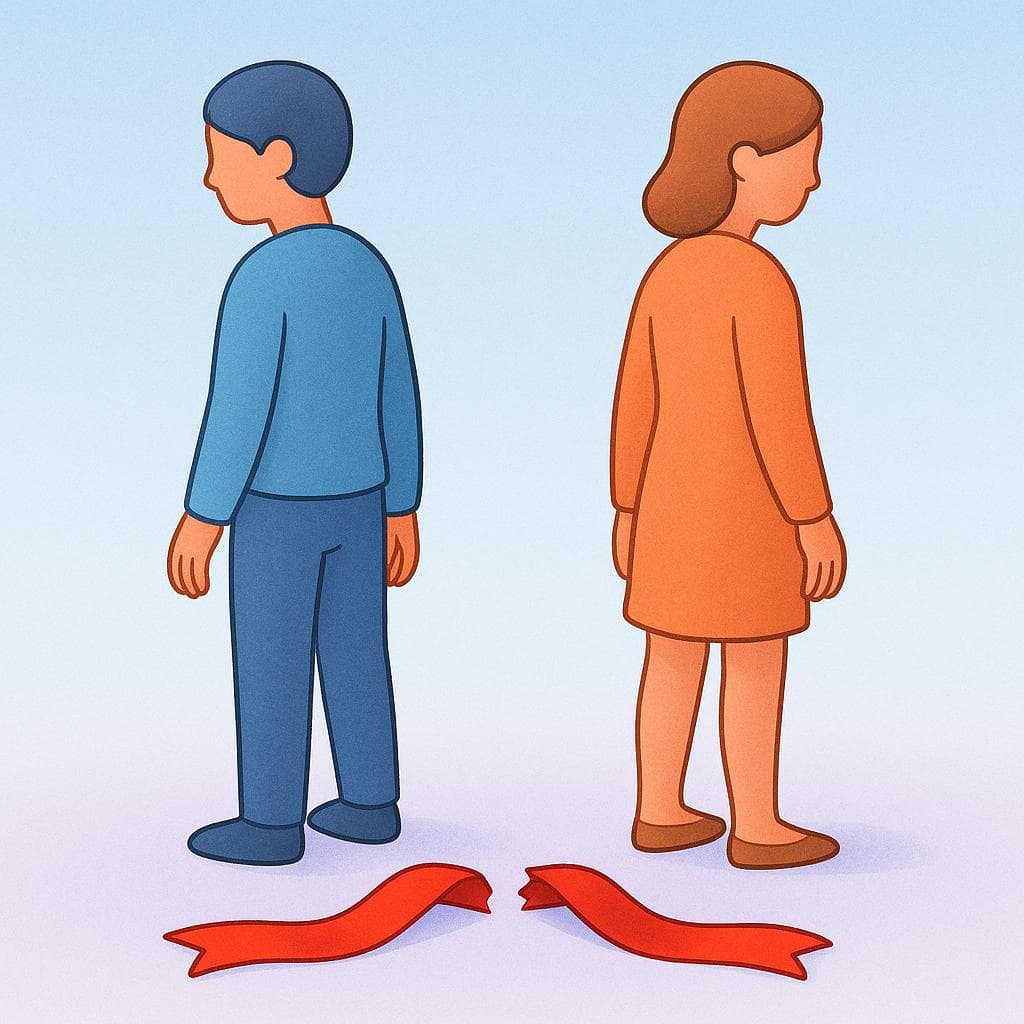
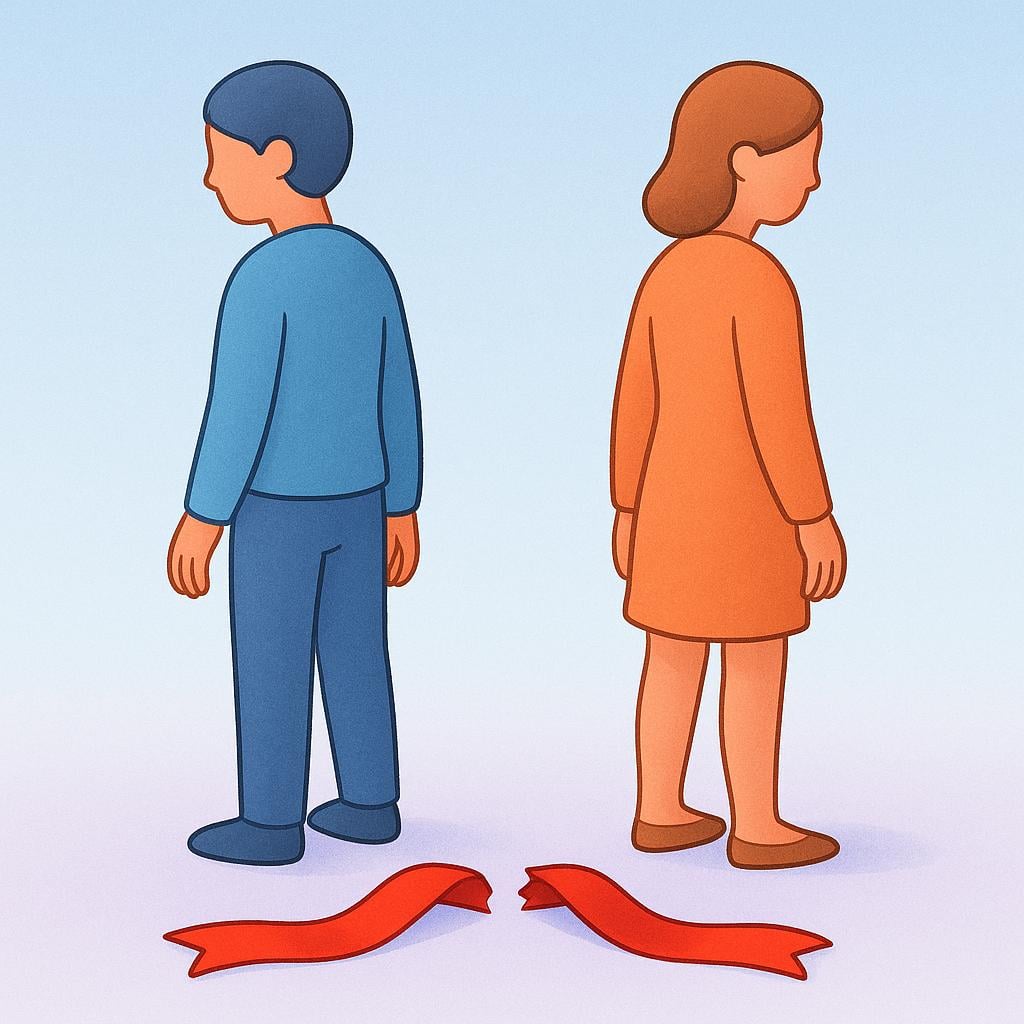
Two simplified figures standing far apart, facing away from each other, with a clearly severed red ribbon lying between them, symbolizing a broken relationship.

Depicting the end of a relationship: I broke up (with them).

rompí(Verb)

B2regular er

I broke up (with)

?

ending a relationship

Also:

I ended

?

a partnership

📝 In Action

Finalmente rompí con mi pareja porque ya no éramos felices.

B2

I finally broke up with my partner because we weren't happy anymore.

Rompí con esa empresa y busqué un nuevo proveedor.

C1

I broke ties with that company and looked for a new supplier.

Word Connections

Synonyms

  • terminar (to end)
  • separarse (to separate (reflexive))

Antonyms

Common Collocations

  • rompí con la tradiciónI broke with tradition

💡 Grammar Points

The 'Con' Requirement

When you mean 'to break up with someone,' you must always use the preposition 'con': 'rompí con mi novio' (I broke up with my boyfriend).

❌ Common Pitfalls

Forgetting 'con'

Mistake: "Rompí mi novio."

Correction: Rompí con mi novio. (Without 'con,' it sounds like you physically broke your boyfriend!)

🔄 Conjugations

indicative

present

él/ella/ustedrompe
yorompo
rompes
ellos/ellas/ustedesrompen
nosotrosrompemos
vosotrosrompéis

imperfect

él/ella/ustedrompía
yorompía
rompías
ellos/ellas/ustedesrompían
nosotrosrompíamos
vosotrosrompíais

preterite

él/ella/ustedrompió
yorompí
rompiste
ellos/ellas/ustedesrompieron
nosotrosrompimos
vosotrosrompisteis

subjunctive

present

él/ella/ustedrompa
yorompa
rompas
ellos/ellas/ustedesrompan
nosotrosrompamos
vosotrosrompáis

imperfect

él/ella/ustedrompiera / rompiese
yorompiera / rompiese
rompieras / rompieses
ellos/ellas/ustedesrompieran / rompiesen
nosotrosrompiéramos / rompiésemos
vosotrosrompierais / rompieseis

✏️ Quick Practice

💡 Quick Quiz: rompí

Question 1 of 2

Which sentence correctly uses 'rompí' to mean 'I ended a relationship'?

📚 More Resources

Word Family

romper(to break) - verb
roto(broken) - adjective

Frequently Asked Questions

Is 'rompí' regular or irregular?

'Rompí' itself is formed regularly in the Preterite tense (the 'I' form is standard for -ER verbs). However, the overall verb 'romper' is considered irregular because its past participle, used in compound tenses, is 'roto' (not 'rompido').

How do I say 'I was breaking' instead of 'I broke'?

You would use the Imperfect tense, which describes ongoing or habitual past actions. The form is 'yo rompía'.