tango
“tango” means “tango” in Spanish. It has 2 different meanings depending on context:
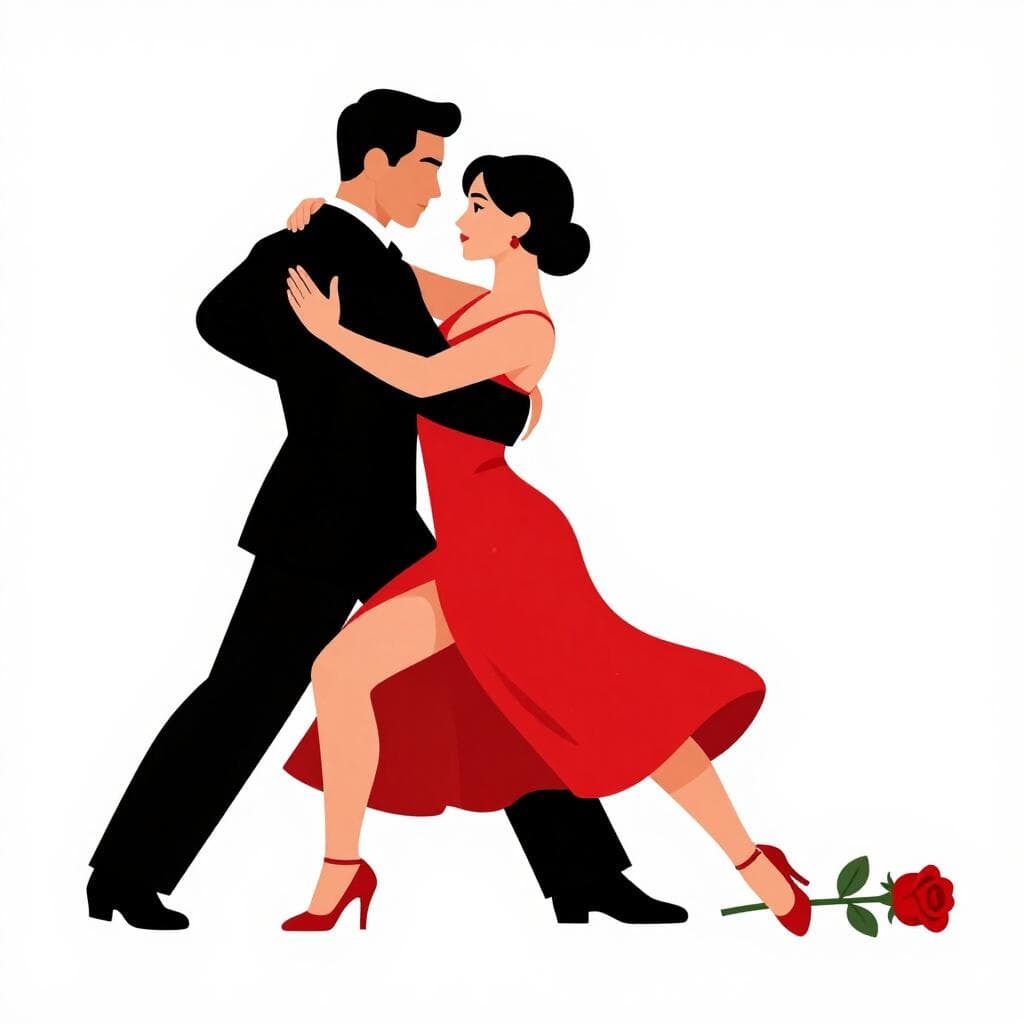

tango
Also: tango music
📝 In Action
El tango es un baile muy elegante y apasionado.
A1The tango is a very elegant and passionate dance.
Me gusta escuchar tango mientras tomo un café.
A2I like listening to tango while I have a coffee.
Buenos Aires es la capital mundial del tango.
B1Buenos Aires is the tango capital of the world.
fuss / scene
Also: mess
📝 In Action
No me vengas con tangos y dime la verdad.
C1Don't come to me with these stories (don't give me that runaround) and tell me the truth.
Se armó un tango en la oficina por el aire acondicionado.
C1A huge scene/fuss broke out in the office because of the air conditioning.
Vocabulary Collections
Translate to Spanish
✏️ Quick Practice
Quick Quiz: tango
Question 1 of 3
What is the correct gender for 'tango' when referring to the dance?
📚 More Resources
👥 Word Family▼
📚 Etymology▼
The word likely comes from African languages (possibly Ibibio or Yoruba), meaning 'drums' or 'place to dance'. It was brought to the Americas by enslaved Africans and eventually merged with European and local influences in the 19th century.
First recorded: Early 19th century
Cognates (Related words)
💡 Master Spanish
Take your Spanish to the next level. Read 200+ illustrated and narrated Spanish stories tailored to your level with the Inklingo app!
Frequently Asked Questions
Where does the word 'tango' actually come from?
While it's famous in Argentina, the word itself has African roots, originally referring to a place where people gathered to play drums and dance.
Is it capitalized in Spanish?
No, like other musical genres (rock, salsa, jazz), it is written in lowercase unless it starts a sentence.
Can 'tango' be a verb?
Technically, 'tango' is the 'I' form (yo) of the verb 'tanguear' (to dance tango), but people usually just say 'bailo tango' instead.