
Not About Real Ducks
Mistake: “Using the phrase when talking about actually buying or paying for a duck at a market.”
Correction: This expression is almost never used literally. If you're buying a duck, you would simply say 'comprar un pato'.
pah-GAR el PAH-toh
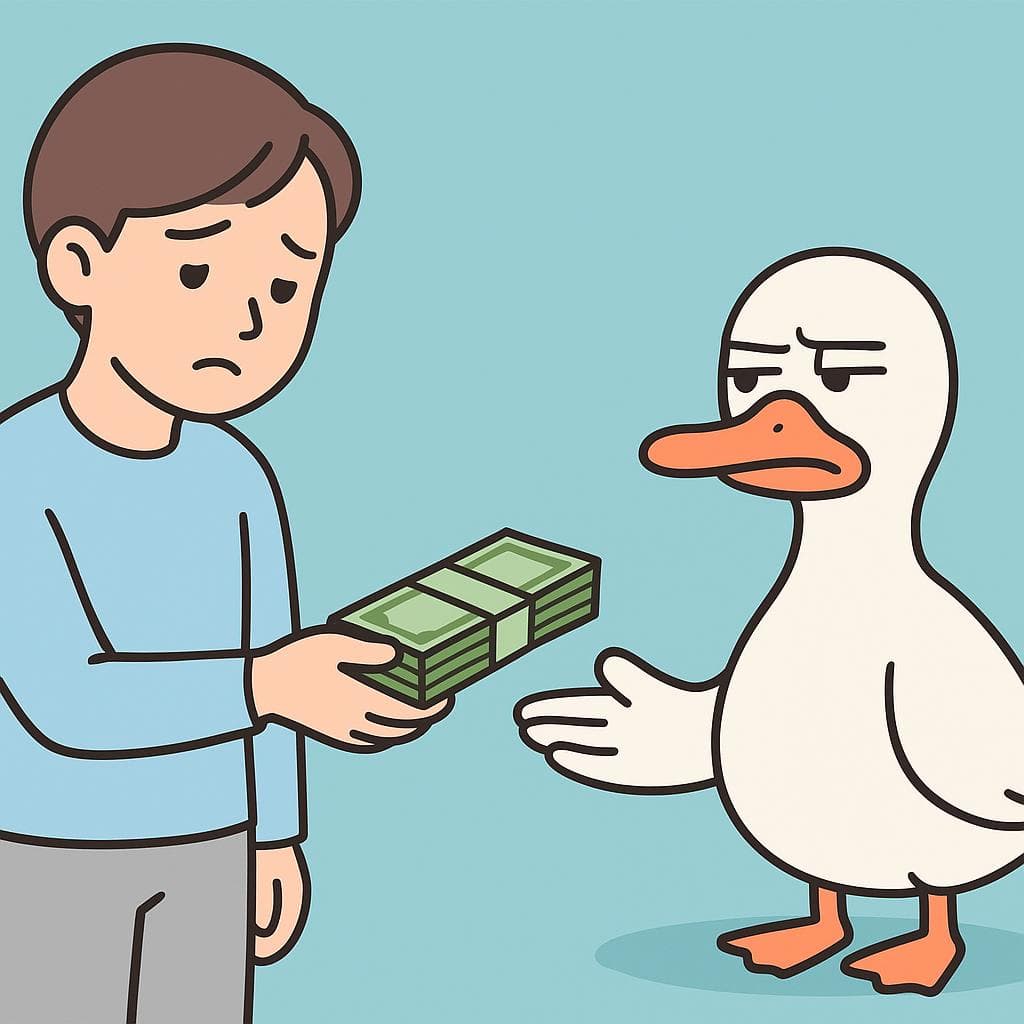
Literally, 'pagar el pato' means 'to pay the duck'.

In reality, it means to be unfairly blamed for something, to be the scapegoat.
Mis hermanos rompieron el jarrón, pero como yo estaba allí, me tocó pagar el pato.
B2My brothers broke the vase, but since I was there, I had to take the fall.
Hubo un error en el proyecto y al final el becario pagó el pato, aunque no fue su culpa.
B2There was an error in the project, and in the end, the intern was the scapegoat, even though it wasn't his fault.
One of the most popular stories behind this phrase dates back to medieval Spain. It's believed that in some communities, there was a cruel game where a duck would be chased. When it was caught, the local Jewish community was often unfairly forced to pay for it, regardless of who was involved. They were made the scapegoats who had to 'pay for the duck.' Over time, the phrase came to mean being blamed for something you didn't do.
Use this idiom when you want to emphasize that someone is being blamed or punished unfairly. It carries a strong sense of injustice.
The person who 'paga el pato' is always the victim or the scapegoat, never the person who is actually guilty. It's about receiving consequences you don't deserve.
Mistake: “Using the phrase when talking about actually buying or paying for a duck at a market.”
Correction: This expression is almost never used literally. If you're buying a duck, you would simply say 'comprar un pato'.
Extremely common and used across all regions.
Widely understood and used in most countries, including Mexico, Argentina, and Colombia.
Question 1 of 1
If your coworker says, 'Yo no hice nada, pero al final pagué el pato', what happened?
Want to sound more natural when using this idiom? Practice your Spanish pronunciation with our collection of tongue twisters.
Browse Spanish Tongue Twisters →Idioms make sense in context. Read 200+ illustrated and narrated Spanish stories to see idioms used naturally by characters — and build the ear native speakers have.
No, the idiom is fixed. 'Pato' (duck) is always masculine in this expression, regardless of who is being blamed. You would say 'Ella pagó el pato'.