How to Say "apartment" in Spanish
The most common Spanish word for “apartment” is “apartamento” — use this general term for a rented or owned dwelling unit within a larger building, widely understood across Spanish-speaking regions.




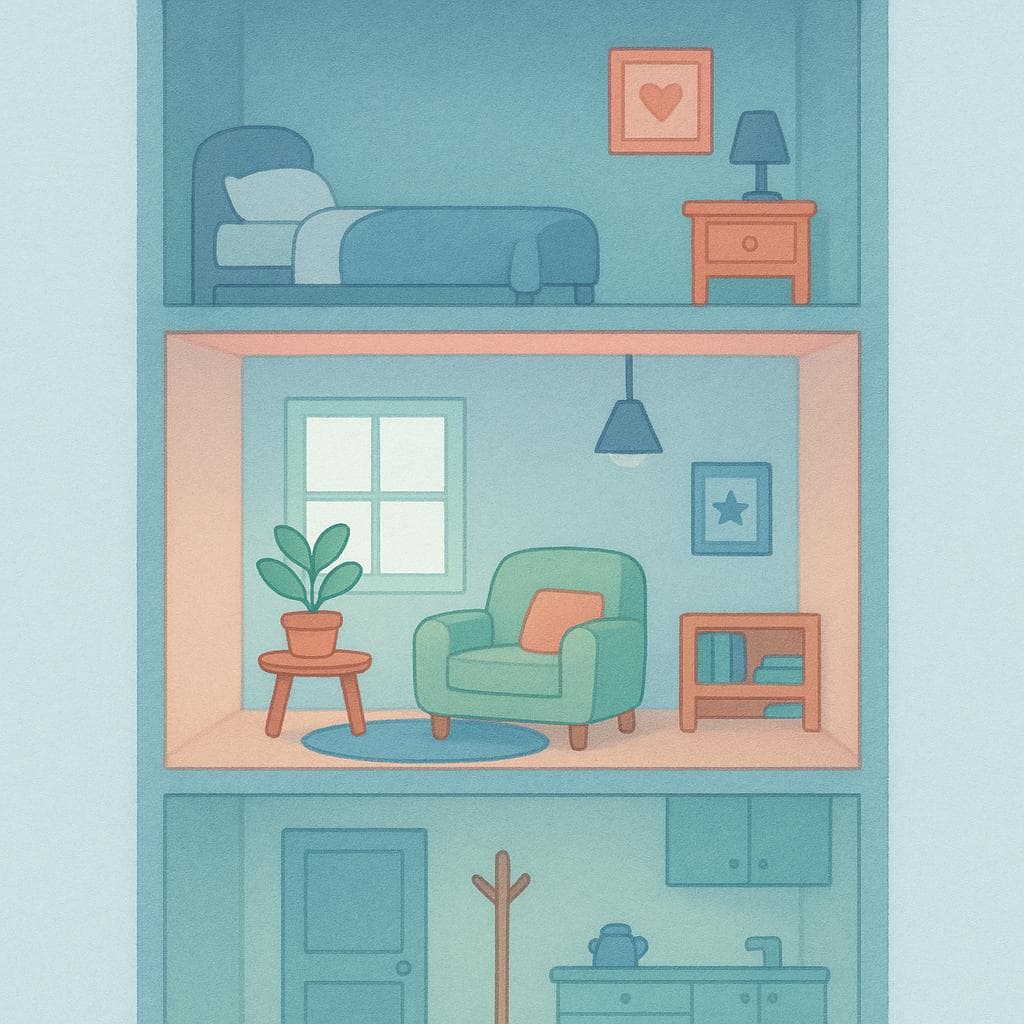

apartamento
ah-par-tah-MEN-toha.paɾ.taˈmen.to

Examples
Necesito un apartamento con dos dormitorios.
I need an apartment with two bedrooms.
¿Cuánto cuesta alquilar este apartamento cerca de la playa?
How much does it cost to rent this apartment near the beach?
Hemos decorado el apartamento con muebles modernos.
We have decorated the flat with modern furniture.
Masculine Noun Rule
Since 'apartamento' ends in -o, it uses the masculine article 'el' (el apartamento) and the masculine plural 'los' (los apartamentos). This is a very common pattern for Spanish nouns.
Using the wrong article
Mistake: “La apartamento es muy grande.”
Correction: El apartamento es muy grande. Remember 'apartamento' is masculine.
piso
pee-soˈpiso

Examples
Mi hermana vive en un piso en el centro de Barcelona.
My sister lives in an apartment in the center of Barcelona.
¿Estás buscando un piso para alquilar o para comprar?
Are you looking for an apartment to rent or to buy?
Regional Usage
Mistake: “Using 'piso' in all Spanish-speaking countries to mean 'apartment'.”
Correction: While understood, 'apartamento' or 'departamento' are much more common in most of Latin America. 'Piso' is the main word in Spain.
departamento
de-par-ta-MEN-todepaɾta'mento

Examples
Vivo en un departamento pequeño en el centro de la ciudad.
I live in a small apartment in the city center.
¿Estás buscando un departamento para alquilar?
Are you looking for an apartment to rent?
Mis padres compraron un departamento con vista al mar.
My parents bought an apartment with an ocean view.
Masculine Noun
Even though it ends in '-o', remember that 'departamento' is a masculine word. So, you'll always use 'el' or 'un' with it: 'el departamento' (the apartment), 'un departamento' (an apartment).
estudio
es-TOO-dyohesˈtuðjo

Examples
Alquilé un estudio amueblado cerca de la universidad.
I rented a furnished studio apartment near the university.
Necesito concentrarme en mi estudio para el examen.
I need to concentrate on my studying for the exam.
Mi hermana alquiló un pequeño estudio cerca de la universidad.
My sister rented a small studio apartment near the university.
El fotógrafo tiene su propio estudio en el centro de la ciudad.
The photographer has his own studio in the city center.
Masculine Noun Rule
Even though 'estudio' ends in '-o', which usually indicates a masculine word, it's good practice to always memorize the article: 'el estudio'.
Confusing 'estudio' (noun) and 'estudiar' (verb)
Mistake: “Hago estudio todos los días. (I do study every day.)”
Correction: Estudio todos los días. (I study every day.) 'Estudio' as a noun is the act; 'estudio' as a verb form is the action itself.
unidad
oo-nee-DAHDu.niˈðað
Examples
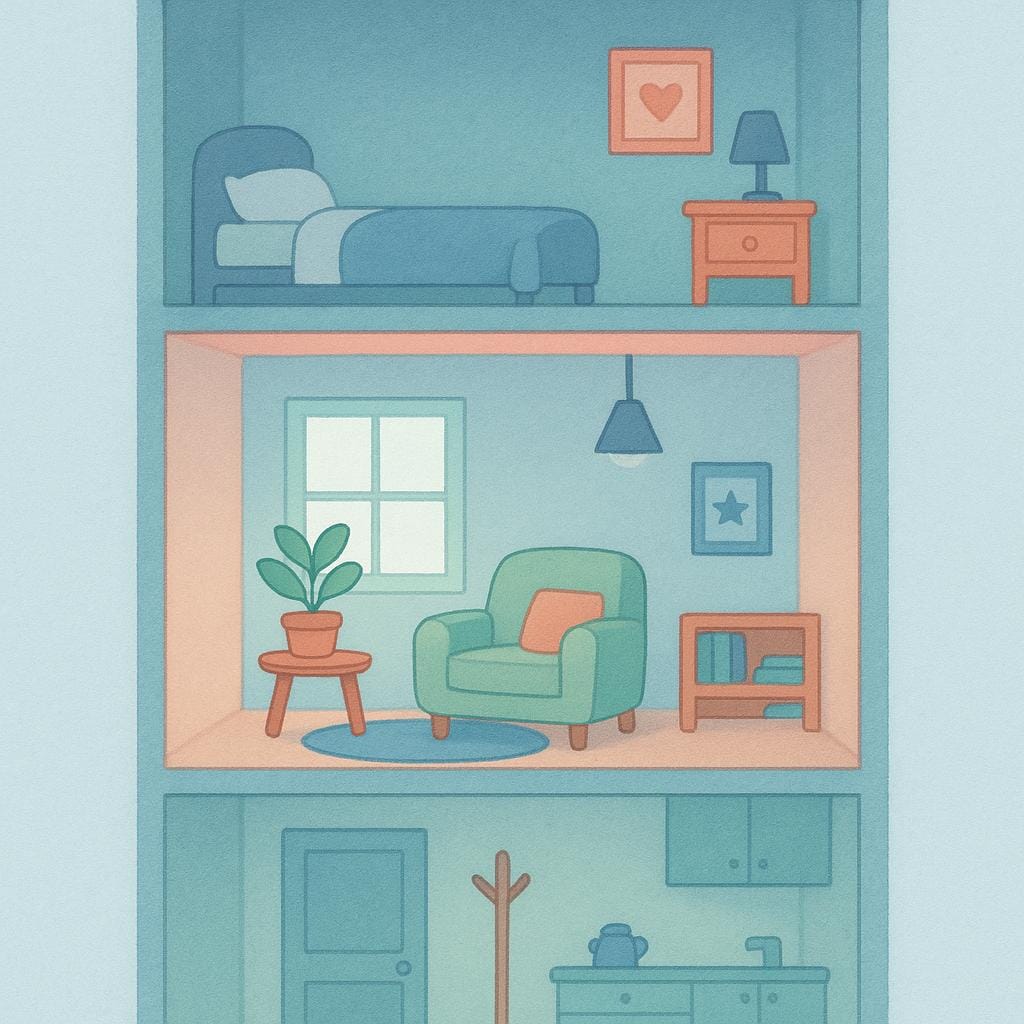
Estamos buscando una unidad de dos dormitorios para alquilar.
We are looking for a two-bedroom apartment (unit) to rent.
El edificio tiene 40 unidades residenciales.
The building has 40 residential units.
pis
peespis

Examples
¡Qué pis tan chulo!
What a cool flat!
Estamos buscando un pis de tres habitaciones cerca del metro.
We are looking for a three-bedroom flat near the subway.
Mi pis está en el quinto piso, así que uso el ascensor.
My apartment is on the fifth floor, so I use the elevator.
Always Masculine
This abbreviated noun is masculine: 'un pis' or 'el pis'.
Confusing with 'Piso'
Mistake: “Thinking 'pis' refers to the floor level (like 'first floor').”
Correction: 'Pis' is only used to mean the entire dwelling (the apartment). If you mean the level, you must say 'piso'.
Regional Differences are Key
Related Translations
Learn Spanish with Inklingo
Interactive stories, personalized learning, and more.