How to Say "carnival" in Spanish
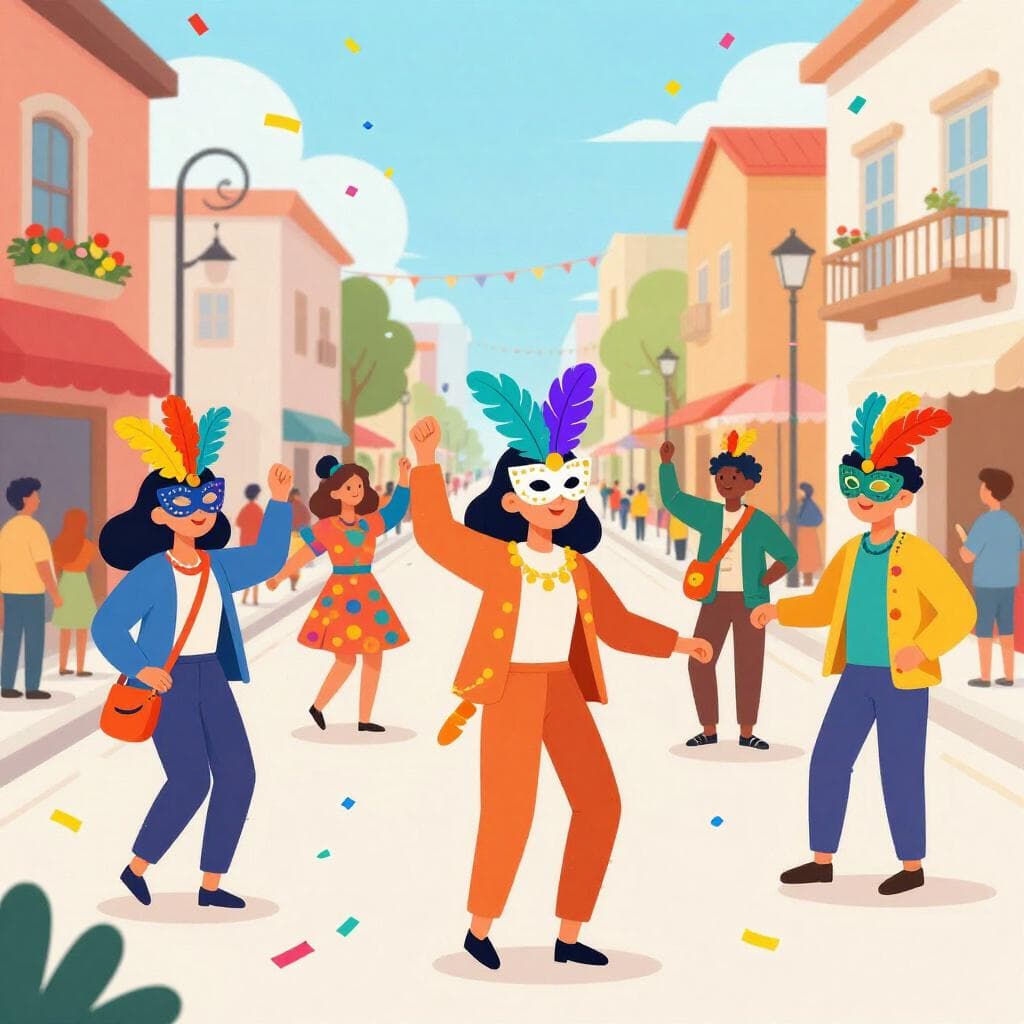
The most common Spanish word for “carnival” is “carnaval” — use 'carnaval' to refer to the festive season celebrated before Lent, often with parades, costumes, and parties, like those in Rio or Venice.

carnaval
kar-na-BALkaɾnaˈβal

Examples
El carnaval de Río de Janeiro es el más grande del mundo.
The Rio de Janeiro carnival is the biggest in the world.
Mucha gente usa máscaras y disfraces durante el carnaval.
Many people wear masks and costumes during the carnival.
Fuimos a Cádiz para ver los desfiles de carnaval.
We went to Cadiz to see the carnival parades.
Masculine Word Rule
This word is masculine, so you should always use 'el' or 'un'. A helpful pattern is that most Spanish words ending in 'l' are masculine.
Making it Plural
To talk about multiple carnivals, add '-es' to the end: 'los carnavales'.
The Gender Trap
Mistake: “Me gusta la carnaval.”
Correction: Me gusta el carnaval. Even though 'fiesta' (party) is feminine, 'carnaval' is a masculine word.
feria
FEH-ree-ahˈfe.ɾja

Examples
Todos los años vamos a la feria del pueblo en agosto.
Every year we go to the town fair in August.
Me encantan las atracciones de la feria, especialmente la rueda gigante.
I love the rides at the carnival, especially the Ferris wheel.
Always Feminine
Remember that 'feria' is always treated as a feminine word, so you must use 'la feria' or 'una feria'.
Carnaval vs. Feria
Related Translations
Learn Spanish with Inklingo
Interactive stories, personalized learning, and more.