How to Say "chin" in Spanish
The most common Spanish word for “chin” is “barbilla” — use 'barbilla' for the anatomical part of the face located below the mouth, which is the most common and standard translation for 'chin'.
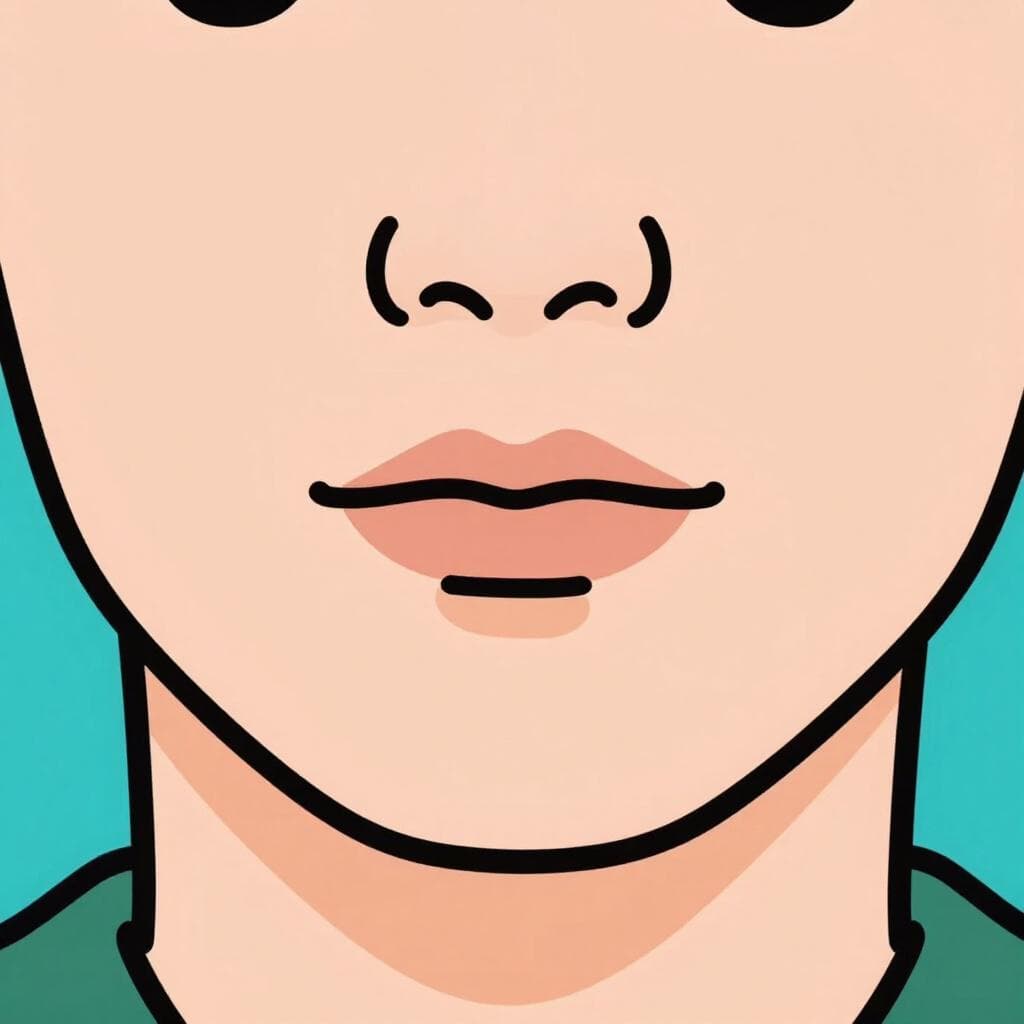

barbilla
bar-bee-yahbaɾˈbiʝa

Examples
Se dio un golpe en la barbilla jugando al fútbol.
He hit his chin playing soccer.
Me pica la barbilla.
My chin itches.
Él tiene un hoyuelo en la barbilla.
He has a dimple on his chin.
Ella apoyó la barbilla en su mano mientras escuchaba.
She rested her chin on her hand while she listened.
Using 'the' instead of 'my'
In Spanish, we use 'la' (the) instead of 'mi' (my) for body parts when it's obvious who we're talking about. Instead of 'my chin,' say 'la barbilla.'
Using 'mi' too much
Mistake: “Me duele mi barbilla.”
Correction: Me duele la barbilla. Spanish speakers prefer the definite article ('la') for body parts.
barba
BAR-bahˈbaɾβa

Examples
Es un hombre de barba poblada y barbilla prominente.
He is a man with a thick beard and a prominent chin.
Mi tío se dejó crecer la barba durante las vacaciones.
My uncle let his beard grow during the holidays.
Llevaba una barba larga y canosa, como un sabio.
He wore a long, gray beard, like a wise man.
El gato tiene unas barbas muy sensibles que le ayudan a orientarse.
The cat has very sensitive whiskers that help it orient itself.
Gender Check
Even though 'barba' ends in '-a' (which usually means feminine), remember that Spanish nouns referring to body parts are almost always used with definite articles (la barba, el brazo) instead of possessives (mi barba) when the owner is clear from the sentence.
Beard vs. Mustache
Mistake: “Using 'barba' when you only mean the hair above the lip.”
Correction: Use 'bigote' (mustache) for hair only above the lip, and 'barba' for hair on the chin and cheeks.
Confusing 'barba' and 'barbilla'
Learn Spanish with Inklingo
Interactive stories, personalized learning, and more.