How to Say "delayed" in Spanish
The most common Spanish word for “delayed” is “retrasado” — use 'retrasado' when referring to a schedule, transportation, or event that is not happening at its planned time.




retrasado
re-trah-SAH-dohre.tɾaˈsaðo
Examples
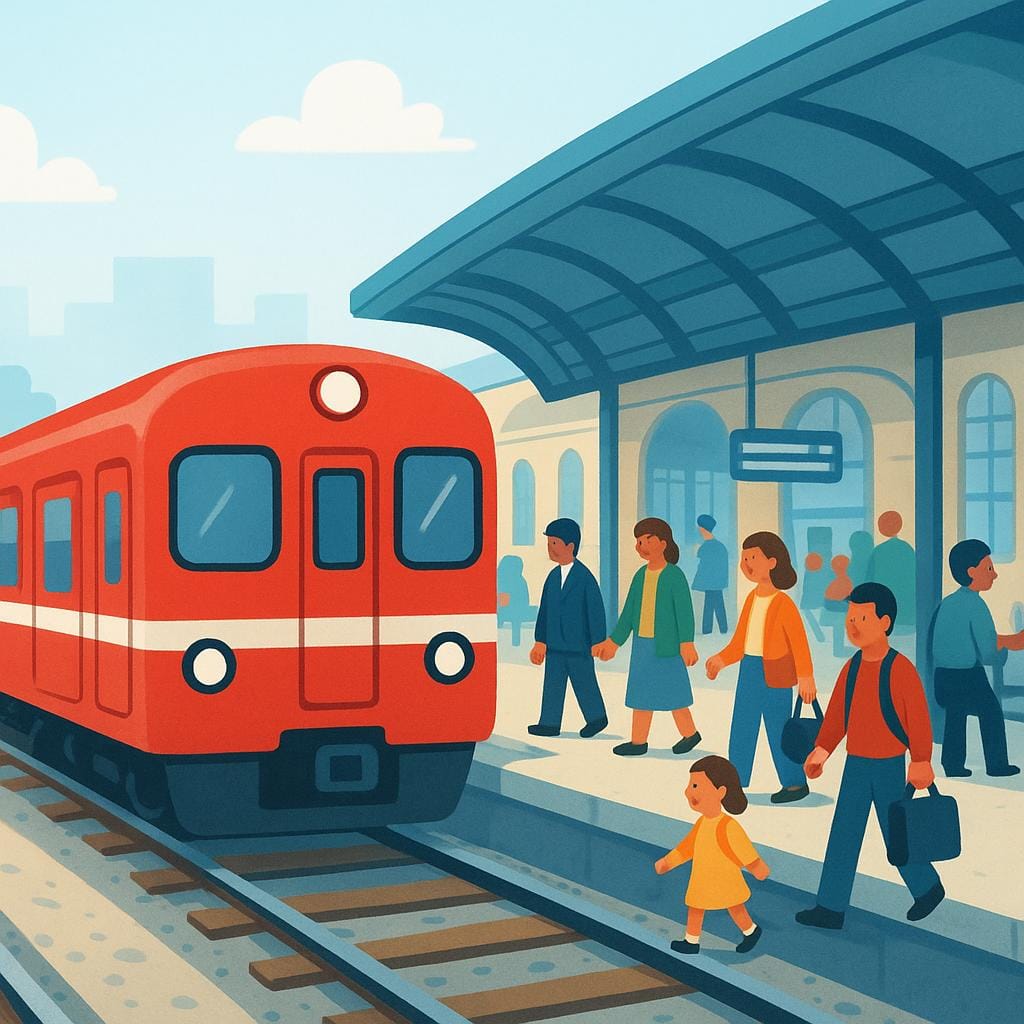
El tren llegó con veinte minutos de retraso.
The train arrived twenty minutes late.
El vuelo a Madrid está retrasado por mal tiempo.
The flight to Madrid is delayed due to bad weather.
Mi reloj está cinco minutos retrasado.
My watch is five minutes slow/behind.
La entrega de los materiales va muy retrasada.
The delivery of the materials is very delayed.
Use with Estar
When describing a temporary state of being behind schedule, use the verb 'estar': 'El tren está retrasado' (The train is delayed right now).
Agreement
Like most Spanish describing words, 'retrasado' must match the thing it describes: 'retrasado' (masc. sing.), 'retrasada' (fem. sing.), 'retrasados' (masc. plural), 'retrasadas' (fem. plural).
detenido
deh-teh-NEE-dohde.teˈni.ðo

Examples
El tráfico estuvo detenido por horas debido a la nieve.
Traffic was stopped for hours due to the snow.
El tráfico estuvo detenido por un accidente en la autopista.
Traffic was stopped due to an accident on the highway.
El proyecto de construcción quedó detenido hasta el próximo mes.
The construction project was halted until next month.
Agreement is Key
When used as an adjective, 'detenido' must match the thing it describes in both gender and number: 'la obra detenida' (the halted work), 'los trenes detenidos' (the stopped trains).
Temporary vs. Permanent Stop
Mistake: “Using 'ser' (to be) with 'detenido' when describing a temporary stop, like traffic.”
Correction: Use 'estar' (to be) for a temporary state: 'El tráfico está detenido.' (The traffic is stopped right now.)
retardado
reh-tar-DAH-dohretaɾˈdaðo

Examples
La reacción alérgica fue retardada y apareció al día siguiente.
The allergic reaction was delayed and appeared the next day.
La medicina tiene un efecto retardado que dura doce horas.
The medicine has a delayed effect that lasts twelve hours.
El crecimiento de la planta fue retardado por la falta de luz.
The plant's growth was slowed down by the lack of light.
Hubo un encendido retardado en el motor del avión.
There was a delayed ignition in the airplane engine.
Matching with the Noun
This word changes its ending to match what you are describing. Use 'retardado' for masculine items (un efecto) and 'retardada' for feminine items (una acción).
Positioning
In Spanish, this adjective usually comes after the noun it describes, like 'un proceso retardado' (a delayed process).
Using it for 'late' people
Mistake: “Soy retardado para la clase.”
Correction: Llego tarde a clase o estoy atrasado.
detuvo
deh-TOO-vohdeˈtuβo

Examples
El policía detuvo el coche que iba demasiado rápido.
The police officer stopped the car that was going too fast.
El conductor detuvo el autobús de repente.
The driver stopped the bus suddenly.
Ella detuvo la grabación para hablar por teléfono.
She paused the recording to talk on the phone.
La policía detuvo el tráfico por el accidente.
The police halted traffic because of the accident.
Tense Identification
'Detuvo' is the simple past tense (preterite) used when talking about a single, completed action in the past by a third person (he, she, or formal you).
Irregularity Pattern
The verb 'detener' is irregular, following the pattern of 'tener' (to have). Notice the 'u' (detUvo, tUve) in the simple past.
Confusing Past Tenses
Mistake: “Using 'detenía' when referring to a single, quick action: 'Ella detenía el carro.'”
Correction: Use 'detuvo' for single completed actions: 'Ella detuvo el carro.' 'Detenía' describes continuous or habitual past actions.
Schedule vs. Stopped
Learn Spanish with Inklingo
Interactive stories, personalized learning, and more.