How to Say "ferry" in Spanish
The most common Spanish word for “ferry” is “ferri” — use 'ferri' for large, modern vessels that transport many passengers and vehicles, like car ferries or passenger ferries operating on regular routes.
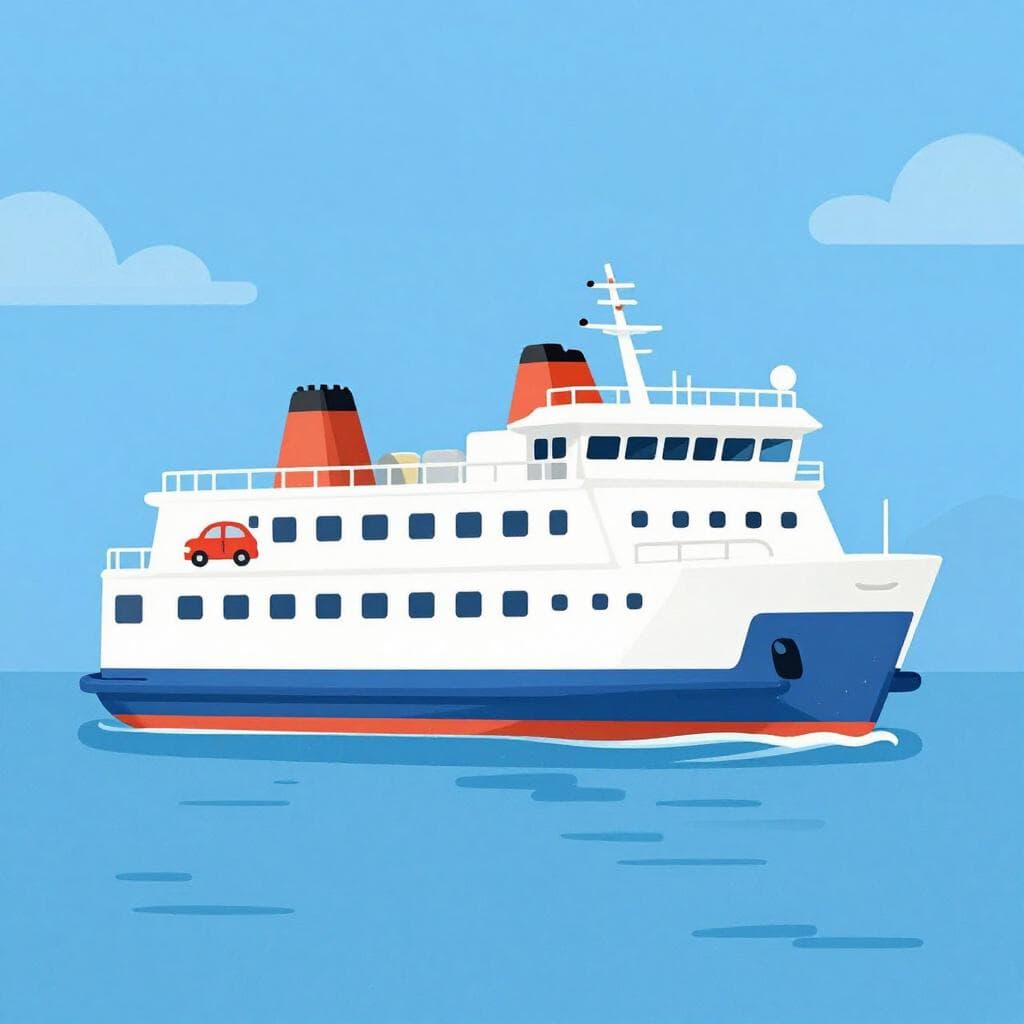
Use 'ferri' for large, modern vessels that transport many passengers and vehicles, like car ferries or passenger ferries operating on regular routes.
Learn more →
Use 'transbordador' for a ferry, especially one that carries vehicles and people across a river or strait, emphasizing its function of transporting things back and forth.
Learn more →
Use 'balsa' for a simpler, often smaller, and more basic raft or flatboat, typically used for crossing short distances on rivers or lakes, or even a makeshift one.
Learn more →fe-rreeˈferi
Examples
Tomo el ferri cada mañana para ir a trabajar.
I take the ferry every morning to go to work.
¿A qué hora sale el próximo ferri hacia Ibiza?
What time does the next ferry to Ibiza leave?
Pudimos subir el coche al ferri sin problemas.
We were able to get the car onto the ferry without any problems.
Always Masculine
Even though it ends in 'i', which is unusual for Spanish nouns, it is always masculine. You must say 'el ferri' or 'un ferri'.
Plural Form
To make it plural, simply add an 's' at the end: 'los ferris'. Don't use a 'y' like in the English 'ferries'.
English Spelling
Mistake: “Escribí 'ferry' en mi examen de español.”
Correction: Debes escribir 'ferri'.
trans-bor-da-dortɾansβoɾðaˈðoɾ

Examples
El transbordador cruza el río cada media hora.
The ferry crosses the river every half hour.
Para llegar a la isla, hay que tomar un transbordador.
To get to the island, you have to take a ferry.
El transbordador de carga ya está en el puerto.
The cargo shuttle is already in the port.
A masculine naming pattern
Most words ending in '-dor' that refer to machines or people doing an action are masculine (el).
Making it plural
Since it ends in a consonant, you add '-es' to the end to talk about more than one: 'los transbordadores'.
Confusing it with a regular boat
Mistake: “Using 'transbordador' for a private yacht.”
Correction: Use 'transbordador' specifically for vehicles that 'shuttle' things back and forth on a fixed route.
BAHL-sahˈbalsa

Examples
Hicimos una balsa con troncos de madera para cruzar el río.
We made a raft with wooden logs to cross the river.
El barco tenía suficientes balsas salvavidas para todos los pasajeros.
The ship had enough life rafts for all the passengers.
La balsa descendió por los rápidos con mucha velocidad.
The raft went down the rapids very quickly.
Feminine Noun Patterns
'Balsa' is a feminine word. Always use 'la' or 'una' with it, and make sure any describing words (adjectives) end in 'a', like 'la balsa pequeña'.
Confusing Rafts and Boats
Mistake: “Using 'barco' for everything that floats.”
Correction: Use 'balsa' specifically for flat structures without a proper hull. A 'barco' usually has a deep bottom and a motor or sails.
Choosing between 'ferri' and 'transbordador'
The most common confusion is between 'ferri' and 'transbordador'. While both refer to ferries, 'ferri' is more general for larger passenger/vehicle transport, whereas 'transbordador' specifically highlights the back-and-forth crossing function. 'Balsa' is distinct for simpler rafts.
Related Translations
Learn Spanish with Inklingo
Interactive stories, personalized learning, and more.