How to Say "fine" in Spanish
The most common Spanish word for “fine” is “buen” — use 'buen' before a masculine singular noun to mean 'good' in quality or type.









buen
bwenbwen

Examples
Hoy es un buen día para empezar.
Today is a good day to start.
Mi abuelo es un buen hombre.
My grandfather is a good man.
Necesito un buen libro para las vacaciones.
I need a good book for the holidays.
The Short Form of 'Bueno'
'Buen' is a special, shorter version of the word 'bueno'. You must use 'buen' instead of 'bueno' when you place it right before a word for a single, male person or thing.
Before vs. After
Placing 'buen' before a word (like 'un buen libro') gives a general, positive feeling. Placing the full word 'bueno' after it ('un libro bueno') can feel more like a specific judgment of its quality.
Using with Female Words
Mistake: “Es una buen chica.”
Correction: Use 'buena' for female words: 'Es una buena chica.' 'Buen' is only for male words.
Using After the Word
Mistake: “Es un amigo buen.”
Correction: If the describing word comes after, you must use the full form 'bueno': 'Es un amigo bueno.' 'Buen' must always come before.
Using with Plural Words
Mistake: “Son buen amigos.”
Correction: For multiple things, you need the plural form 'buenos': 'Son buenos amigos.' 'Buen' is only for one single thing.
buena
BWEH-nahˈbwena

Examples
Es una buena doctora.
She is a good doctor.
Compré una falda muy buena y barata.
I bought a very good and cheap skirt.
Tiene buena memoria para los nombres.
She has a good memory for names.
Matching the Noun
Adjectives in Spanish change to match the thing they describe. 'Buena' is the form you use for feminine things, like 'una casa buena' (a good house). For masculine things, you'd use 'bueno', like 'un libro bueno' (a good book).
Where Does it Go?
Usually, 'buena' comes after the noun ('una amiga buena'). Placing it before the noun ('una buena amiga') can make it sound a bit more emotional or emphasize a close relationship, like saying 'a dear friend'.
Gender Mix-up
Mistake: “El coche es buena.”
Correction: El coche es bueno. 'Coche' is a masculine word, so the adjective needs to be masculine too ('bueno'). 'Buena' is for feminine words like 'la casa'.
bien
byenˈbjen

Examples
Ella canta muy bien.
She sings very well.
No me siento bien hoy.
I don't feel well today.
El examen me salió bien.
The exam went well for me.
Adverb vs. Adjective: `bien` vs. `bueno`
Bien usually describes how you do something (an action), while bueno describes what something is like (a person or thing). Think: 'sing well' (cantar bien) vs. 'a good song' (una buena canción).
Using `bueno` instead of `bien` for Health
Mistake: “Estoy bueno.”
Correction: Estoy bien. (I am well.)
ok
o-keioˈkei

Examples
—¿Cómo estás? —Estoy ok.
—How are you? —I'm okay.
¿Cómo estás? - Estoy ok.
How are you? - I'm okay.
La comida no era increíble, pero estaba ok.
The food wasn't incredible, but it was okay.
No te preocupes por el jarrón, está ok.
Don't worry about the vase, it's okay.
An Adjective That Never Changes
'Ok' is special because it's an adjective that always stays the same. It doesn't change for masculine, feminine, or plural. For example: 'El libro está ok' (The book is okay) and 'Las películas están ok' (The movies are okay).
fino
fee-nohˈfino
Examples
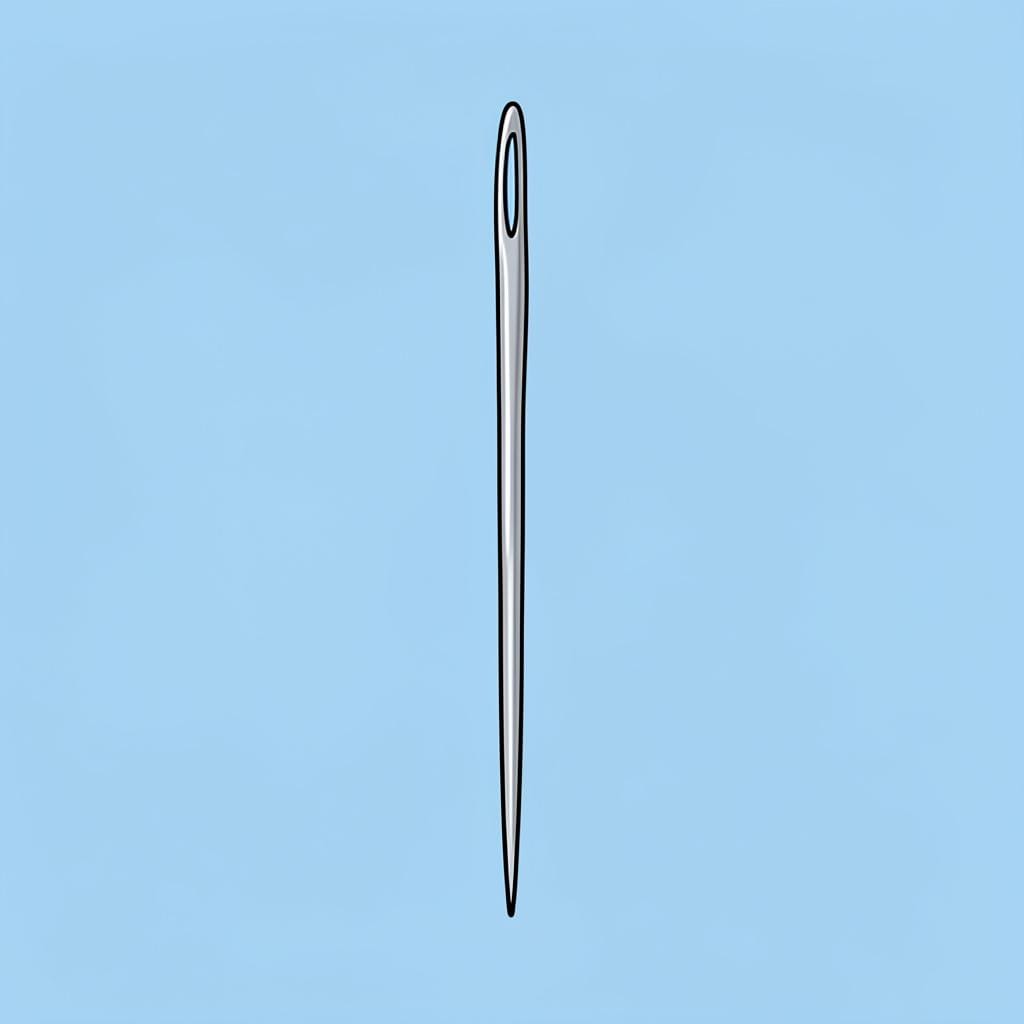
Dibuja una línea muy fina con el lápiz.
Draw a very thin line with the pencil.
La arena de esta playa es muy fina.
The sand on this beach is very fine.
Matching the Gender
Remember to change the ending to 'fina' if the object you are describing is feminine, like 'la mesa fina'.
Fino vs. Delgado
Mistake: “Using 'fino' to describe a person who has lost weight.”
Correction: Use 'delgado' for people. Use 'fino' for objects or textures like paper, hair, or sand.
multa
MULL-tahˈmulta

Examples
Recibí una multa por aparcar en zona prohibida.
I received a fine for parking in a prohibited area.
La multa por exceso de velocidad fue de 200 euros.
The fine for speeding was 200 euros.
Si devuelves el libro tarde, tendrás que pagar una multa a la biblioteca.
If you return the book late, you will have to pay a fine to the library.
Gender is Feminine
Remember that 'multa' is always feminine, so you must use 'la multa' or 'una multa' when referring to it.
Using 'Dar' instead of 'Poner'
Mistake: “Me dieron una multa.”
Correction: Me pusieron una multa. (In Spanish, authorities 'put' or 'place' a fine on you, using the verb 'poner', not 'dar' (to give)).
okey
oh-kayoˈkei

Examples
—¿Nos vemos a las ocho? —Okey, allí estaré.
—Shall we meet at eight? —Okay, I'll be there.
Okey, entiendo lo que dices.
All right, I understand what you're saying.
A Word That Never Changes
This word is 'invariable,' which just means it always stays exactly the same. You don't need to change it if you are talking to one person or many people.
Spelling Varieties
Mistake: “Thinking 'okey' is the only way to write it.”
Correction: In Spanish, you will see 'okey,' 'OK,' and 'ok.' 'Okey' is just the way we spell it to match how it sounds in Spanish!
hermoso
er-MOH-soheɾˈmoso

Examples
El paisaje desde la montaña es hermoso.
The landscape from the mountain is beautiful.
Tu vestido es hermoso, ¿dónde lo compraste?
Your dress is gorgeous, where did you buy it?
Gracias por el hermoso regalo.
Thank you for the lovely gift.
Making it Match: Gender & Number
Like most Spanish describing words, 'hermoso' must change its ending to match the person or thing it describes. Use 'hermoso' for masculine things, 'hermosa' for feminine things, 'hermosos' for plural masculine things, and 'hermosas' for plural feminine things.
Where to Put It
Usually, 'hermoso' comes after the thing it describes (e.g., 'un coche hermoso' - a beautiful car). You can put it before for a more poetic or emotional effect (e.g., 'un hermoso día' - a beautiful day).
Forgetting to Change the Ending
Mistake: “La casa es hermoso.”
Correction: Say 'La casa es hermosa.' Because 'casa' is a feminine word (it ends in -a), the describing word 'hermoso' needs to change to 'hermosa' to match.
Ser vs. Estar
Mistake: “La playa es hermosa hoy.”
Correction: It's better to say 'La playa está hermosa hoy.' Use 'ser' (es) for permanent qualities ('La playa es hermosa' - The beach is a beautiful place in general). Use 'estar' (está) for temporary states or how something looks right now ('La playa está hermosa hoy' - The beach looks beautiful today).
delgado
del-GAH-dohdelˈɣaðo

Examples
La pared es muy delgada y se escucha todo.
The wall is very thin and you can hear everything.
Necesito un hilo muy delgado para este bordado.
I need a very fine thread for this embroidery.
El café estaba demasiado delgado, casi agua.
The coffee was too weak/light, almost water.
Describing Consistency
You can use 'delgado' to describe liquids or foods that are watery or lack body, like a light sauce or weak coffee. It means the consistency is 'thin.'
bello
BAY-yohˈbe.ʎo

Examples
Fue un bello gesto de su parte ayudar a los necesitados.
It was a noble gesture on his part to help those in need.
La justicia es uno de los más bellos ideales de la humanidad.
Justice is one of humanity's finest ideals.
Vivimos en la bella época de la literatura renacentista.
We lived during the great era of Renaissance literature.
Literary Use
In this formal sense, 'bello' often precedes the noun (e.g., 'un bello ideal') to emphasize the inherent quality, giving it a poetic or literary feel.
sanción
Examples
El conductor recibió una sanción por exceso de velocidad.
The driver received a penalty for speeding.
noble
NO-blehˈnoβle

Examples
La familia noble vivía en un castillo antiguo.
The noble family lived in an old castle.
La madera noble de roble se usó para construir el palacio.
Fine oak wood was used to build the palace.
Used as a Noun
When you put a definite article (like 'el' or 'la') before 'noble,' it stops being an adjective and becomes a noun meaning 'a nobleman' or 'a noblewoman' (e.g., 'El noble fue a la guerra').
Good vs. Thin
Learn Spanish with Inklingo
Interactive stories, personalized learning, and more.