How to Say "held" in Spanish
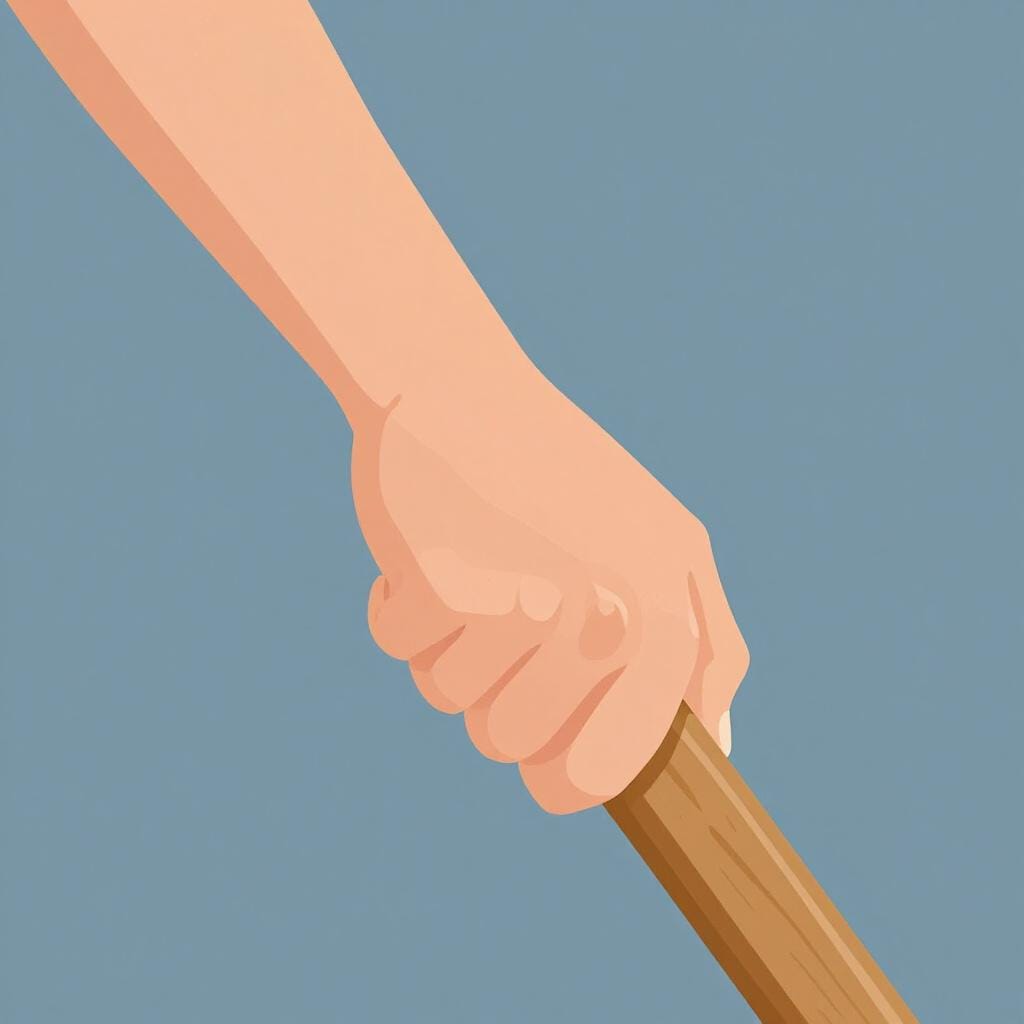
The most common Spanish word for “held” is “agarrado” — use 'agarrado' when someone is physically gripping or holding onto something, often for support or security.
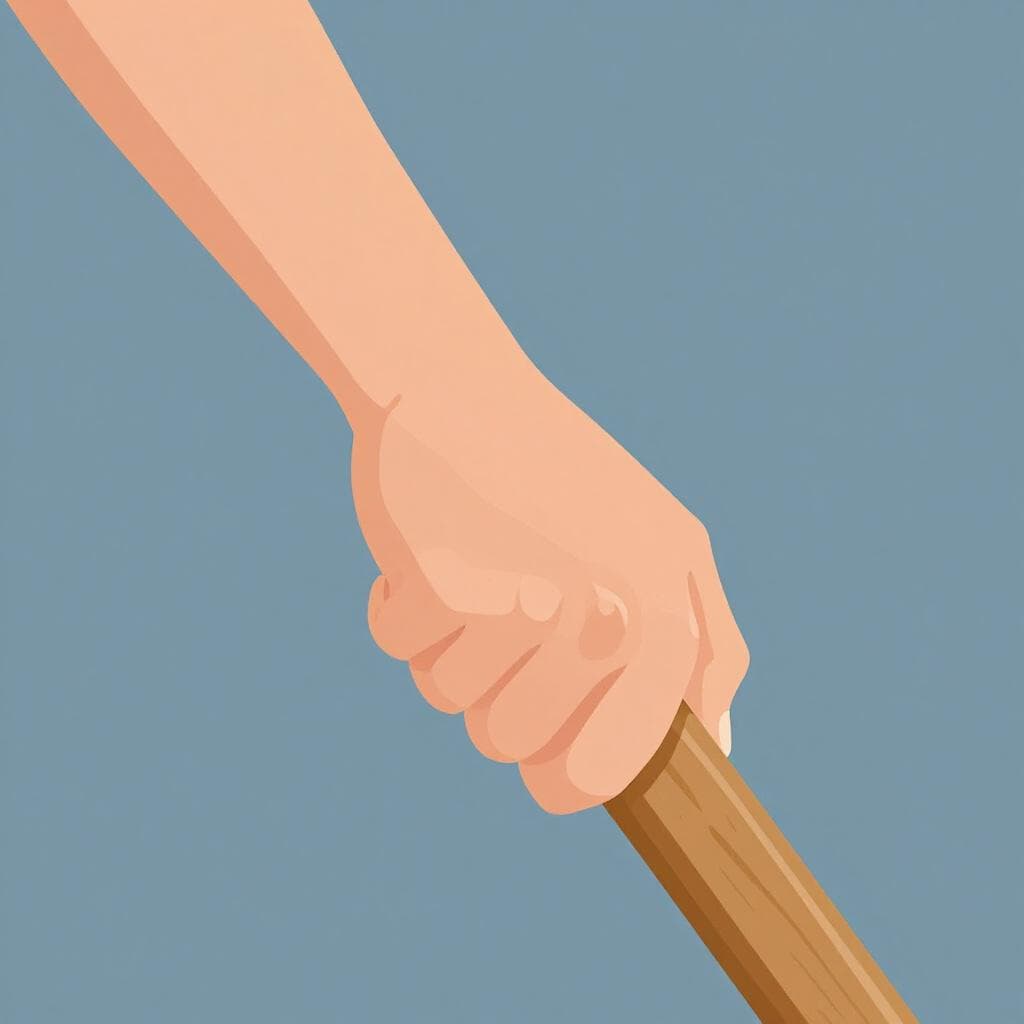





agarrado
ah-gah-rah-doha.ɣa.ˈra.ðo
Examples
El niño camina agarrado de la mano de su padre.
The boy walks holding his father's hand.
Mantente agarrado a la barandilla cuando bajes las escaleras.
Keep holding onto the handrail when you go down the stairs.
El gato está agarrado a la cortina y no puede bajar.
The cat is clinging to the curtain and can't get down.
Matching the Person or Thing
Since this word is used to describe something, its ending changes. Use 'agarrado' for a boy or a masculine object, and 'agarrada' for a girl or a feminine object.
Using 'de' and 'a'
When you are holding someone's hand, you use 'de' (agarrado de la mano). When you are holding onto a physical object like a railing, you usually use 'a' (agarrado a la barra).
Using 'con' instead of 'de'
Mistake: “Estoy agarrado con la mano.”
Correction: Estoy agarrado de la mano.
cogido
coh-HEE-dohkoˈxi.ðo

Examples
El ladrón fue cogido por la policía.
The thief was caught by the police.
Hemos cogido todas las manzanas del árbol.
We have grabbed all the apples from the tree.
Forming Perfect Tenses
Use 'cogido' with a form of the verb 'haber' (to have) to describe actions completed in the past, like 'He cogido' (I have caught).
Agreement as an Adjective
When used to describe a person or thing, 'cogido' must match its gender and number: 'la cosa cogida' (the thing caught), 'los libros cogidos' (the books taken).
Confusing Past Participles
Mistake: “Using 'cogiendo' (the -ing form) instead of 'cogido' for perfect tenses.”
Correction: Always use the '-ido' form ('cogido') with 'haber' for completed actions.
celebrado
seh-leh-BRAH-dohθeleˈβɾaðo

Examples
El partido celebrado ayer fue muy emocionante.
The match held yesterday was very exciting.
La reunión será celebrada en el salón principal.
The meeting will be held in the main hall.
Fue un acto celebrado con mucha solemnidad.
It was a ceremony performed with great solemnity.
Matching the Noun
Since this is an adjective here, the ending changes to match what you are describing. Use 'celebrado' for masculine nouns (el evento) and 'celebrada' for feminine ones (la boda).
Placement after the Noun
When describing an event that already happened, put 'celebrado' right after the noun it describes, like 'el concierto celebrado'.
Using 'tenido' instead
Mistake: “La reunión fue tenida ayer.”
Correction: La reunión fue celebrada ayer.
mantenido
man-teh-NEE-dohmanteˈniðo

Examples
El parque está muy bien mantenido, siempre luce limpio.
The park is very well maintained; it always looks clean.
Debido a la crisis, el precio de la gasolina se ha mantenido alto.
Due to the crisis, the price of gasoline has been kept high.
Agreement
Like many Spanish adjectives, 'mantenido' must change its ending to match the noun it describes: 'mantenida' (feminine), 'mantenidos' (plural masculine), and 'mantenidas' (plural feminine).
sujeta
soo-HEH-tahsuˈxeta

Examples
La estantería está bien sujeta a la pared.
The shelf is well fastened to the wall.
Esta oferta está sujeta a cambios.
This offer is subject to changes.
Matching the Noun
Since this is the feminine form, use it only when describing feminine words like 'la mesa' (the table) or 'la oferta' (the offer). For masculine words, use 'sujeto'.
contenido
kon-teh-NEE-dohkon.teˈni.ðo

Examples
El tanque ha contenido el agua durante meses.
The tank has contained the water for months.
La policía había contenido la multitud antes de que llegáramos.
The police had contained the crowd before we arrived.
Una gran lección está contenida en este relato.
A great lesson is contained in this story.
Forming Perfect Tenses
'Contenido' is used with the verb 'haber' (to have) to create perfect tenses: 'He contenido' (I have contained), 'Habíamos contenido' (We had contained).
Irregularity of Contener
The base verb 'contener' (to contain) is irregular, following the pattern of 'tener' (to have). Notice the change in the 'yo' present tense: 'yo contengo' instead of 'yo conteno'.
Confusing Past Participle and Adjective
Mistake: “El tanque está contenido el agua. (Mixing verb and adjective uses)”
Correction: El tanque ha contenido el agua. (Use 'haber' for the verb action.) OR El agua está contenida. (Use 'estar' for the state/adjective.)
Physical Grip vs. Event Timing
Related Translations
Learn Spanish with Inklingo
Interactive stories, personalized learning, and more.