How to Say "caught" in Spanish
The most common Spanish word for “caught” is “atrapó” — use this when referring to someone or something successfully grabbing a moving object or person, like a ball or a fleeing suspect.












atrapó
ah-tra-POHa.tɾaˈpo

Examples
El jardinero atrapó la pelota que salió del campo.
The outfielder caught the ball that went out of the field.
El jugador atrapó la pelota con una mano.
The player caught the ball with one hand.
La policía atrapó al ladrón en el callejón.
The police caught the thief in the alley.
Talking about the past
The ending '-ó' tells you that a single action happened and finished in the past. It specifically refers to 'he,' 'she,' or 'it' doing the action.
The Importance of the Accent
The accent mark on the 'ó' is vital. Without it, 'atrapo' means 'I catch' (present). With it, 'atrapó' means 'he/she caught' (past).
Mixing up the person
Mistake: “Using 'atrapó' to mean 'I caught'.”
Correction: For 'I caught', use 'atrapé'. 'Atrapó' is only for someone else (he, she, you formal).
agarrado
ah-gah-rah-doha.ɣa.ˈra.ðo

Examples
El niño caminaba agarrado de la mano de su madre.
The child walked holding his mother's hand.
El niño camina agarrado de la mano de su padre.
The boy walks holding his father's hand.
Mantente agarrado a la barandilla cuando bajes las escaleras.
Keep holding onto the handrail when you go down the stairs.
El gato está agarrado a la cortina y no puede bajar.
The cat is clinging to the curtain and can't get down.
Matching the Person or Thing
Since this word is used to describe something, its ending changes. Use 'agarrado' for a boy or a masculine object, and 'agarrada' for a girl or a feminine object.
Using 'de' and 'a'
When you are holding someone's hand, you use 'de' (agarrado de la mano). When you are holding onto a physical object like a railing, you usually use 'a' (agarrado a la barra).
Using 'con' instead of 'de'
Mistake: “Estoy agarrado con la mano.”
Correction: Estoy agarrado de la mano.
cogido
coh-HEE-dohkoˈxi.ðo

Examples
El ladrón fue cogido por la policía mientras intentaba escapar.
The thief was caught by the police while trying to escape.
El ladrón fue cogido por la policía.
The thief was caught by the police.
Hemos cogido todas las manzanas del árbol.
We have grabbed all the apples from the tree.
Forming Perfect Tenses
Use 'cogido' with a form of the verb 'haber' (to have) to describe actions completed in the past, like 'He cogido' (I have caught).
Agreement as an Adjective
When used to describe a person or thing, 'cogido' must match its gender and number: 'la cosa cogida' (the thing caught), 'los libros cogidos' (the books taken).
Confusing Past Participles
Mistake: “Using 'cogiendo' (the -ing form) instead of 'cogido' for perfect tenses.”
Correction: Always use the '-ido' form ('cogido') with 'haber' for completed actions.
atrapado
ah-trah-PAH-doha.tɾaˈpa.ðo

Examples
El ratón estaba atrapado en la ratonera.
The mouse was trapped in the mousetrap.
El gato estaba atrapado en el árbol.
The cat was trapped in the tree.
Encontraron al ladrón atrapado por la policía.
They found the thief caught by the police.
La pelota quedó atrapada entre las rocas.
The ball got stuck between the rocks.
Agreement is Key
Like all Spanish describing words, 'atrapado' must change its ending to match the person or thing it describes: 'atrapado' (masculine singular), 'atrapada' (feminine singular), 'atrapados' (masculine plural), and 'atrapadas' (feminine plural).
enganchado
en-gan-CHA-doeŋɡanˈtʃaðo
Examples
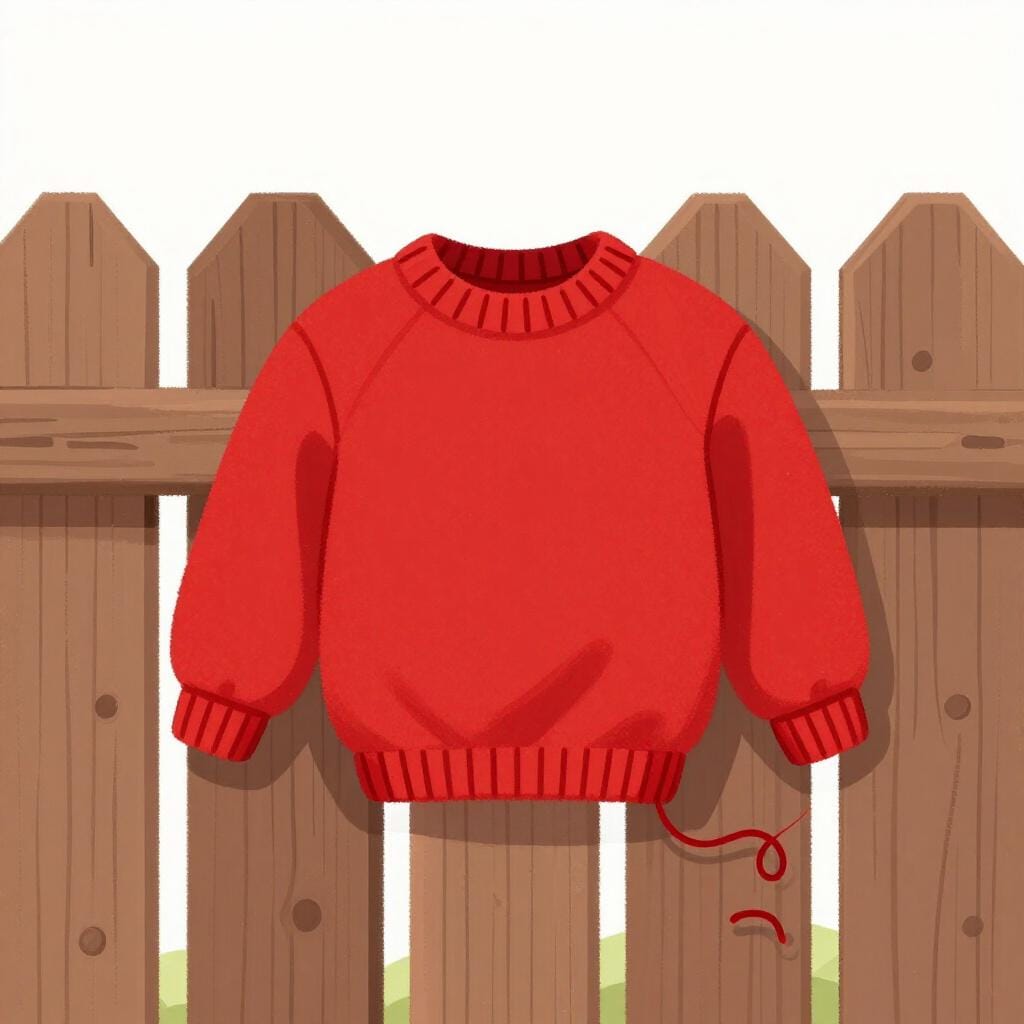
Mi camisa se quedó enganchada en el pomo de la puerta.
My shirt got caught on the doorknob.
Mi suéter se quedó enganchado en la puerta.
My sweater got caught on the door.
El remolque ya está enganchado al coche.
The trailer is already hitched to the car.
Ten cuidado, no te quedes enganchado con los cables.
Be careful, don't get tangled/caught with the cables.
Gender Matching
Since this describes a thing, remember to change the ending. If a 'camiseta' (t-shirt) is caught, she is 'enganchada'.
Action vs State
Mistake: “La ropa es enganchada.”
Correction: Use 'está enganchada' to describe the result of being stuck. Use 'se enganchó' to describe the moment it happened.
tomó
toh-MOHtoˈmo

Examples
Tomamos el autobús para ir al centro.
We caught the bus to go downtown.
Ella tomó mi mano y caminamos juntos.
She took my hand and we walked together.
Mi jefe tomó un avión a Madrid ayer.
My boss took a plane to Madrid yesterday.
Él tomó una foto del paisaje.
He took a picture of the landscape.
The Single Past Action
Tomó describes an action that started and finished completely in the past, like a snapshot in time. It translates to the simple English past tense, 'took'.
Who Did the Action?
Tomó is used when the person doing the action is 'él' (he), 'ella' (she), or 'usted' (formal you).
agarró
ah-gah-RROHaɣaˈro

Examples
Creo que agarré un resfriado porque no me abrigué bien.
I think I caught a cold because I didn't dress warmly enough.
Parece que agarró la gripe en el viaje.
It seems he caught the flu on the trip.
Ella agarró un mal hábito de morderse las uñas.
She picked up a bad habit of biting her nails.
Catching a Cold
Mistake: “Usar 'capturó' para un resfriado (Él capturó un resfriado).”
Correction: Use 'agarró' or 'cogió' (Él agarró un resfriado). 'Capturar' is only for physically catching animals or people.
cogió
koh-HEE-ohkoˈxjo

Examples
Perdimos el tren porque llegamos tarde a la estación y no lo cogimos.
We missed the train because we arrived late at the station and didn't catch it.
Llegó tarde y no cogió el tren de las diez.
He arrived late and didn't catch the ten o'clock train.
Ella cogió un resfriado después de la lluvia.
She caught a cold after the rain.
Using 'Coger' for Sports
Mistake: “Usó 'cogió el balón' para decir 'He caught the ball' in a soccer game.”
Correction: Use 'atrapó' or 'paró' instead. 'Coger' is typically for static objects or transport, not fast-moving sports equipment.
capturado
kahp-too-RAH-dohkap.tuˈɾa.ðo

Examples
El sospechoso fue capturado después de una larga persecución.
The suspect was captured after a long chase.
El criminal fue capturado anoche por la policía.
The criminal was captured last night by the police.
La imagen capturada era de muy baja resolución.
The captured image was very low resolution.
Los documentos capturados contenían información sensible.
The seized documents contained sensitive information.
Gender and Number Match
As an adjective, 'capturado' must always match the noun it describes. If the noun is feminine (like 'la ladrona'), it becomes 'capturada'. If it's plural (like 'los peces'), it becomes 'capturados'.
pillado
pee-YAH-dohpiˈʎa.ðo

Examples
El cartero me pilló saliendo de casa.
The mailman caught me leaving the house.
El ladrón fue pillado justo cuando salía de la tienda.
The thief was caught just as he was leaving the store.
Estamos pillados en un atasco terrible en la autopista.
We are trapped/stuck in a terrible traffic jam on the highway.
Agreement is Key
Like many adjectives, 'pillado' must match the person or thing it describes: 'La niña está pillada' (The girl is caught).
Using the Wrong Verb
Mistake: “Fui pillado en el tráfico. (Implies the action of being caught is permanent.)”
Correction: Estoy pillado en el tráfico. (Use 'estar' to describe the temporary state of being stuck.)
pescado
pes-KAH-dohpesˈkaðo

Examples
Hoy hemos pescado una lubina enorme.
Today we have caught a huge sea bass.
Hemos pescado muchos salmones esta mañana.
We have fished (caught) many salmon this morning.
El tesoro fue pescado del fondo del mar.
The treasure was fished (brought up) from the bottom of the sea.
La red estaba llena de peces pescados.
The net was full of caught fish.
Spelling Change in the Preterite
In the past tense (preterite) 'yo' form, verbs ending in -car (like 'pescar') change 'c' to 'qu' before the 'é' ending. This keeps the hard 'k' sound: 'Yo pesqué' (I fished).
Forming Perfect Tenses
To say 'I have fished,' you use the verb 'haber' (to have) plus 'pescado': 'He pescado'. This form never changes its ending, regardless of who is doing the action.
Incorrect Preterite Spelling
Mistake: “Yo pescó ayer.”
Correction: Yo pesqué ayer. (Remember to add the 'u' after the 'c' in the 'yo' form of -car verbs in the past tense.)
prendido
pren-DEE-dohpɾenˈdiðo

Examples
La policía ha prendido al fugitivo en el aeropuerto.
The police have caught the fugitive at the airport.
La policía ha prendido al sospechoso.
The police have caught the suspect.
Llevaba un broche prendido a la solapa.
She wore a brooch fastened to her lapel.
The Past Participle
As a verb form, 'prendido' is used after the word 'haber' (to have) to describe things that have already happened.
pegó
peh-GOHpeˈɣo

Examples
En invierno, es fácil que el virus se pegue entre los compañeros de trabajo.
In winter, it's easy for the virus to spread (be caught) among coworkers.
El virus se pegó rápidamente en el colegio.
The virus spread quickly in the school.
Mi hermano me pegó su mal humor.
My brother transferred his bad mood to me (made me feel bad too).
Distinguishing Physical vs. Figurative 'Caught'
Related Translations
Learn Spanish with Inklingo
Interactive stories, personalized learning, and more.