How to Say "naughty" in Spanish
The most common Spanish word for “naughty” is “travieso” — use this for children exhibiting mildly bad or mischievous behavior, or for a flirtatious or suggestive smile or look.





travieso
trah-bee-EH-sohtɾaˈβjeso

Examples
El niño es muy travieso y siempre esconde mis zapatos.
The boy is very mischievous and always hides my shoes.
Tengo un gatito travieso que juega con las cortinas.
I have a playful kitten that plays with the curtains.
No seas travieso, siéntate y come tu cena.
Don't be naughty, sit down and eat your dinner.
Me lanzó una sonrisa traviesa antes de salir.
She gave me a naughty smile before leaving.
Matching the Person
This word needs to change its ending to match who you are talking about: 'travieso' for a boy, 'traviesa' for a girl, 'traviesos' for a group of boys (or mixed), and 'traviesas' for a group of girls.
Using 'Ser' vs 'Estar'
Use 'ser' if the person is naturally mischievous by personality. Use 'estar' if they are just acting up or being playful at this specific moment.
Placing the word
When used in a flirtatious way, 'travieso' usually comes after the thing it describes (like 'sonrisa traviesa').
Don't use 'malo' for fun trouble
Mistake: “Mi perro es malo.”
Correction: Mi perro es travieso.
malas
MAH-lasˈmalas
Examples
Las noticias eran muy malas.
The news was very bad.
Esas decisiones malas afectaron a la compañía.
Those poor decisions affected the company.
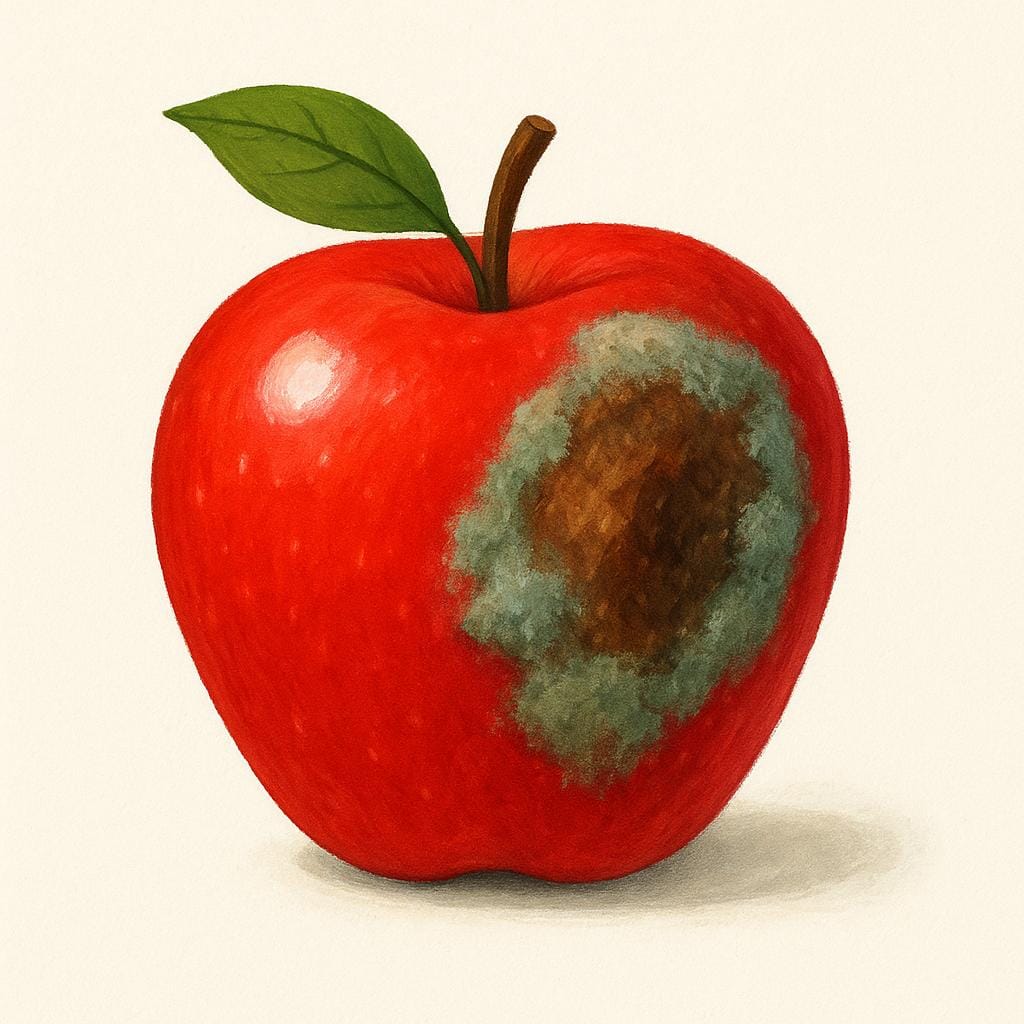
No comas esas manzanas; parecen malas.
Don't eat those apples; they look bad (spoiled).
Gender and Number Agreement
'Malas' must only be used to describe things that are both feminine and plural, like 'las ideas' (the ideas) or 'las actitudes' (the attitudes).
Using the wrong form
Mistake: “La situación eran malas.”
Correction: La situación era mala. (The thing described, 'situación,' is singular, so use 'mala.')
tremenda
treh-MEN-dahtɾeˈmenda

Examples
Tu hija es tremenda, no para de correr.
Your daughter is a handful, she doesn't stop running.
Not always bad!
Mistake: “Thinking 'tremenda' only means 'bad' or 'terrible'.”
Correction: When describing a person's behavior, it often implies they are high-energy or mischievous, sometimes even in an admiring way.
picante
pee-KAHN-tehpiˈkante

Examples
El comediante contó un chiste muy picante sobre política.
The comedian told a very racy joke about politics.
Su comentario fue un poco picante y ofendió a algunos invitados.
His comment was a little sharp/suggestive and offended some guests.
Figurative Meaning
Think of this meaning as describing something that 'stings' or 'spices up' a conversation, making it thrilling or slightly inappropriate.
pecador
peh-kah-DORpekaˈðoɾ

Examples
Tuvo un pensamiento pecador.
He had a sinful thought.
Este mundo pecador necesita esperanza.
This sinful world needs hope.
Ese chocolate tiene un aspecto muy pecador.
That chocolate looks very sinful (tempting).
Placement
Like most Spanish adjectives, put 'pecador' after the word it describes: 'un hombre pecador' (a sinful man).
Travieso vs. Malas
Related Translations
Learn Spanish with Inklingo
Interactive stories, personalized learning, and more.