How to Say "opposite" in Spanish
The most common Spanish word for “opposite” is “enfrente” — use 'enfrente' when indicating something is directly across from a location, in a facing position.







enfrente
en-FREN-tehenˈfɾente
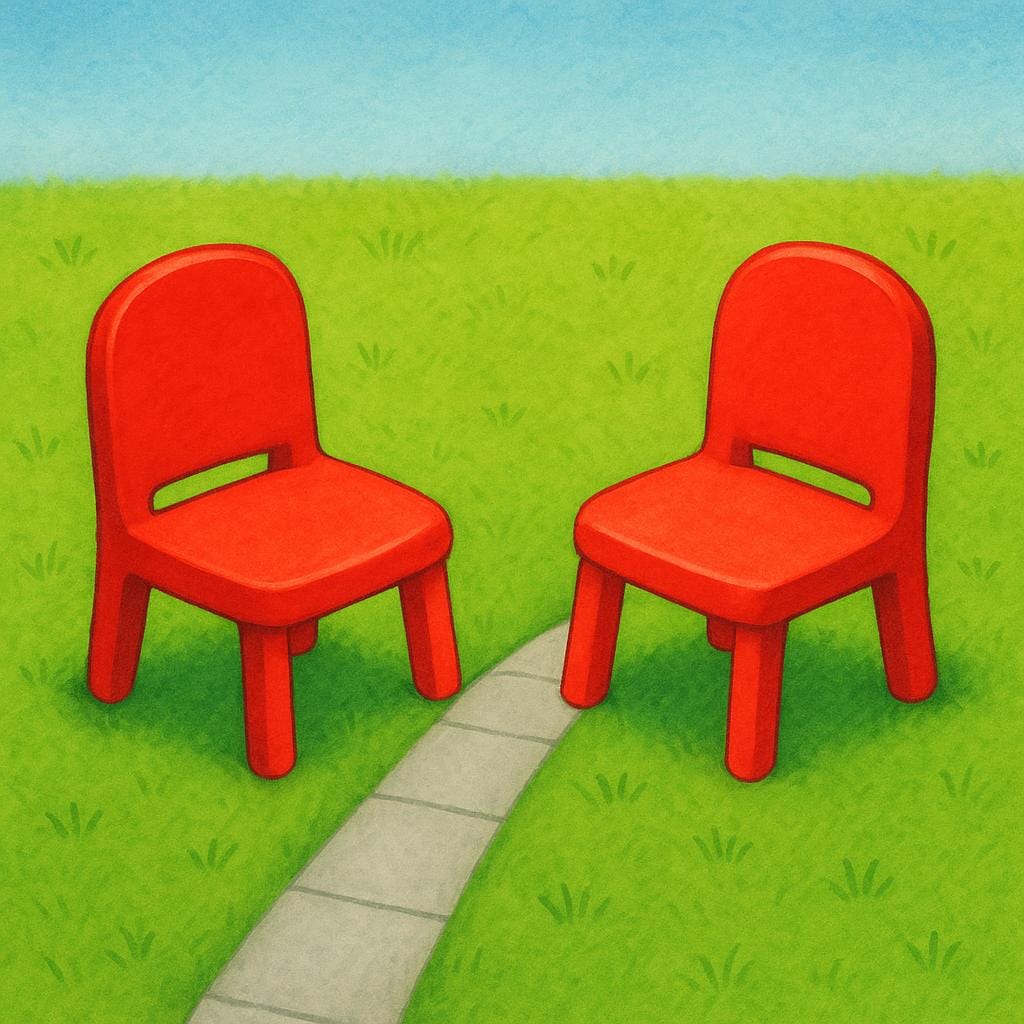
Examples
La tienda está justo enfrente del banco.
The store is right opposite the bank.
El cine está justo enfrente.
The movie theater is right opposite/across the way.
Hay una farmacia enfrente de mi oficina.
There is a pharmacy across from my office.
Pusieron la mesa enfrente del sofá.
They put the table opposite the sofa.
Using 'enfrente' with 'de'
To specify what is opposite, always use 'enfrente de' followed by the person or thing (e.g., 'enfrente de la escuela').
Using 'enfrente' alone
You can use 'enfrente' by itself when the location is clear from context, meaning 'across the way' or 'opposite here' (e.g., 'El café está enfrente').
Confusing 'Enfrente' and 'Delante'
Mistake: “Using 'enfrente de' when you mean 'in front of' but not necessarily facing (e.g., 'el coche está enfrente de la casa' when the car is parked right against the front door).”
Correction: Use 'delante de' for 'in front of' (positional) and 'enfrente de' only when two things are facing each other or directly across from each other.
frente
FREN-tayˈfɾen.te

Examples
Mi apartamento está frente al mar.
My apartment is opposite the sea.
Mi casa está frente al parque.
My house is in front of the park.
Se sentó frente a mí.
She sat opposite me.
Frente a este problema, debemos actuar.
In the face of this problem, we must act.
Contracting 'a + el'
When 'frente a' is followed by the masculine word 'el' (the), they combine to form 'al'. For example, 'frente a el parque' becomes 'frente al parque'.
opuesto
oh-PWEH-stohoˈpwesto

Examples
Sus casas están en calles opuestas.
Their houses are on opposite streets.
Vivimos en lados opuestos de la ciudad.
We live on opposite sides of the city.
Ella se sentó en el extremo opuesto de la mesa.
She sat at the opposite end of the table.
Matching the Noun
This word changes its ending depending on what you are describing: use 'opuesto' for masculine nouns, 'opuesta' for feminine, and add an 's' for plurals.
Using 'frente' vs 'opuesto'
Mistake: “Using 'frente' when you mean 'the other side of the spectrum'.”
Correction: Use 'opuesto' for things that are fundamentally different or on the reverse side; 'frente' is usually just for things physically in front of you.
contrario
kon-TRAH-ree-ohkonˈtɾa.ɾjo

Examples
El resultado fue contrario a nuestras expectativas.
The result was contrary to our expectations.
Mi opinión es contraria a la suya.
My opinion is contrary to yours (or, opposite of yours).
Fuimos en direcciones contrarias y nos perdimos.
We went in opposite directions and got lost.
La ley es contraria a mis principios.
The law is against my principles.
Changing Forms
As an adjective, 'contrario' must match the noun it describes in number and gender: 'una idea contraria' (feminine singular) or 'dos puntos contrarios' (masculine plural).
inverso
een-VEHR-sohinˈbeɾso

Examples
Para deshacer el nudo, haz lo inverso.
To undo the knot, do the reverse.
Caminaron en el sentido inverso al nuestro.
They walked in the opposite direction from us.
El orden inverso de los factores no altera el producto.
The reverse order of the factors doesn't change the result.
Hay una relación inversa entre el precio y la cantidad vendida.
There is an inverse relationship between the price and the quantity sold.
Matching the Noun
Since this is an adjective, it must match the gender of the object it describes. Use 'inverso' for masculine things and 'inversa' for feminine things.
Positioning
In technical or mathematical phrases like 'relación inversa,' it usually comes after the noun.
Confusing with 'invertido'
Mistake: “La relación es invertida.”
Correction: La relación es inversa.
altura
ahl-TOO-rahalˈtu.ɾa

Examples
A esta altura del camino, ya estamos cansados.
At this point on the road, we are already tired.
A esta altura del partido, ya no podemos ganar.
At this point/stage of the game, we can no longer win.
El coche se detuvo a la altura del semáforo.
The car stopped level with (or opposite) the traffic light.
Positional Use
When you use 'a la altura de' (at the height of), it describes something being directly across from or on the same plane as another object.
polar
poh-LAHRpoˈlaɾ

Examples
Los dos hermanos tienen personalidades polares.
The two brothers have polar personalities.
El agua es una molécula polar.
Water is a polar molecule.
Ellos tienen opiniones polares sobre la política.
They have polar (completely opposite) opinions about politics.
Metaphorical use
Just like in English, 'polar' can describe things that are as far apart as the North and South poles, like personalities or beliefs.
Location vs. Opinion
Related Translations
Learn Spanish with Inklingo
Interactive stories, personalized learning, and more.