How to Say "performer" in Spanish
The most common Spanish word for “performer” is “actor” — use 'actor' when referring to a male performer in a play, film, or television show.




actor
ak-TÓRakˈtoɾ
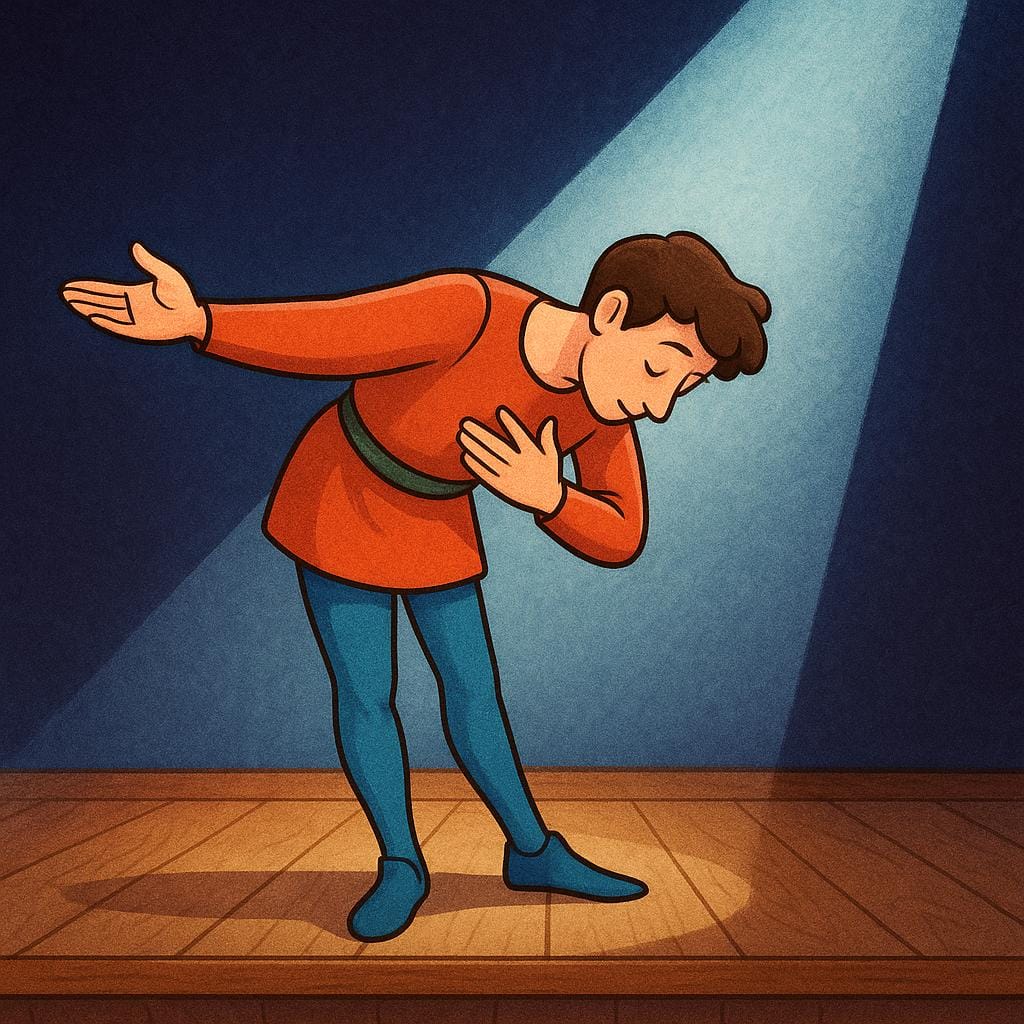
Examples
Mi actor favorito ganó un premio anoche.
My favorite actor won an award last night.
El joven actor estaba muy nervioso antes de subir al escenario.
The young actor was very nervous before going on stage.
Necesitan un actor con experiencia para este papel dramático.
They need an experienced actor for this dramatic role.
Masculine Noun Rule
Since 'actor' ends in -r, it is a masculine noun. Always use masculine articles (el, un) and masculine adjectives (e.g., el actor famoso).
Mixing Genders
Mistake: “Using 'el actriz' or 'la actor'.”
Correction: The word for a female performer is 'actriz' (la actriz). The word 'actor' is only for males (el actor).
actriz
ak-TREESakˈtɾiθ

Examples
Mi actriz favorita ganó un premio anoche.
My favorite actress won an award last night.
Ella es una actriz de teatro con mucha experiencia.
She is a theater actress with a lot of experience.
La joven actriz logró conmover al público con su dramática interpretación.
The young actress managed to move the audience with her dramatic performance.
Gendered Professions
In Spanish, job titles often change depending on whether the person is male or female. 'Actriz' is the female form; the male form is 'actor'.
Using the Male Form
Mistake: “La actor es famosa.”
Correction: La actriz es famosa. Remember to match the gender of the job title to the person being described.
artista
ar-TEE-staaɾˈtista

Examples
El artista firmó autógrafos después del concierto.
The artist (male) signed autographs after the concert.
Mi abuela es una artista increíble; pinta retratos muy reales.
My grandmother is an incredible artist (female); she paints very realistic portraits.
Los artistas callejeros hacen que la plaza sea más interesante.
The street performers make the square more interesting.
Gender and Articles
The word 'artista' itself doesn't change based on gender. You use 'el' for a male artist and 'la' for a female artist. This is true for many Spanish professions ending in -ista.
Changing the Ending
Mistake: “La artisa (Incorrect)”
Correction: La artista (Correct). Do not try to change the final 'a' to an 'o' when referring to a man, or change it to 'i' when referring to a woman. The word stays the same.
intérprete
Examples
Esa cantante es una gran intérprete de boleros.
That singer is a great performer of boleros.
boy
boyboi̯

Examples
Contrataron a un boy para la despedida de soltera de mi hermana.
They hired a male stripper for my sister's bachelorette party.
El club anunció un espectáculo de boys para el próximo sábado.
The club announced a male stripper show for next Saturday.
Trabajar como boy requiere mucha confianza y saber bailar.
Working as a male stripper requires a lot of confidence and knowing how to dance.
Borrowed Words
Since this word comes directly from English, it stays the same regardless of who you are talking about, but it is almost always masculine ('el boy').
Making it Plural
Unlike most Spanish words ending in 'y' that add '-es' (like 'bueyes'), this borrowed word usually just adds an 's' to become 'boys'.
The 'Voy' Confusion
Mistake: “Yo boy a la tienda.”
Correction: Yo voy a la tienda.
Actor/Actriz vs. Artista
Related Translations
Learn Spanish with Inklingo
Interactive stories, personalized learning, and more.