How to Say "plunge" in Spanish
The most common Spanish word for “plunge” is “caída” — use 'caída' when referring to a sudden, dramatic drop or fall, especially in financial markets, prices, or a physical descent.

caída
Examples
La caída de las acciones fue alarmante.
The fall of the stocks was alarming.
klah-BAH-dohklaˈβaðo
Examples
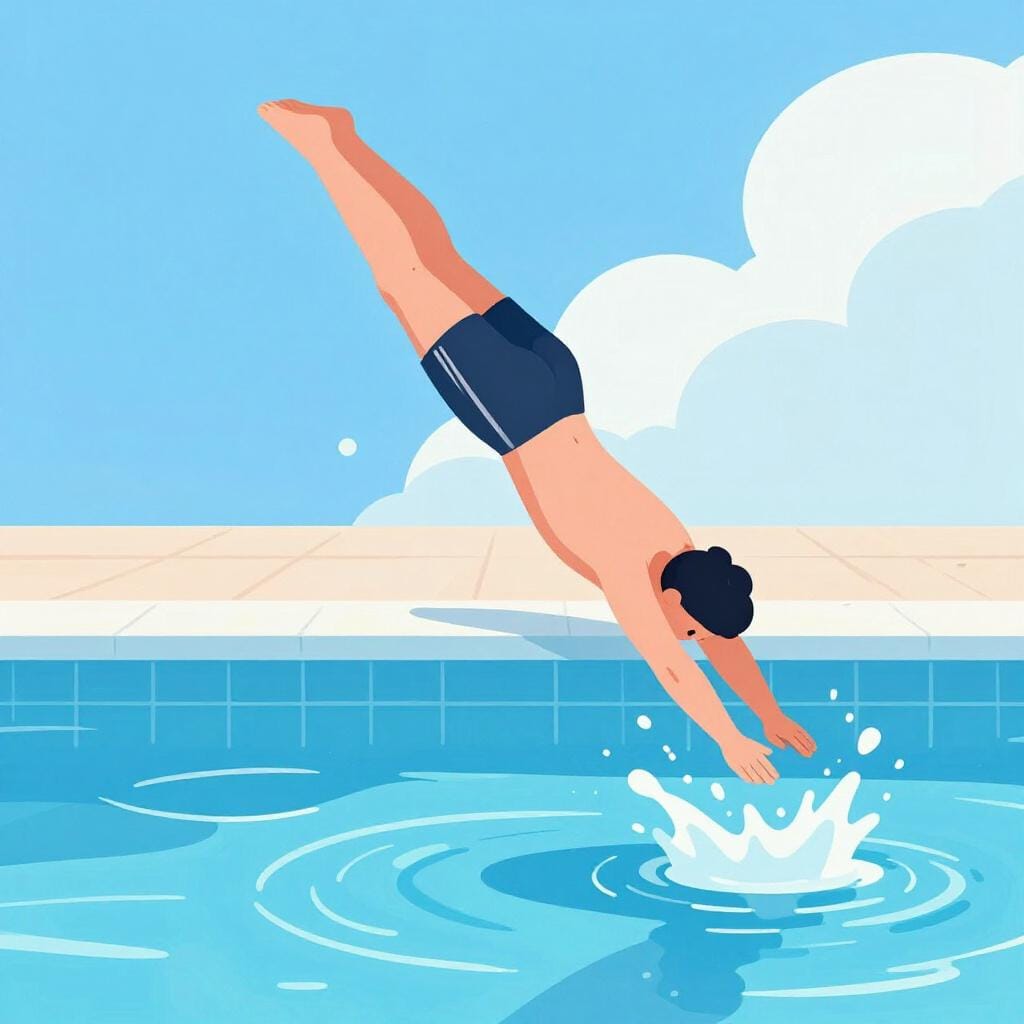
El niño dio un clavado en la piscina.
The child took a dive into the pool.
El atleta hizo un clavado perfecto desde la plataforma.
The athlete did a perfect dive from the platform.
Me da miedo echarme un clavado en la parte honda.
I'm afraid to take a dive in the deep end.
Vimos los clavados en las Olimpiadas.
We watched the diving at the Olympics.
Action Verbs with Clavado
Unlike English where you just 'dive', in Spanish you usually 'throw' (echar) or 'give' (dar) a dive.
Using 'hacer' too much
Mistake: “Yo hice un clavado.”
Correction: Say 'Me eché un clavado'. While 'hacer' is okay in sports contexts, 'echarse' is much more natural for jumping in a pool.
Caída vs. Clavado
Learners often confuse 'caída' and 'clavado' by using 'caída' for a dive or 'clavado' for a market drop. Remember, 'caída' is for general falls, while 'clavado' is a specific type of dive into water.
Related Translations
Learn Spanish with Inklingo
Interactive stories, personalized learning, and more.