How to Say "dive" in Spanish
The most common Spanish word for “dive” is “agujero” — use 'agujero' to describe a place, specifically a very run-down, unpleasant bar or establishment.



agujero
ah-goo-HEH-roha.ɣuˈxe.ɾo

Examples
Este bar es un agujero, vámonos a otro sitio.
This bar is a dump/dive, let's go somewhere else.
Pasé dos semanas viviendo en un pequeño agujero sin internet.
I spent two weeks living in a little remote spot without internet.
Use of Articles
When used in this way, it usually takes 'un' or 'ese/aquel' (that/that distant one) to emphasize the negative feeling associated with the place.
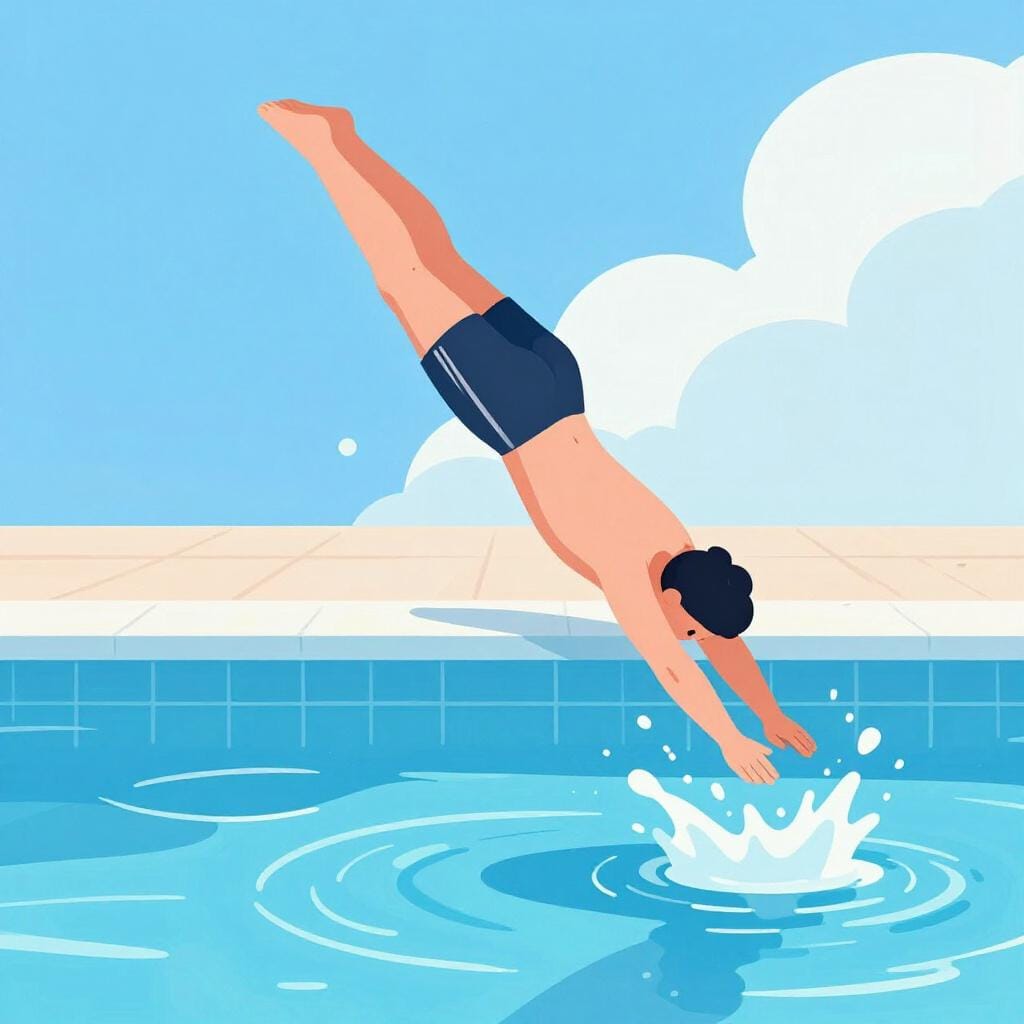
clavado
klah-BAH-dohklaˈβaðo
Examples
El atleta hizo un clavado perfecto desde la plataforma.
The athlete did a perfect dive from the platform.
Me da miedo echarme un clavado en la parte honda.
I'm afraid to take a dive in the deep end.
Vimos los clavados en las Olimpiadas.
We watched the diving at the Olympics.
Action Verbs with Clavado
Unlike English where you just 'dive', in Spanish you usually 'throw' (echar) or 'give' (dar) a dive.
Using 'hacer' too much
Mistake: “Yo hice un clavado.”
Correction: Say 'Me eché un clavado'. While 'hacer' is okay in sports contexts, 'echarse' is much more natural for jumping in a pool.
picado
pee-KAH-dohpiˈkaðo

Examples
El director usó un picado para que el personaje pareciera pequeño.
The director used a high-angle shot to make the character look small.
El avión inició un picado hacia la pista.
The plane started a steep dive toward the runway.
The 'In' Phrase
When talking about a dive, we often say 'en picado' (literally 'in chopped') to describe the downward motion.
Place vs. Action
Learn Spanish with Inklingo
Interactive stories, personalized learning, and more.