How to Say "gap" in Spanish
The most common Spanish word for “gap” is “espacio” — use 'espacio' for a general empty area or room between things, like in a car or between furniture.




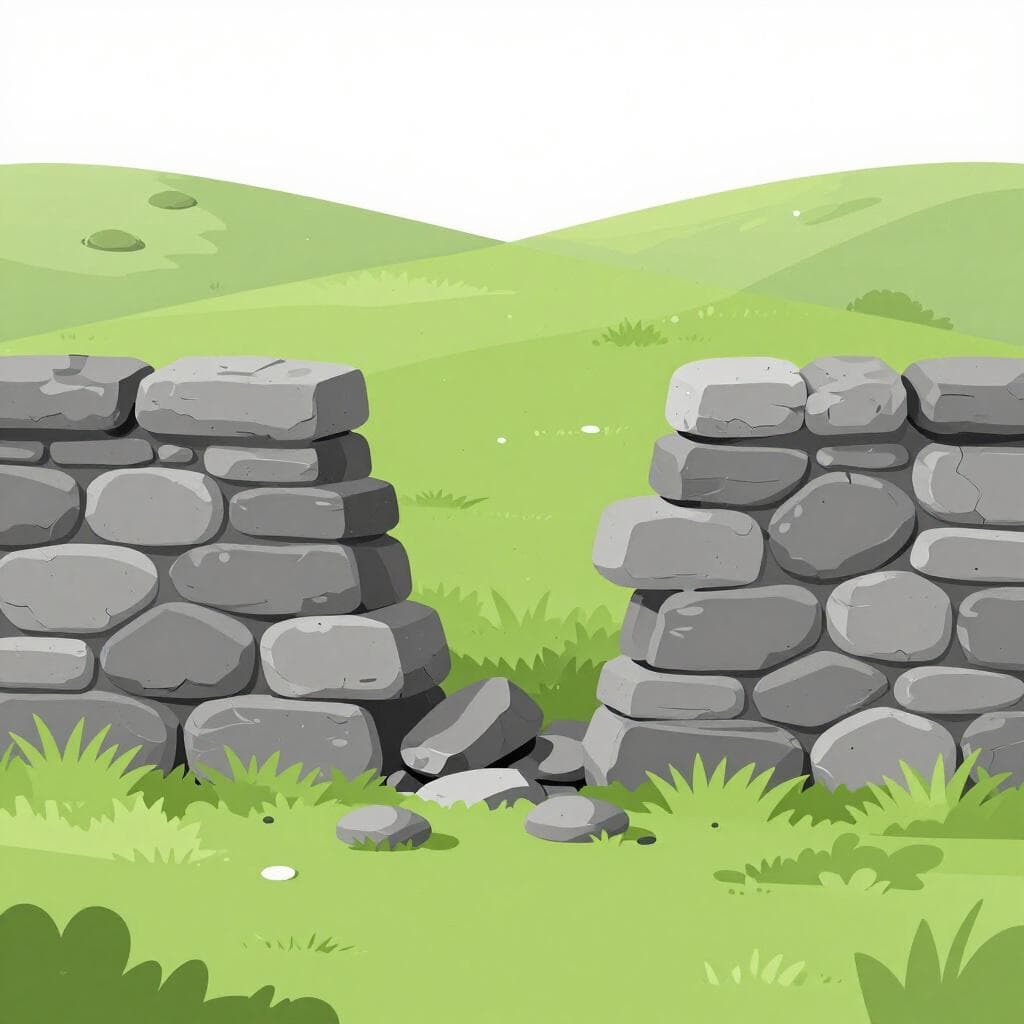









espacio
es-PA-syoesˈpa.sjo

Examples
No hay espacio en el coche para más maletas.
There is no space/room in the car for more suitcases.
Necesitamos más espacio para la mesa nueva.
We need more space for the new table.
Por favor, haz un poco de espacio para que pueda sentarme.
Please, make a little space so I can sit down.
Always Masculine
Even though it ends in 'o', it's good to remember that 'espacio' is always masculine. So, you'll always say 'el espacio' (the space) or 'un espacio' (a space).
'Space' vs. 'Room'
Mistake: “Quiero reservar un espacio en el hotel.”
Correction: Quiero reservar una habitación en el hotel. Use 'habitación' or 'cuarto' for a room in a building like a hotel or house. 'Espacio' refers to general, open area or capacity.
distancia
dees-TAHN-syahdisˈtan.sja

Examples
¿Cuál es la distancia entre tu casa y la escuela?
What is the distance between your house and the school?
Mantén una distancia segura del fuego.
Keep a safe distance from the fire.
Ellos se conocieron a larga distancia, por internet.
They met over a long distance, online.
Gender Reminder
Remember that 'distancia' is always a feminine noun, so use 'la' before it: 'la distancia'.
Using 'a' vs. 'de'
You often use 'a' (at/to) or 'de' (from) when specifying distance: 'a cinco metros de aquí' (five meters from here).
Confusing 'distancia' and 'trayecto'
Mistake: “Using 'trayecto' when referring to the measurement of space.”
Correction: 'Trayecto' means 'route' or 'journey.' Use 'distancia' for the measured space: 'La distancia es de 10 kilómetros.'
hueco
WAY-kohˈw̝e.ko

Examples
Tapa ese hueco en la pared antes de que entre agua.
Cover that hole in the wall before water gets in.
Dejó un gran hueco en su corazón cuando se fue.
He left a big void (or hole) in her heart when he left.
Gender Agreement
As a masculine noun, 'hueco' uses masculine articles and adjectives (e.g., 'el hueco', 'un hueco grande').
abertura
ah-behr-TOO-rahaβerˈtuɾa

Examples
Hay una pequeña abertura en la pared por donde entra el frío.
There is a small opening in the wall where the cold comes in.
La falda tiene una abertura lateral muy elegante.
The skirt has a very elegant side slit.
Los escaladores encontraron una abertura entre las rocas.
The climbers found a gap between the rocks.
Always Feminine
Even though it starts with 'a', it doesn't follow the 'el agua' rule because the stress is not on the first 'a'. Always say 'la abertura' or 'una abertura'.
Physical vs. Action
Use this word to describe the physical hole itself, not the act of opening something.
Abertura vs. Apertura
Mistake: “La abertura de la nueva tienda es mañana.”
Correction: La apertura de la nueva tienda es mañana. Use 'apertura' for events or ceremonies, and 'abertura' for physical holes/gaps.
brecha
BREH-chahˈbɾet͡ʃa
Examples
La brecha salarial entre hombres y mujeres sigue siendo un problema.
The wage gap between men and women remains a problem.
Los soldados lograron abrir una brecha en la muralla.
The soldiers managed to open a breach in the wall.
Se hizo una brecha en la cabeza al caerse de la bicicleta.
He got a cut on his head when he fell off the bike.
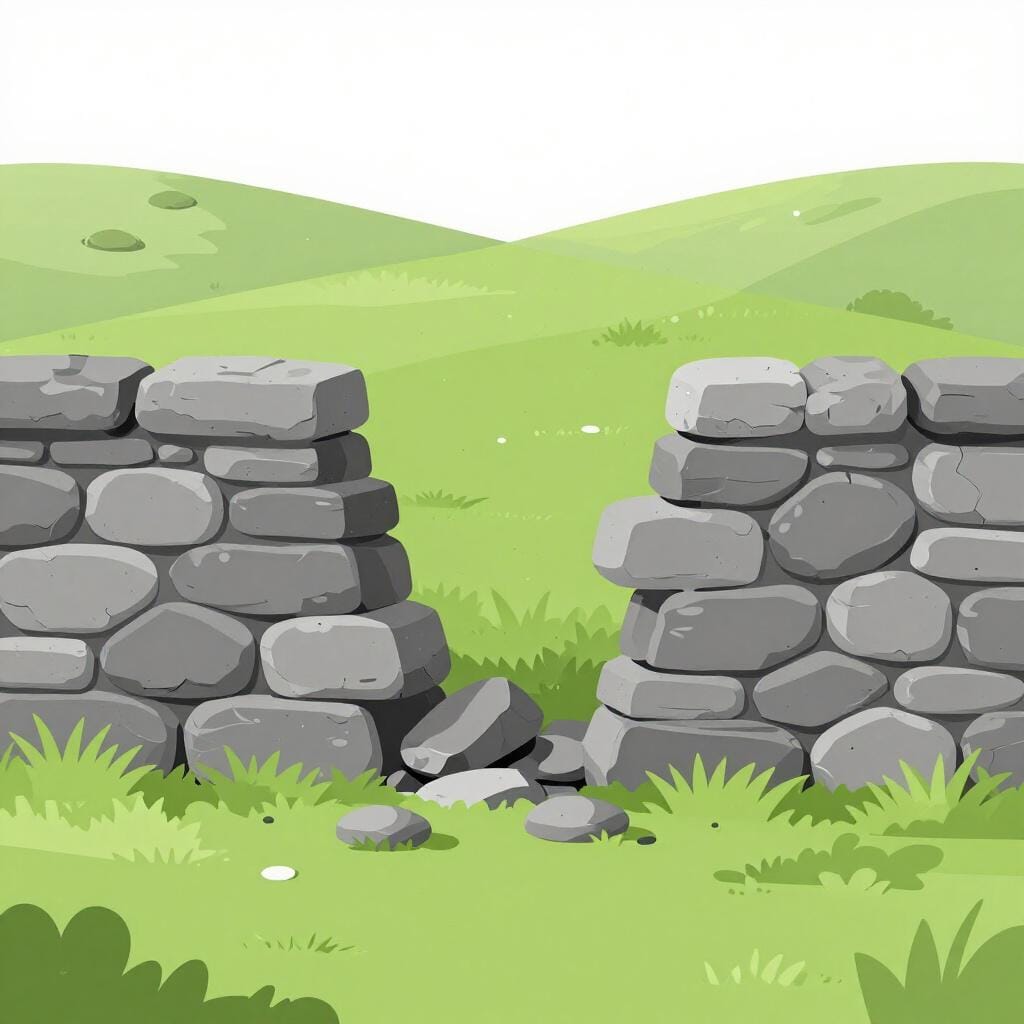
Hay una pequeña brecha entre las tablas del suelo.
There is a small gap between the floorboards.
Gender and Articles
Brecha is a feminine noun. Always use 'la' or 'una' with it, even though it refers to a sharp or rough opening.
Abstract Gaps
When talking about social differences, 'brecha' implies a distance that is difficult to cross, much like a physical canyon.
Wounds vs. Cuts
Mistake: “Using 'brecha' for any cut on the body.”
Correction: In a medical sense, 'brecha' is almost exclusively used for deep cuts on the head that likely need stitches. Use 'corte' for general cuts elsewhere.
Using 'Gap' directly
Mistake: “Saying 'el gap salarial'.”
Correction: Always use 'la brecha salarial'. While 'gap' is understood in business, it is not correct Spanish.
intervalo
een-ter-BA-lointeɾˈbalo

Examples
Hubo un intervalo de diez minutos entre las dos películas.
There was a ten-minute interval between the two movies.
Las luces parpadean a intervalos de cinco segundos.
The lights blink at five-second intervals.
El intervalo de temperatura hoy será de 15 a 20 grados.
The temperature range today will be from 15 to 20 degrees.
Using 'a intervalos'
Use this phrase when you want to say something happens 'every now and then' or with a specific rhythm, like 'a intervalos regulares' (at regular intervals).
Gender memory aid
It's a masculine noun ending in -o. Think of 'un intervalo' as 'a period,' which is also masculine (un periodo).
Intervalo vs. Descanso
Mistake: “Using 'intervalo' for a coffee break at work.”
Correction: Use 'descanso' or 'pausa' for a work break; 'intervalo' is more about the measurement of the gap between events.
puerto
PWEHR-tohˈpweɾto

Examples
La carretera sube hasta el puerto de montaña a 2000 metros.
The road climbs up to the mountain pass at 2000 meters.
Tuvimos que cerrar el puerto por la nieve.
We had to close the mountain pass because of the snow.
Meaning Context
When 'puerto' is used to mean 'mountain pass,' it is almost always followed by 'de montaña' (mountain) or is clear from the context of travel and elevation.
separación
Examples
La separación entre las mesas es obligatoria por seguridad.
The separation (distance) between the tables is mandatory for safety.
vacío
Examples
Sintió un gran vacío en su vida después de mudarse.
He felt a great void/emptiness in his life after moving.
agujero
ah-goo-HEH-roha.ɣuˈxe.ɾo

Examples
Las nuevas cuentas muestran un agujero fiscal de tres millones de dólares.
The new accounts show a fiscal deficit of three million dollars.
Intentamos tapar el agujero de conocimiento con cursos intensivos.
We tried to fill the knowledge gap with intensive courses.
Figurative Use
Just like in English where you can have a 'hole' in your budget, 'agujero' is used figuratively to mean a severe financial problem or a significant missing amount.
abra
AH-brahˈa.βɾa

Examples
Tuvimos que cruzar la abra de la sierra para llegar al valle.
We had to cross the mountain pass to reach the valley.
La abra en la costa ofrecía un refugio natural para los barcos.
The inlet on the coast offered a natural shelter for the boats.
Gender Note
This noun is feminine: 'la abra'. Note that it does not follow the rule of using 'el' before feminine nouns that start with a stressed 'a' sound, because 'abra' is not stressed on the first syllable.
déficit
Examples
El país tiene un gran déficit comercial este año.
The country has a large trade deficit this year.
hoyo
OH-yohˈo.ʝo

Examples
La empresa está en un hoyo financiero muy profundo.
The company is in a very deep financial hole (deficit).
Intentamos salir del hoyo después de la crisis.
We tried to get out of the mess/hole after the crisis.
Figurative Use
This meaning uses 'hoyo' metaphorically, comparing a bad situation, especially one related to money, to being physically trapped in a deep pit.
laguna
lah-GOO-nahlaˈɡuna

Examples
Tengo una laguna mental y no recuerdo su nombre.
I have a mental blank and don't remember his name.
El abogado encontró una laguna legal en el contrato.
The lawyer found a legal loophole in the contract.
Hay lagunas importantes en su educación.
There are significant gaps in his education.
Abstract Use
Even though it's the same word as the body of water, it functions abstractly to show that a piece of information is 'missing' like a hole in a surface.
Plural Use
Using the plural 'lagunas' often implies a general lack of preparation or knowledge in a subject.
Not just for water
Mistake: “Thinking 'laguna' only refers to nature.”
Correction: Remember that if someone says they have a 'laguna', they likely forgot something, not that they own a lake!
claro
KLAH-rohˈkla.ɾo

Examples
Vimos un ciervo en un claro del bosque.
We saw a deer in a clearing in the forest.
A través de un claro en las nubes, vimos la luna.
Through a gap in the clouds, we saw the moon.
grieta
GREE-eh-tahˈɡɾjeta

Examples
La grieta política divide a las familias durante las elecciones.
The political rift divides families during elections.
Sus diferencias abrieron una grieta en su amistad de años.
Their differences opened a rift in their years-long friendship.
Es necesario trabajar para cerrar la grieta social.
It is necessary to work to bridge the social gap.
Abstract Use
Just like in English, physical words can be used for feelings. 'Grieta' describes a relationship that is broken but hasn't completely collapsed yet.
Don't use 'ruptura' for everything
Mistake: “Using 'ruptura' for a small disagreement.”
Correction: Use 'grieta' for the beginning of a problem or a long-standing division. 'Ruptura' is for the final breakup.
vano
VAH-nohˈba.no

Examples
El arquitecto diseñó un gran vano para la puerta principal.
The architect designed a large opening for the main door.
Los vanos de las ventanas permitían la entrada de luz.
The window openings allowed the entry of light.
Always Masculine
When 'vano' is used as a noun meaning 'opening' or 'void,' it is always masculine ('el vano'), regardless of the gender of the object it refers to (like 'la ventana' or 'la puerta').
Physical Openings vs. Abstract Gaps
Learn Spanish with Inklingo
Interactive stories, personalized learning, and more.